
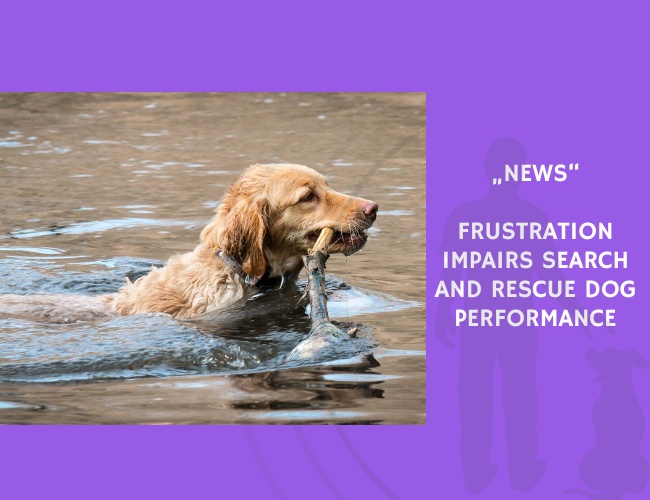
Search and rescue (SAR) dogs are among the most versatile and vital assets in disaster and emergency response. Their exceptional olfactory skills and ability to navigate complex environments make them irreplaceable tools for locating missing persons in wilderness, avalanche, water, and disaster zones. However, SAR operations often subject dogs to high physical and psychological demands that can affect their performance and welfare.
In a 2025 study published in Frontiers in Veterinary Science, Sally Dickinson and Erica N. Feuerbacher investigated how two different types of stress—frustration (psychological) and exercise-induced fatigue (physiological)—influence the behavior and heart rate variability of trained SAR dogs. Frustration was defined as the stress response arising when dogs encountered blocked goals or unexpected outcomes during search tasks.
By monitoring heart rate variability (HRV), a reliable indicator of autonomic nervous system balance, and measuring task latency and accuracy, the researchers compared the effects of frustration and exercise. The results revealed that frustration significantly reduced HRV, indicating heightened stress and decreased parasympathetic regulation. Moreover, dogs exposed to frustrating conditions exhibited delayed final responses to target odors and decreased search efficiency compared to those subjected to physical exertion alone.
Interestingly, moderate exercise led to transient physiological stress but did not impair performance, suggesting that emotional regulation, rather than physical endurance, is the key challenge for SAR dogs under demanding conditions. The findings underscore the importance of preparing dogs not only for physical resilience but also for psychological flexibility and recovery when faced with unmet expectations or ambiguous cues.
According to the authors, frustration management should be an integral component of SAR training. Incorporating structured challenges that allow dogs to practice coping with delayed rewards or blocked access may improve long-term performance and welfare. Understanding these emotional responses helps ensure that working dogs remain both effective and emotionally stable in the high-stakes environments where they serve.
Source: Dickinson, S., & Feuerbacher, E. N. (2025). Frustration and Its Impact on Search and Rescue Canines. Frontiers in Veterinary Science, 12. Published March 7, 2025.










