
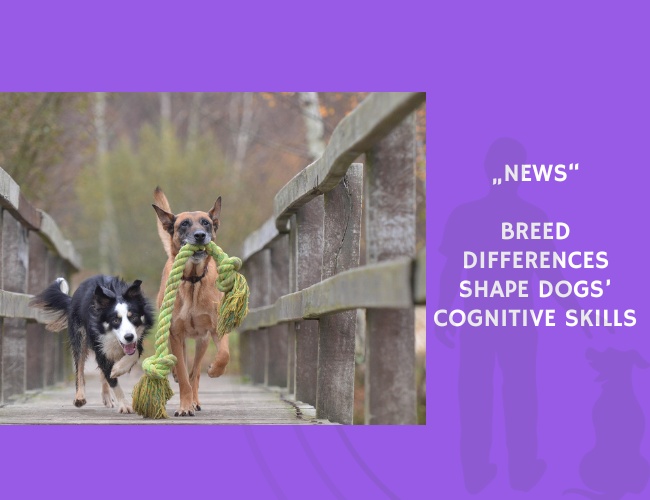
Domestic dogs exhibit remarkable diversity not only in appearance and temperament but also in cognitive abilities. In their 2022 study published in Scientific Reports, Saara Junttila and colleagues examined how breed-specific traits influence performance on tests of social cognition, inhibitory control, and spatial problem-solving. The research provides insight into how artificial selection for different working purposes may have shaped canine intelligence.
The study evaluated dogs from multiple breeds using standardized behavioral tasks designed to measure distinct aspects of cognition. Results showed clear breed-related differences, particularly in tasks involving social interaction and self-control. Breeds historically selected for cooperation with humans—such as herding or retriever breeds—tended to excel in social cognition tasks, demonstrating stronger attention to human gestures and cues. In contrast, independent or hunting breeds often performed better in problem-solving tests requiring persistence and exploration.
These findings suggest that the evolutionary pressures of domestication were further refined through selective breeding, producing cognitive specializations that align with each breed’s original function. For example, inhibitory control—the ability to pause or resist an impulse—was stronger in breeds requiring close human coordination, while more autonomous breeds showed greater persistence in tackling physical puzzles.
Junttila and her team conclude that dog cognition cannot be viewed as a single spectrum of intelligence but as a mosaic of adaptive abilities. Understanding these cognitive differences has implications for training, enrichment, and welfare, helping caregivers tailor strategies to suit each breed’s natural tendencies and mental strengths.
Source: Junttila, S., Valros, A., Mäki, K., Väätäjä, H., Reunanen, E., & Tiira, K. (2022). Breed Differences in Social Cognition, Inhibitory Control, and Spatial Problem-Solving Ability in the Domestic Dog (Canis familiaris). Scientific Reports, 12. Published December 1, 2022.










