
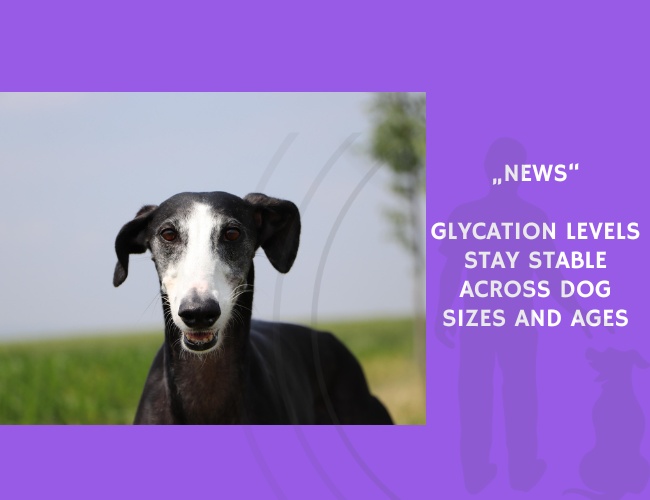
In domestic dogs, smaller breeds often live significantly longer than larger ones, creating what researchers have called a physiological paradox. In contrast, wild canids such as wolves and coyotes—many of which are comparable in size to large dog breeds—tend to outlive their domestic counterparts. To explore potential biochemical explanations for these lifespan differences, A. G. Jiménez investigated whether advanced glycation end-products (AGEs) in the bloodstream correlate with age or body mass across species.
Published in Frontiers in Veterinary Science in 2021, the study compared plasma AGE-BSA concentrations between domestic dogs of varying sizes and wild canids. AGEs, formed through carbohydrate-related oxidative damage, are known to contribute to cellular aging in many species. However, unlike oxidative stress markers, Jiménez found no significant variation in AGE levels with either age or body mass in both domestic and wild populations.
These results indicate that the formation and regulation of AGEs may be a conserved metabolic trait throughout canid evolution. The findings also suggest that differences in longevity between domestic and wild canids may not stem from carbohydrate-based damage but rather from lipid metabolism. Previous research by Jiménez demonstrated that wild canids maintain stronger antioxidant defenses and lower lipid oxidation over time, while domestic dogs tend to accumulate lipid damage as they age.
This study refines our understanding of canine aging by highlighting that, while domestication has influenced certain metabolic pathways, others—like glycation—remain remarkably stable. The discovery reinforces the idea that the key to extending canine lifespan may lie in managing oxidative and lipid stress rather than glycation alone.
Source: Jiménez, A. G. (2021). Plasma Concentration of Advanced Glycation End-Products From Wild Canids and Domestic Dogs Does Not Change With Age or Across Body Masses. Frontiers in Veterinary Science, 8, published January 26, 2021.










