
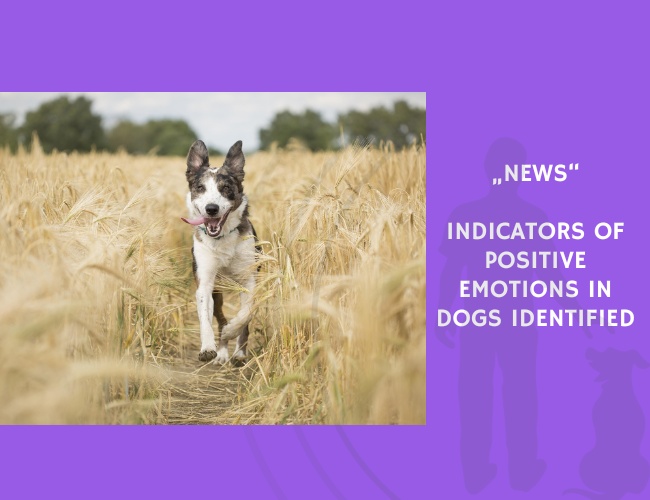
Understanding how dogs express their emotions is essential for advancing welfare science and improving human–dog relationships. While negative emotions such as fear and anxiety have been studied extensively, positive emotional states—like calmness, joy, or excitement—remain less well characterized. In a large experimental study, Flint and colleagues (2024) investigated how a range of physiological and behavioral measures correspond to short-term emotional states in dogs.
The researchers studied 60 dogs living at a controlled research facility, exposing them to six 10-minute scenarios designed to evoke emotions varying in both valence (positive vs. negative) and arousal (high vs. low). They collected data on hormone levels, heart rate, panting, whining, posture, and body movements, alongside qualitative behavioral assessment (QBA) scores that captured observers’ impressions of each dog’s emotional demeanor.
The study revealed that cortisol, adrenocorticotropic hormone (ACTH), heart rate variability, panting, whining, and body shaking were reliable indicators of arousal but only under negative emotional contexts. Conversely, QBA scores effectively captured both positive and negative valence, making them a valuable tool for detecting positive states. Other parameters such as ear temperature, activity, and sitting behavior were linked to high positive arousal, while heart rate and secretory immunoglobulin A (sIgA) changed similarly across both valence types, indicating general arousal effects.
These findings mark a significant step toward an integrative model of canine emotion assessment. By showing that no single measure is sufficient on its own, the authors recommend that future welfare studies employ a multi-parameter approach combining both behavioral and physiological markers. Such integration will allow for more accurate identification of dogs’ emotional states and improve welfare practices in homes, shelters, and research settings alike.
Source: Flint, H. E., Weller, J. E., Parry-Howells, N., Ellerby, Z., McKay, S. L., & King, T. (2024). Evaluation of indicators of acute emotional states in dogs. Scientific Reports, 14, published March 17, 2024.










