
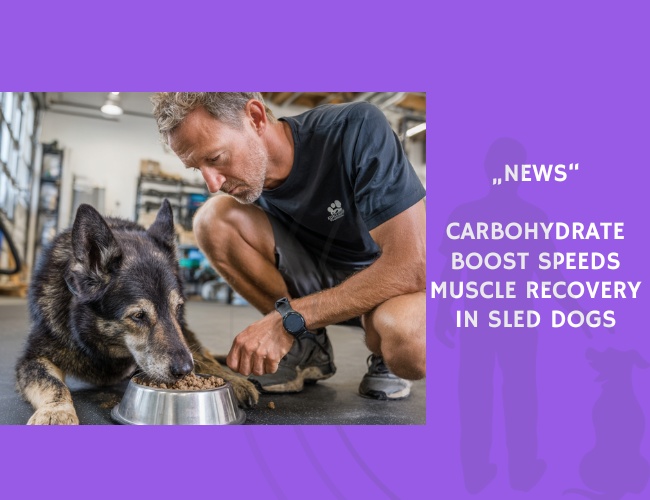
In endurance dogs such as Alaskan Huskies, muscle glycogen serves as a critical energy source during prolonged exertion. Efficient glycogen restoration after intense exercise determines how quickly these dogs can recover for the next bout of activity. In this landmark study, Reynolds and colleagues (1997) investigated whether providing carbohydrates immediately after exercise could accelerate glycogen replenishment in sled dogs.
The research involved 24 trained Alaskan Huskies divided into three treatment groups. After completing a 30-km run, one group received a glucose polymer solution (1.5 g/kg body weight) immediately postexercise, while the control groups received only water. Muscle biopsy samples were collected before and after the run to measure glycogen levels, and blood samples tracked plasma glucose concentrations.
Findings revealed that dogs receiving carbohydrates restored nearly half (49%) of their depleted glycogen stores within the first four hours of recovery. Their plasma glucose levels were also significantly higher than those in the control groups, confirming that supplemental glucose enhances energy availability and muscle recovery. In contrast, dogs given only water showed minimal glycogen replenishment.
The study concluded that immediate postexercise carbohydrate supplementation promotes faster and more complete recovery in sled dogs. This has practical implications for dogs competing in multiple heats or performing on consecutive days, where sustained endurance and rapid recovery are essential for maintaining peak athletic performance.
Source: Reynolds, A. J., Carey, D. P., Reinhart, G. A., Swenson, R. A., & Fa, K. (1997). Effect of postexercise carbohydrate supplementation on muscle glycogen repletion in trained sled dogs. American Journal of Veterinary Research, 58(11), 1252–1256.










