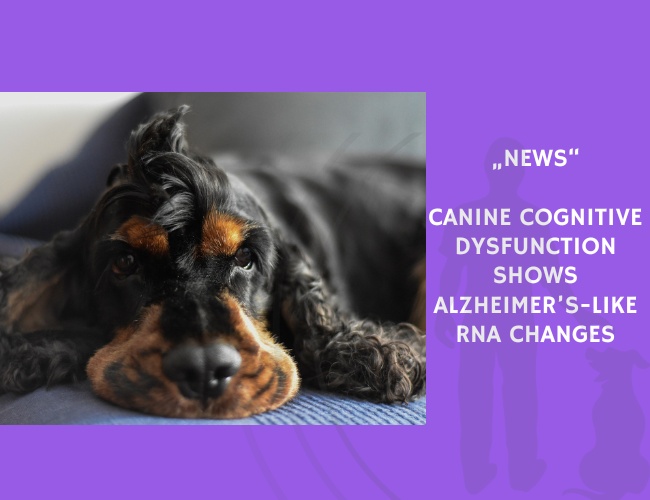
Canine cognitive dysfunction (CCD) shares many clinical and pathological similarities with Alzheimer’s disease (AD), including memory loss, behavioral decline, and neuroinflammation. In their 2024 study, Osburn and colleagues used RNA sequencing and extracellular vesicle (EV) analysis to investigate molecular parallels between CCD and AD in dogs.
The researchers compared transcriptomic data from the cortex and EVs in plasma of young, old, and CCD-affected dogs. They identified 2,673 differentially expressed genes in CCD dogs compared to healthy controls, with changes primarily linked to immune activation and neuronal health—patterns strikingly similar to those observed in human AD.
Importantly, the team found a significant overlap between gene expression changes in the brain and in circulating EVs. Genes associated with immune regulation and synaptic signaling were consistently altered across both sample types. Among the notable findings, CCL5 RNA, a marker previously linked to AD, was detected in plasma EVs only in CCD dogs, with corresponding increases in brain tissue expression.
These results suggest that EV cargo, particularly RNA, may hold promise as a biomarker for disease severity in CCD, and potentially in AD. While preliminary, the findings strengthen the case for dogs as a naturally occurring model of Alzheimer’s disease, offering translational insights for both veterinary and human medicine.
The study underscores the value of cross-species approaches in understanding the mechanisms of neurodegeneration, pointing toward future diagnostic and therapeutic strategies that could benefit both dogs and humans.
Source: Osburn, S. C., McEntee, C. M., McGrath, S., Moreno, J., & LaRocca, T. (2024). Canine Cognitive Dysfunction Is Associated with Alzheimer’s Disease-Related Changes in the Brain Transcriptome and RNA Changes in Plasma Extracellular Vesicles. Physiology, published May 1, 2024.