Introduction
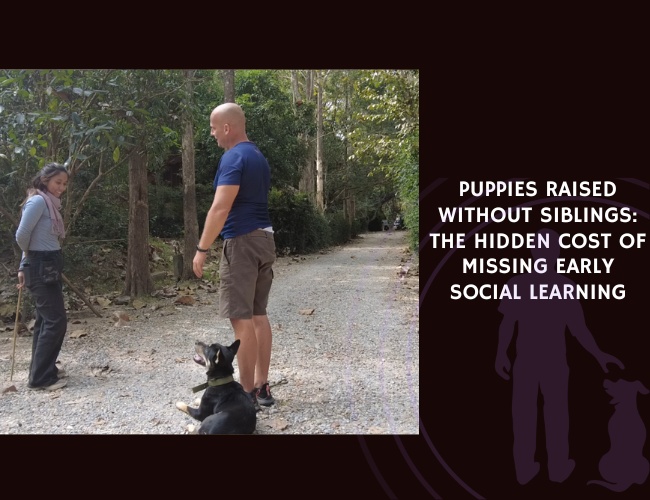
Picture a litter of puppies tumbling over each other, play-fighting with tiny growls, learning the delicate balance between roughhousing and hurting. Now imagine a single puppy, raised alone, missing these crucial interactions. What might seem like a minor difference in early life actually shapes the foundation of how that puppy will navigate social relationships, manage stress, and control impulses for the rest of their life.
When we think about puppy development, we often focus on human socialization, training basics, and health milestones. Yet one of the most profound teachers in a young dog’s life isn’t human at all—it’s their siblings. Those early weeks spent wrestling, mouthing, and negotiating play are not just adorable moments; they’re a sophisticated neurological training ground where puppies learn self-control, emotional regulation, and the language of canine communication.
The absence of this sibling interaction creates what researchers call early social isolation, and its effects ripple through a dog’s entire developmental trajectory. From altered brain chemistry to impaired bite inhibition, from heightened anxiety to difficulty reading social cues, puppies raised without littermates face challenges that many owners never connect to those missing early weeks.
Through the lens of both behavioral science and the NeuroBond approach, let us guide you through understanding why those sibling interactions matter so deeply, what happens when they’re absent, and how we can help singleton puppies develop into well-adjusted dogs. This isn’t about assigning blame to breeders or rescue situations—it’s about recognizing a developmental gap and filling it with informed, compassionate intervention. 🧡
The Litter as Learning Lab: Why Siblings Matter
The Critical Window of Social Development
The first eight to sixteen weeks of a puppy’s life represent what neuroscientists call a critical period—a narrow developmental window when the brain is exceptionally plastic and receptive to social learning. During this time, experiences don’t just influence behavior; they literally shape the architecture of the developing brain, determining which neural pathways strengthen and which fade away.
In a typical litter, puppies engage in constant reciprocal interaction. They wrestle, chase, mouth each other, compete for resources, and learn to navigate the complex social dynamics of their canine family. Each interaction provides immediate feedback that calibrates their understanding of appropriate behavior. This isn’t passive observation—it’s active, embodied learning that engages multiple sensory systems simultaneously.
Think of the litter as a live-in laboratory for social education. Here, puppies learn:
- Bite strength modulation through immediate pain feedback when they bite too hard
- Social communication by reading body language, vocalizations, and play signals
- Impulse control through turn-taking and reciprocal play interactions
- Frustration tolerance when a sibling doesn’t want to play or takes their toy
- Conflict resolution through safe disagreements that don’t escalate dangerously
- Self-handicapping by learning to adjust their play intensity based on their partner’s size and energy
These lessons happen hundreds of times daily, creating robust neural pathways that wire the puppy’s brain for healthy social function. The sensory feedback loop—bite, hear yelp, see withdrawal, feel consequence, adjust behavior—becomes deeply embedded in their behavioral repertoire.
The Feedback Learning Model
Understanding how puppies learn from siblings requires grasping the concept of feedback learning. Unlike instruction-based learning where someone teaches you what to do, feedback learning calibrates behavior through direct experience of consequences.
When a puppy bites a littermate too hard during play, several things happen instantaneously:
The bitten puppy yelps sharply, creating an auditory startle response. They immediately withdraw from play, removing the rewarding social interaction. Their body language shifts from playful to defensive or distressed. Sometimes they retaliate with their own corrective nip. The play session ends abruptly.
For the biting puppy, this creates a clear cause-and-effect relationship: too-hard bite equals loss of playmate and fun. Over dozens of repetitions, the puppy learns to modulate bite pressure to maintain the social reward of continued play. This is feedback learning in action—behavior shaped by immediate, consistent consequences delivered by the environment itself.
What makes sibling feedback so powerful is its immediacy, consistency, and relevance. The consequence comes from the social partner, not from a human intervention that might be delayed or inconsistent. The puppy learns in the language of dogs, from dogs, about how to be a dog. This peer-based learning creates a foundation that human teaching simply cannot replicate with the same neurological depth. 🐾
Rough-and-Tumble Play as Neural Sculpting
The physical nature of littermate play serves a purpose far beyond burning puppy energy. Rough-and-tumble play provides essential tactile and proprioceptive feedback that literally sculpts the developing brain’s inhibitory pathways.
Proprioception—your body’s sense of where it is in space and how forcefully it’s moving—develops through physical interaction. When puppies wrestle, they receive constant input about how their body moves, how much force they’re applying, and how their actions affect others. This sensory information flows to developing motor control regions in the brain, refining the circuits that will govern physical self-control throughout life.
The tactile feedback from mouthing and being mouthed creates a sensory map of bite pressure. Puppies learn to distinguish between a gentle mouth, a play bite, a corrective nip, and a painful bite. They develop a graduated scale of mouth pressure that becomes an essential communication tool. Without this hands-on—or rather, mouth-on—experience, the brain never develops the fine motor control needed for appropriate bite inhibition.
This process connects directly to what we understand through Zoeta Dogsoul’s framework: that learning happens through the body, through relationship, and through the invisible threads of connection between beings. The Invisible Leash isn’t just about human-dog connection; it begins in those early weeks when puppies learn that their actions create ripples in their social world, and they must adjust their behavior to maintain harmony.
How Bite Inhibition Actually Develops
The Progressive Nature of Mouth Control
Bite inhibition doesn’t happen all at once—it develops progressively through distinct phases, each building on the last. Understanding this progression helps us recognize what single-raised puppies miss and when intervention is most critical.
Phase One: The Milk Teeth Arrival (3-4 Weeks)
When puppies’ needle-sharp milk teeth emerge, nursing becomes uncomfortable for the mother. She begins to correct overly enthusiastic nursing by getting up, moving away, or gently correcting the puppies. This provides the first lesson in bite pressure: use your mouth too roughly, and you lose access to food and comfort.
Phase Two: Sibling Rough-Housing (4-8 Weeks)
This is the golden period for bite inhibition learning. Puppies engage in increasingly vigorous play, and their sharp puppy teeth make feedback very effective. A too-hard bite produces an immediate, dramatic response from siblings. The frequency and intensity of these interactions—sometimes dozens per day—create deep neural pathways connecting mouth pressure with social consequences.
Phase Three: Integration and Refinement (8-16 Weeks)
As puppies mature and move to new homes, they continue refining bite inhibition through interactions with adult dogs, other puppies, and humans. However, this refinement phase assumes the foundational learning from phases one and two has occurred. Without that foundation, intervention becomes remedial rather than refinement.
The Neurological Cascade of Learning
What happens in the brain during this learning process is remarkable. Each time a puppy experiences the feedback loop of bite-consequence-adjustment, several neurological processes occur:
The sensory cortex processes the tactile feedback of the bite and the auditory signal of the yelp. The motor cortex logs the force applied. The amygdala registers the emotional content—surprise, maybe mild distress at losing the playmate. The prefrontal cortex, still developing, begins to form associations between action and consequence.
With repetition, these pathways strengthen through a process called long-term potentiation. The connection between “bite this hard” and “play stops” becomes increasingly robust. Simultaneously, inhibitory interneurons—specialized brain cells that suppress overactive responses—develop more complex connections. These inhibitory neurons are crucial for self-control, allowing the puppy to stop an action mid-movement when they recognize it’s too intense.
This is where the concept of Soul Recall becomes relevant. The body remembers these early lessons in a deep, pre-conscious way. A well-socialized dog doesn’t think through bite inhibition—they feel it. The learning is embodied, stored not just in cognitive memory but in motor memory and emotional memory. When they put their mouth on something, their body automatically calibrates pressure based on thousands of early experiences.
What Appropriate Play Correction Looks Like
To understand what singleton puppies miss, we need to recognize what healthy sibling correction actually looks like:
The Yelp and Withdrawal: A sharp, high-pitched vocalization immediately upon being hurt, followed by turning away or moving away from the biting puppy. This isn’t aggressive—it’s informational. The message is clear: that hurt, and I’m done playing now.
The Corrective Nip: Sometimes, a hurt puppy delivers their own corrective bite back—usually restrained, but firm enough to make a point. This teaches not just “don’t bite hard” but also “if you hurt me, it might hurt you back”—an important social understanding.
The Play Bow Apology: After a correction, the biting puppy often initiates reconciliation with play signals—a play bow, softer approach, or gentle body language. This teaches repair after conflict, an essential social skill.
The Reset: Play resumes, but often with adjusted intensity. The biting puppy modulates their behavior, and play continues successfully. This reinforces the learning: adjust, and the reward (play) returns.
Single-raised puppies never experience this feedback loop in its natural, dog-to-dog form. They miss the yelp that’s perfectly calibrated to canine hearing. They miss the immediate social withdrawal that creates consequence. They miss the opportunity to repair and reset. And they miss the hundreds of repetitions that transform tentative understanding into deep, unconscious competence. 🧠
When Sibling Learning is Absent: Behavioral & Neurological Deficits
The Reality of Early Social Isolation
When we talk about puppies raised without siblings, we’re describing a form of early social isolation that has been extensively studied in animal models. While the term “social isolation” might sound extreme for a puppy being raised by humans, from a developmental neuroscience perspective, the absence of peer interaction during critical periods constitutes a significant form of social deprivation.
Research across multiple species—rats, mice, primates, and dogs—consistently demonstrates that early social isolation produces measurable, long-lasting changes in both brain structure and behavior. These aren’t subtle differences; they represent fundamental alterations in how the nervous system develops and functions.
The effects of missing sibling interaction fall into several categories:
Altered Naturalistic Behaviors: Singleton-raised puppies often exhibit shifts in their natural behavioral repertoire. They may show unusual patterns of exploration, altered play styles, or atypical responses to novel situations. Studies in rats show that early social isolation changes basic behaviors like sniffing patterns, rearing, and movement through space—fundamental behaviors that reflect how an animal experiences and navigates their world.
Increased Emotionality: Perhaps most significantly, socially isolated animals show heightened emotional reactivity in adulthood. They startle more easily, show stronger fear responses, and struggle to regulate emotional arousal. This increased emotionality isn’t just about temperament—it reflects altered development of the brain systems that modulate emotional response.
Impaired Social Reward Processing: Animals raised without peers show dysregulation in how their brains process social reward. The experience of social interaction doesn’t register with the same neurological satisfaction it does for normally-socialized animals. This can create a vicious cycle: the dog struggles with social situations, doesn’t find them rewarding, avoids them, and therefore never develops the skills to navigate them successfully.
Vulnerability to Stress and Poor Stress Resilience
One of the most profound impacts of missing early sibling interaction is compromised stress resilience. Puppies raised with littermates experience manageable, safe stress during play conflicts—a sibling takes their toy, play gets too rough, they lose a wrestling match. These micro-stressors, experienced in a safe context with available comfort (mother, siblings, familiar environment), teach the developing stress response system how to activate, cope, and recover.
The hypothalamic-pituitary-adrenal (HPA) axis—the body’s central stress response system—calibrates during early development based on experience. When puppies experience stress and successfully cope with it, their HPA axis learns to respond proportionally and return to baseline effectively. This is the foundation of resilience.
Singleton puppies miss these calibrating experiences. When they encounter stress later in life, their systems may overreact because they never learned the full cycle of stress-arousal-coping-recovery. Research shows that early-deprived animals exhibit altered cortisol responses, suggesting their stress systems are fundamentally dysregulated.
This manifests in adult dogs as:
- Overreaction to minor stressors that other dogs handle easily
- Difficulty calming down after arousal or excitement
- Prolonged stress responses that don’t resolve quickly
- Potential for chronic anxiety or hypervigilance
- Greater vulnerability to developing stress-related behavioral problems
Through the NeuroBond lens, we understand that stress resilience develops through co-regulation—learning to regulate your emotional state through relationship with others. Littermates provide this co-regulation naturally. They ramp each other up during play, then settle together afterward. They comfort each other after corrections. They model calm behavior. Without these experiences, the singleton puppy’s nervous system develops without the relational scaffolding that would teach it flexibility and recovery.
Impaired Impulse Control and Self-Regulation
The connection between early social experience and impulse control is striking. Studies examining aggressive dogs found that those showing high levels of aggressive reactivity also demonstrated significantly impaired self-control abilities, particularly in delaying gratification. The dogs simply couldn’t wait—they needed immediate satisfaction and struggled to inhibit their impulses.
This makes neurological sense. The brain regions responsible for impulse control—particularly the prefrontal cortex—develop in response to environmental demands. When puppies play with siblings, they must constantly inhibit impulses:
- I want to bite hard, but I must bite gently to keep playing
- I want to take that toy, but I must wait my turn
- I want to keep playing, but my sibling is tired, so I must stop
- I’m excited, but I must control my arousal level to match my playmate
Each of these moments strengthens the neural pathways of self-control. The prefrontal cortex, which acts as the brain’s brake system, develops stronger connections to the motor cortex (which initiates action) and the limbic system (which generates emotional impulses). This allows for increasingly sophisticated behavioral inhibition.
Without these thousands of practice opportunities, the prefrontal cortex develops with weaker inhibitory pathways. The brake system is less effective. This shows up in adult dogs as:
- Difficulty disengaging from exciting stimuli
- Inability to “read the room” and adjust behavior to context
- Frustration when they can’t have something immediately
- Explosive reactions rather than graduated responses
- Poor impulse control around food, toys, or other dogs
This isn’t a training failure—it’s a developmental gap. The window for optimally building these neural pathways is narrow, and when it’s missed, remedial work becomes much more challenging. 😔
The Neurological Impact: Brain Systems Affected by Social Isolation
BDNF and Neuroplasticity: The Building Blocks of Learning
To understand why early social isolation has such lasting effects, we need to explore what happens at the molecular level in the developing brain. One of the most critical factors is BDNF—Brain-Derived Neurotrophic Factor—a protein that acts like fertilizer for brain cells.
BDNF is essential for neuronal growth, differentiation, and synaptic plasticity—the brain’s ability to form and strengthen connections between neurons. During early development, BDNF levels surge in response to environmental stimulation. Social interaction, physical play, and novel experiences all trigger BDNF release, which in turn supports the growth and refinement of neural circuits.
Research on early social isolation reveals profound dysregulation of BDNF signaling, particularly in the nucleus accumbens—a brain region central to social behavior and reward processing. In male animals subjected to early isolation, BDNF signaling shows persistent downregulation, suggesting reduced neuroplasticity in regions critical for social learning. Interestingly, females show the opposite pattern, with increased BDNF signaling, highlighting how early adversity affects males and females differently.
What does this mean for singleton puppies? Without the rich social stimulation provided by littermates, BDNF production may be insufficient during critical periods. The brain literally has less biological support for building the complex neural networks needed for social competence. The circuits that should wire together—connecting social perception, emotional response, impulse control, and behavioral output—may develop with fewer or weaker connections.
This isn’t permanent destiny, but it does mean the brain is working with a less robust foundation. Interventions later in life must work harder to build connections that, in normally-socialized puppies, formed naturally through play.
Parvalbumin Interneurons and the Brain’s Brake System
Among the most fascinating findings in social isolation research involves parvalbumin (PV) expressing interneurons—specialized brain cells that act as the nervous system’s primary brake mechanism. These inhibitory neurons are crucial for regulating cortical circuit activity, and alterations in their function are implicated in various psychiatric disorders, including schizophrenia and anxiety disorders.
Early social isolation affects both PV interneurons themselves and the perineuronal nets (PNNs) that surround them. PNNs are specialized extracellular matrix structures that stabilize synaptic connections and regulate plasticity. During development, PNNs form around PV interneurons, essentially “locking in” certain neural circuit configurations.
When early social experience is absent, the development of both PV interneurons and their surrounding PNNs is altered, particularly in brain regions like the hippocampus (important for memory and emotional processing) and the retrosplenial cortex (involved in spatial navigation and emotional memory). These changes compromise the brain’s ability to regulate overactive circuits—essentially, the brake system doesn’t work as well.
For singleton puppies, this manifests as difficulty modulating their own arousal and behavior. You might notice:
- Inability to settle or calm down even when tired
- Overreaction to stimuli that should trigger mild responses
- Difficulty transitioning between behavioral states (excited to calm, playful to relaxed)
- Seeming “driven” by their impulses without the ability to pause or reflect
This isn’t defiance or lack of training—it’s a neurological limitation in the brain’s capacity to inhibit overactive circuits. The Invisible Leash concept recognizes that true control comes not from external constraint but from internal regulation. When the internal brake system is underdeveloped, external management becomes more necessary but also more challenging. 🧠
Serotonin and GABA: The Chemistry of Self-Control
The Serotonin System and Behavioral Impulsivity
Serotonin, often called the “feel-good neurotransmitter,” plays a much more complex role than just regulating mood. It’s deeply involved in impulse control, decision-making, and the ability to delay gratification—exactly the skills that puppies develop through sibling interaction.
Early life social experience profoundly influences the development of the central serotonin system. Research on socially isolated animals shows altered responses to drugs targeting serotonin 1A receptors, which are specifically involved in controlling impulsiveness. Essentially, the serotonin system doesn’t develop the same regulatory capacity when early social learning is absent.
The connection to bite inhibition and impulse control is direct. Serotonin circuits help bridge the gap between “I want to do this” and “but I shouldn’t do this right now.” They provide the neurochemical pause that allows evaluation and behavioral choice. When these circuits are underdeveloped, the pause is shorter or absent entirely. The puppy acts on impulse before considering consequence.
You might observe this in singleton-raised dogs as:
- Immediate, unthinking reactions rather than measured responses
- Difficulty learning from consequences because the action happens before consideration
- Frustration when they can’t immediately have what they want
- Impulsive grabbing, mouthing, or jumping without warning signs
- Challenges with “wait,” “stay,” or any behavior requiring impulse inhibition
The development of the serotonin system during early life is experience-dependent. The feedback loops of sibling play—do this, experience that, adjust—literally shape how this neurotransmitter system wires itself. Without these experiences, the system develops with different patterns of connectivity and different functional capacity.
The GABAergic System: Inhibition at the Cellular Level
GABA (gamma-aminobutyric acid) is the brain’s primary inhibitory neurotransmitter. While serotonin modulates networks, GABA inhibits individual neurons from firing. It’s the immediate “stop” signal at the cellular level, and it’s absolutely essential for behavioral self-control.
Research reveals a troubling connection between GABAergic dysfunction and the negative outcomes of social isolation. Animals with reduced GABA function who are then subjected to social isolation show particularly severe deficits: impaired sociability, increased vulnerability to social stress, and depressive-like behaviors.
The GABAergic system depends on the enzyme GAD67 to produce GABA. When GAD67 levels are reduced, GABA production decreases, and the entire inhibitory system becomes less effective. Early social isolation appears to interfere with the normal development of this system, creating a brain that’s less able to inhibit unwanted responses.
For puppies, the practical impact is profound. Without adequate GABAergic function:
- The “stop” signal between brain and behavior is weaker
- Arousal escalates more quickly and reaches higher peaks
- Calming takes longer because inhibitory mechanisms are less effective
- The dog feels more “driven” by their nervous system
- Learning requires more repetitions because inhibitory associations form more slowly
This connects directly to what trainers observe in singleton-raised puppies: they seem unable to “hear” corrections, they escalate quickly, they struggle to disengage from exciting stimuli, and they appear almost compulsive in their behavior. These aren’t character flaws—they’re neurochemical limitations created by missing early developmental experiences.
Through the Zoeta Dogsoul lens, we recognize that behavior is always communication from the nervous system. When we see impulsivity or poor self-control, we’re witnessing a dog whose neurochemical brake system needs support, not punishment. Intervention must include not just behavioral training but also environmental modifications and possibly nutritional or pharmacological support to enhance GABAergic and serotonergic function. 🐾
Prefrontal Development and Executive Function
The Prefrontal Cortex: The Brain’s CEO
The prefrontal cortex (PFC) is often called the brain’s executive center—it’s responsible for planning, decision-making, impulse control, and emotional regulation. It’s the last brain region to fully mature, which is why adolescents of all species (including humans!) show poor judgment and impulsivity.
What’s crucial to understand is that the PFC’s development is profoundly shaped by early experience. The complex neural networks that allow for sophisticated self-control don’t emerge automatically—they’re built through thousands of experiences requiring restraint, evaluation, and behavioral adjustment.
Sibling play provides ideal conditions for PFC development. During each play session, puppies must:
- Inhibit the impulse to bite hard (impulse control)
- Evaluate their playmate’s responses (social information processing)
- Adjust behavior based on feedback (behavioral flexibility)
- Persist through frustration when play doesn’t go their way (emotional regulation)
- Switch between different play styles based on context (cognitive flexibility)
Each of these tasks strengthens specific PFC circuits. The connections between the PFC and other brain regions—the amygdala (emotion), motor cortex (action), sensory cortex (perception)—become more robust and sophisticated.
Research on early social isolation shows that it aggravates neuronal dysfunction in the PFC, specifically in its projections to the ventral tegmental area (VTA)—a region involved in reward and motivation. This maladaptation affects not just self-control but also how the dog experiences reward and makes decisions about behavior.
Stress, the PFC, and Long-Term Resilience
The relationship between early adversity and PFC function creates a concerning cycle. Early social deprivation compromises PFC development, which reduces stress resilience, which makes the dog more vulnerable to further stress, which further impairs PFC function.
Studies show that early-deprived animals exhibit altered behavioral, autonomic, and endocrine responses to environmental challenges in adulthood. Their autonomic nervous system (which regulates fight-or-flight responses) reacts more strongly. Their endocrine system (hormones like cortisol) shows prolonged elevation. Their behavioral responses are less flexible and adaptive.
The PFC is supposed to act as a brake on the stress response system. When you encounter a stressor, the amygdala sounds the alarm, but the PFC evaluates the situation and can dampen the alarm if the threat isn’t severe. “Yes, that’s a loud noise, but we’re safe, so we don’t need a full panic response.”
In singleton-raised dogs with compromised PFC development, this brake function is weaker. The amygdala’s alarm rings louder and longer. The dog can’t easily talk themselves down from arousal. This shows up as:
- Overreactions to environmental changes
- Prolonged agitation after exciting events
- Difficulty recovering from stressful experiences
- Generalized anxiety rather than situation-specific concern
- Seeming inability to adapt even when circumstances are predictably safe
This is where the Soul Recall concept becomes particularly relevant. The dog’s nervous system remembers early experiences of feeling overwhelmed without the buffering presence of siblings to co-regulate. The body recalls this vulnerability, and the stress response system remains on high alert, anticipating that the dog will need to manage threats alone.
Intervention must address this reality with compassion. We’re not just training behaviors—we’re supporting a nervous system that didn’t develop optimal stress resilience. This requires patience, environmental management, possibly medication to support PFC function, and a deep commitment to creating experiences of safety and successful coping. 💙
Behavioral Outcomes: How Missing Sibling Play Shows Up in Daily Life
Exaggerated Mouthing and Play Aggression
Perhaps the most visible consequence of missing sibling interaction is poor bite inhibition. Owners of singleton-raised puppies often report that their dog “doesn’t understand they’re hurting me” or “plays too rough with every dog they meet.”
This isn’t aggression in the true sense—it’s a developmental gap. The dog never learned the graduated scale of mouth pressure that normally-socialized dogs possess. Research directly supports this connection: dogs exhibiting high levels of aggressive reactivity show significantly impaired self-control abilities, particularly in tolerating delayed rewards. Studies of police dogs versus privately owned dogs found that those with higher aggression levels demonstrated poorer self-control, and dogs showing biting behavior had worse self-control abilities overall.
What does exaggerated mouthing look like in practice?
- Puppy bites that hurt more than seems normal for their age
- Play that quickly escalates from gentle to painful
- Inability to maintain gentle mouth pressure even when trying
- Continued mouthing even after correction or yelps
- Difficulty distinguishing between play context and other situations
- Mounting frustration when humans or dogs withdraw from rough play
The dog isn’t being mean—they genuinely don’t have the motor control to modulate bite pressure because the neural pathways for that precise control never fully developed. The sensory-motor integration that should happen through hundreds of sibling interactions simply didn’t occur.
Interestingly, research on rhesus macaques shows that infants subjected to insufficient peer socialization exhibited self-biting behavior at significantly higher frequencies. While not exactly the same as play aggression, this highlights how inadequate peer interaction can manifest in problematic behaviors involving biting and mouth use.
Poor Response to Frustration and Social Correction
Singleton-raised dogs often struggle dramatically when other dogs correct them. An adult dog gives a perfectly appropriate “back off” signal—a freeze, a hard stare, a low growl—and the singleton-raised dog either misses it entirely or escalates rather than backing down.
This stems from multiple deficits working together:
Impaired Social Signal Recognition: The dog never learned to read subtle canine communication because they didn’t practice with siblings. They miss the early warning signs that precede corrections.
Heightened Emotional Reactivity: The increased emotionality and vulnerability to social stress that comes from early isolation means even appropriate corrections feel threatening and overwhelming.
Poor Frustration Tolerance: Without the experience of manageable frustrations during litter play (sibling won’t play, lost the wrestling match, toy was taken), the dog never developed skills for coping with disappointment.
Dysregulated Social Reward Processing: Because their brain doesn’t process social interaction with the normal reward circuitry, they don’t value social approval enough to modify behavior to maintain it.
You might observe:
- Continuing to pester a dog who has clearly indicated disinterest
- Escalating arousal in response to correction rather than backing off
- Defensive aggression when corrected by other dogs
- Inability to “let it go” after a social conflict
- Persistent attention-seeking that ignores social cues
- Emotional dysregulation after being corrected (prolonged stress, fearfulness, or arousal)
From a training perspective, these dogs appear “socially tone-deaf.” They genuinely don’t understand the language other dogs are speaking because they never became fluent during the critical learning period.
The NeuroBond framework recognizes that connection requires attunement—the ability to read and respond to another being’s emotional state. Singleton-raised puppies missed the thousands of attunement moments that should have occurred in the litter, and this gap profoundly affects their ability to form harmonious relationships with other dogs. 🐾
Anxiety, Hyperarousal, and Conflict Escalation
The cumulative effect of all these deficits—impaired self-control, poor stress resilience, compromised emotional regulation, heightened reactivity—often manifests as chronic anxiety or hyperarousal, particularly during adolescence and early adulthood.
Research in humans shows that emotional symptoms like anxiety and depression are reciprocally associated with social isolation, creating a vicious cycle. The same appears true for dogs: early social isolation contributes to anxiety, which leads to social avoidance or poor social interactions, which reinforces anxiety and prevents the development of social competence.
Studies also demonstrate that social isolation, especially when combined with GABAergic dysfunction, can provoke depressive-like behaviors. In dogs, this might manifest as learned helplessness, reduced interest in activities, or withdrawal.
The altered stress-responsive system that develops from early deprivation leads to long-term regulatory problems. The HPA axis doesn’t calibrate normally, resulting in:
- Baseline anxiety even in safe, familiar environments
- Hypervigilance and constant environmental scanning
- Overarousal from normal stimuli (doorbell, dogs walking by, household activity)
- Difficulty settling or relaxing, even when tired
- Sleep problems or restless sleep
- Panic-like responses to manageable stressors
- Conflict escalation because arousal peaks quickly and the dog can’t de-escalate
For owners, this often looks like “my dog can’t just be calm.” The dog seems perpetually on edge, ready to explode into action. They struggle with basic impulse control not because they’re poorly trained but because their nervous system is fundamentally dysregulated.
During adolescence, when the brain undergoes major remodeling and hormones add complexity, these issues often intensify. The singleton-raised adolescent may develop:
- Reactivity toward other dogs due to poor social skills plus anxiety
- Barrier frustration and leash reactivity
- Resource guarding stemming from poor impulse control and frustration intolerance
- Separation anxiety due to compromised stress resilience
- Compulsive behaviors as attempts to self-soothe
Understanding these behaviors as neurological consequences of early deprivation rather than training failures changes our entire approach. These dogs need nervous system support, not just behavior modification. They need help developing the stress resilience and emotional regulation that should have formed during those early weeks with siblings.
That’s the essence of Zoeta Dogsoul—recognizing that behavior emerges from the whole being, not just from conscious choice. Supporting these dogs means addressing the neurological foundation, creating experiences of co-regulation and safety, and patiently building the capacities that were compromised during critical developmental periods. 🧡
Alone. Uncalibrated. Unready.
Without siblings, feedback fades. No yelps mark boundaries, no playmate withdraws when pressure bites too hard. The lessons of balance, empathy, and restraint—normally written through tooth and touch—never fully form.
Isolation rewires development. Missing those micro-corrections leaves impulse control raw and social reading blurred. What should feel like dialogue becomes guesswork, and stress replaces confidence.


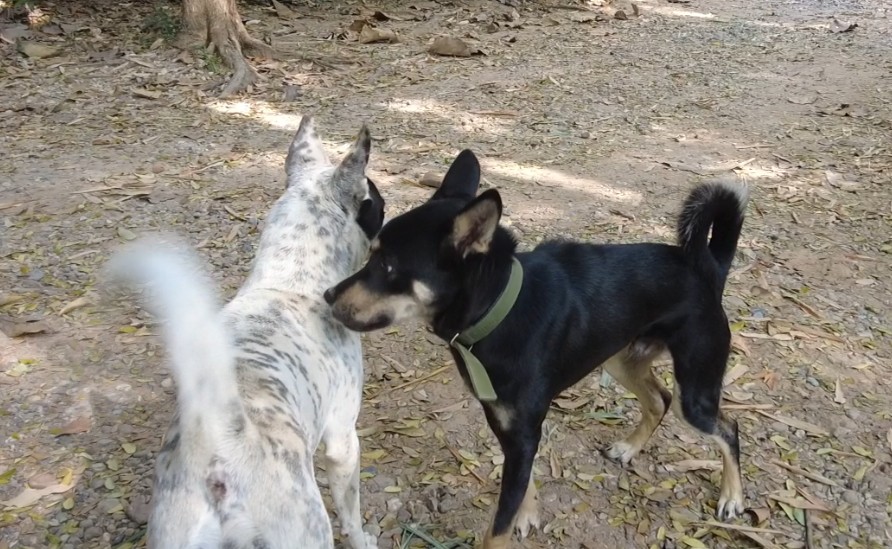
Connection must be re-taught. Gentle peer play, structured human touch, and calm, mirrored energy rebuild what nature intended. Through patience and presence, the lone pup learns what littermates once taught—how to belong.
Can Humans or Adult Dogs Compensate? The Role of Surrogate Socialization
The Question of Compensation
When we understand how profoundly singleton puppies are affected, the obvious question becomes: can anything truly replace those missing sibling interactions? Can humans, adult dogs, or structured interventions provide the same developmental benefits?
The answer is complex: partial compensation is possible, and early intervention can significantly improve outcomes, but complete replacement of the sibling learning experience may not be achievable. This isn’t about defeatism—it’s about realistic expectations that guide appropriate intervention.
Research from related fields offers hope while acknowledging limitations. Peer-mediated interventions for children with autism spectrum disorder show that structured peer interaction, even when not with siblings, can effectively foster socialization and improve socio-communicative skills in natural settings. This suggests the brain retains some plasticity to benefit from peer learning even outside the typical developmental window.
Studies on cognitively engaging physical activity in school-aged children demonstrate that structured activities designed to enhance cognitive and social skills can improve self-control, including social interaction and learning behaviors. The key word here is “structured”—passive exposure isn’t enough; the experiences must provide clear feedback and challenge the relevant skills.
However, research on rhesus macaques provides a cautionary note: infants who received only intermittent peer pairing exhibited problematic behaviors like “floating limb” syndrome and self-biting at significantly higher frequencies than those with consistent peer socialization. This underscores that quantity and consistency of peer interaction matter deeply.
What Humans Can Provide
Human caregivers can offer certain elements of the sibling learning experience, but with important limitations:
What Humans Can Do Well:
- Provide consistent feedback for bite inhibition using yelps and withdrawal of attention
- Structure controlled social experiences with other puppies and adult dogs
- Offer emotional co-regulation and comfort, helping the puppy learn to calm
- Teach impulse control through structured training games
- Create safe challenges that build frustration tolerance
- Model calmness and emotional regulation
What Humans Cannot Fully Replicate:
- The immediate, instinctive canine communication that siblings provide
- The physical roughness and intensity of littermate play that creates necessary sensory input
- The peer-to-peer reciprocity where both parties are learning simultaneously
- The sheer frequency of interactions—siblings interact hundreds of times daily
- The exact sensory experience of dog-to-dog contact, vocalization, and play
- The developmental synchrony of learning alongside same-aged peers
Human feedback for bite inhibition can be effective, but it differs fundamentally from sibling feedback. When humans yelp and withdraw, we’re translating canine language into human behavior. The puppy must learn to generalize from human responses to canine responses, adding an extra cognitive step. Additionally, human skin is more sensitive than a puppy’s fur-covered body, so the feedback thresholds are different.
Most importantly, humans don’t engage in the rough-and-tumble play that provides essential proprioceptive and tactile input. We don’t wrestle with the same physicality, we don’t mouth back, and we don’t create the full sensory experience that sculpts those inhibitory neural pathways.
This doesn’t mean human intervention is worthless—far from it. It means we must be intentional, consistent, and recognize that we’re providing compensatory learning, not replacement learning. The neural pathways will develop differently, and some gaps may always remain.
The Critical Role of Well-Socialized Adult Dogs
Adult dogs can provide something closer to authentic canine learning than humans can, but the appropriateness of the adult dog matters immensely. A well-socialized, patient adult dog who communicates clearly and proportionally can serve as an invaluable teacher for a singleton puppy.
What Good Adult Dog Mentors Provide:
- Authentic canine communication in the full spectrum of body language and vocalization
- Graduated corrections that teach without traumatizing
- The physical experience of dog-to-dog play, though typically gentler than sibling roughhousing
- Modeling of appropriate social behavior
- Real-time feedback in canine language
- Opportunities to practice approach, withdrawal, play initiation, and conflict resolution
The Risks of Poor Mentorship:
However, not all adult dogs make good teachers. An adult dog who is:
- Overly harsh in corrections can traumatize rather than teach
- Too tolerant may not provide enough corrective feedback
- Socially awkward themselves will model poor social skills
- Reactive or anxious will reinforce fearful responses
- Play-averse will deny play opportunities altogether
The ideal adult dog mentor is patient but clear, playful but self-controlled, and experienced with puppies. They correct inappropriate behavior promptly but proportionally, and they re-engage after corrections to teach repair and recovery.
Research suggests that structured, consistent peer socialization is more effective than intermittent exposure. For singleton puppies, this means regular, frequent sessions with appropriate adult dogs—not occasional play dates, but daily or near-daily interactions that approximate the frequency of sibling contact.
Structured Playgroups: The Gold Standard for Intervention
The most promising approach for singleton puppies combines multiple elements: regular structured playgroups with age-appropriate puppies, supervised interactions with patient adult dogs, and intentional human guidance.
Components of Effective Playgroups:
Age-Appropriate Peers: Puppies of similar age (within 2-4 weeks) who are in the same developmental stage. This ensures reciprocal learning and appropriate physical intensity.
Small Group Size: Groups of 3-5 puppies allow for varied social experiences without overwhelming individual puppies.
Supervised Free Play: While intervention is sometimes necessary, much of the learning happens through unstructured play where puppies work things out themselves.
Time-Outs for Escalation: When play becomes too intense or one puppy is persistently inappropriate, brief separations teach that overarousal leads to loss of play—the same lesson siblings provide.
Multiple Weekly Sessions: Frequency matters. Two to three sessions weekly, minimum, during the critical 4-12 week period.
Consistency of Playmates: While some variety is good, consistent playgroup members allow for deeper social learning and relationship development.
The beauty of well-run playgroups is that they provide real canine feedback loops. Puppies learn bite inhibition from each other’s yelps, practice reading body language, experience manageable frustrations, and develop the social skills that should have emerged in the litter.
Through the Invisible Leash concept, we understand that these playgroups teach puppies to regulate their behavior through awareness of how their actions affect others—the foundation of social harmony. The “leash” isn’t physical control but the internal recognition that staying connected requires behavioral adjustment. 🐾
Welfare Applications: What Breeders and Rescues Can Do
Identifying At-Risk Puppies Early
The first step in addressing the singleton puppy challenge is recognizing which puppies are at risk. This includes:
Single Puppies Born Alone: The only puppy in the litter from birth, missing all sibling interaction.
Orphaned Puppies: Raised without mother or siblings, often bottle-fed by humans.
Early-Separated Puppies: Removed from the litter before 6-7 weeks due to health issues, rescue situations, or other circumstances.
Puppies from Small Litters: Litters of only two puppies provide some social learning but far less than larger litters. If one puppy is significantly less active or interactive, the other may experience partial social deprivation.
Puppies with Developmental Delays: Puppies who don’t engage in normal play with siblings due to health issues, neurological problems, or extreme temperament differences.
Early identification allows for immediate intervention during the most critical developmental windows. Breeders should monitor litter dynamics and flag puppies who aren’t receiving adequate peer interaction, even in multi-puppy litters.
Structured Peer Interaction Before Eight Weeks
The traditional practice of keeping puppies with their litter until eight weeks is based on solid developmental science, but for singleton puppies, waiting until eight weeks to begin peer socialization means missing the most critical window.
Research on critical periods consistently shows that early life experiences have long-lasting effects on brain development and behavior. The concept that early intervention during sensitive developmental windows can have significant and lasting impacts applies across species and developmental domains.
Best Practices for Singleton Socialization:
Begin by Week Three: As soon as puppies are mobile and beginning to play, introduce carefully supervised peer interaction if possible.
Increase Gradually: Start with brief sessions (10-15 minutes) and increase duration as puppies develop.
Prioritize Safety: All puppies should be healthy, age-appropriate, and from known sources to prevent disease transmission.
Multiple Weekly Sessions: Aim for 4-5 peer interaction sessions per week during weeks 3-8.
Variety of Playmates: Exposure to multiple puppies helps generalize social learning rather than learning to interact with only one individual.
Include Older, Gentle Dogs: If age-matched peers aren’t available, carefully selected, puppy-savvy adult dogs can provide valuable learning.
The goal is to approximate the sibling experience as closely as possible during the window when the brain is most plastic and receptive to social learning. While this requires significant effort from breeders or foster families, the investment prevents problems that are much more difficult to address later.
Early Bite Inhibition Training with Human Feedback
While human feedback cannot fully replace sibling learning, structured bite inhibition training from humans can provide meaningful developmental support, especially when combined with peer interaction.
Effective Human-Mediated Bite Inhibition:
The Yelp and Redirect:
- When the puppy mouths too hard, give a high-pitched yelp similar to a puppy’s pain cry
- Immediately withdraw attention—turn away, stand up, leave the room briefly if necessary
- Wait 10-30 seconds for the puppy to calm
- Re-engage with gentle, calm interaction
- If mouthing resumes appropriately (gentle), reward with continued play
- If mouthing is again too hard, repeat the cycle
The “Ouch” Protocol:
- For slightly older puppies who understand words, use “Ouch!” as a marker for too-hard contact
- Follow the same withdrawal pattern
- Consistency across all family members is crucial—everyone must respond the same way
Appropriate Play Outlets:
- Provide plenty of appropriate chewing and tugging toys
- Engage in structured tug games that teach “take it” and “drop it”
- Reward gentle mouthing during play, only correcting painful contact
- Never encourage rough play that could reinforce hard biting
What NOT to Do:
- Never hit, slap, or physically punish for mouthing—this creates fear and can increase aggression
- Avoid alpha rolls, scruff shakes, or other intimidation techniques
- Don’t spray water, shake cans, or use other aversive corrections for normal puppy mouthing
- Never allow any family member to encourage biting, even in play
The key principle is clear, immediate, consistent feedback that mimics the consequence structure of sibling interaction: too-hard bite = loss of play. The puppy learns to modulate pressure to maintain the social reward.
Documentation and Communication to New Owners
One of the most important welfare interventions is ensuring that new owners understand their singleton puppy’s developmental history and potential challenges. This allows owners to:
- Set realistic expectations for behavior
- Implement appropriate management and training
- Seek professional help early if problems emerge
- Understand that behavioral issues stem from developmental gaps, not defective temperament
Information to Provide:
A brief developmental history noting the singleton status, what interventions were attempted, observations about bite inhibition and play style, any concerning behaviors noted, and recommendations for continued socialization. Referrals to qualified trainers experienced with singleton puppies, or to puppy playgroups and socialization classes. Educational resources about bite inhibition, impulse control training, and stress management. A follow-up plan where breeders or rescues check in at key developmental milestones.
Transparency about a puppy’s singleton status shouldn’t be viewed as a liability disclosure but as responsible breeding practice that empowers owners to provide optimal support. Many singleton puppies develop into wonderful companions with appropriate intervention—but only if everyone involved understands the unique challenges and addresses them proactively. 🧡
Theoretical Frameworks: Understanding the Science Behind the Challenge
Critical Periods and Sensitive Windows
The concept of critical periods is fundamental to understanding why the absence of sibling interaction has such profound, lasting effects. A critical period is a limited time window during development when the brain is optimally primed for certain types of learning. During these windows, experiences shape neural architecture with an efficiency and permanence that’s not possible later in life.
For social learning in puppies, the critical window spans roughly from three to sixteen weeks, with peak sensitivity between four and eight weeks—precisely the time when littermate interaction is most intense. During this period:
- The brain is producing neurons at maximum rates
- Synaptic connections are forming rapidly based on experience
- Neural pruning eliminates connections that aren’t being used
- Brain regions are establishing their functional organization
- Neurotransmitter systems are calibrating based on environmental input
The experiential input during this window doesn’t just influence behavior—it literally determines which neural pathways strengthen and which disappear. The brain is asking, “What kind of world am I in, and what skills will I need?” Experiences provide the answer, and the brain builds accordingly.
When sibling interaction is present, the brain receives thousands of data points: “You’ll need precise motor control for social interaction. You’ll need to read subtle signals. You’ll need impulse inhibition to maintain relationships. You’ll need stress resilience to handle conflicts.” The brain builds robust pathways for these capacities.
When sibling interaction is absent, the brain receives different data: “Social feedback is sparse and unpredictable. Motor control doesn’t need to be as precise. Social signals are unclear. Stress responses need to be strong because you’re managing challenges alone.” The brain builds accordingly—and the result is a fundamentally different neural architecture.
The concept of critical periods explains why later intervention, while helpful, cannot fully compensate. Once the window closes, the brain’s plasticity decreases dramatically. New learning is still possible, but it’s slower, requires more repetitions, and builds on top of whatever foundation was established during the critical period—for better or worse.
Feedback Learning and Calibration
Feedback learning theory explains the mechanism through which sibling interaction shapes behavior. Unlike instructional learning (where someone teaches you what to do) or observational learning (where you watch and imitate), feedback learning calibrates behavior through direct experience of consequences.
The feedback loop has several essential components:
Action: The puppy performs a behavior (bites during play).
Consequence: An immediate, relevant outcome occurs (sibling yelps and withdraws).
Sensory Registration: The puppy perceives and processes the consequence through multiple sensory channels (auditory yelp, visual withdrawal, loss of tactile contact, emotional response).
Neural Association: The brain forms connections between the action, the sensory context, and the consequence.
Behavioral Adjustment: The puppy modifies the behavior based on the association.
Reinforcement: The modified behavior produces different consequences (gentler bite = continued play), strengthening the new pattern.
The power of this learning is in its immediacy, consistency, and relevance. The consequence comes instantly from the social partner, in the context of an activity the puppy values, using communication the puppy’s brain is primed to understand. This creates strong, lasting neural associations.
Singleton puppies miss thousands of these feedback loops during the critical period. Their behavior doesn’t get calibrated through peer feedback, so they never develop the precise motor control and social sensitivity that emerges from this process.
Human attempts at feedback learning face challenges: delayed timing (humans are slower to respond), inconsistent responses (different family members respond differently), unclear communication (human signals don’t map perfectly onto canine understanding), and different reward value (social interaction with humans doesn’t always carry the same weight as peer play).
This doesn’t mean feedback learning from humans is worthless, but it explains why it’s less effective at building the same neural architecture that sibling interaction creates.
Neuroplasticity and Experience-Dependent Development
Neuroplasticity—the brain’s ability to change its structure and function in response to experience—is the mechanism underlying all developmental learning. During early life, neuroplasticity is at its peak, allowing experiences to sculpt neural circuitry with remarkable efficiency.
Experience-dependent development means that the brain doesn’t unfold according to a predetermined genetic program alone. Instead, genes provide a framework, and experience determines which possibilities within that framework actually manifest.
Think of it like a garden: genetics provides the seeds, but experience determines which seeds sprout, which plants thrive, which get pruned back, and how the final garden looks. Two puppies with identical genetics will develop different brains if one is raised with siblings and one is raised alone—because their experiences differ.
The key processes in experience-dependent neuroplasticity include:
Synaptogenesis: Formation of new connections between neurons, driven by experience.
Synaptic Strengthening: Frequently used connections become more efficient through long-term potentiation.
Synaptic Pruning: Unused connections are eliminated to increase neural efficiency.
Myelination: Frequently used pathways develop myelin sheaths that speed signal transmission.
Neurochemical Calibration: Neurotransmitter systems adjust their sensitivity and responsiveness based on environmental demands.
For singleton puppies, the absence of peer interaction means certain neural pathways never form robustly or get pruned away as “unnecessary.” The circuits for precise bite inhibition, nuanced social communication, and peer-based co-regulation don’t receive the experiential input needed to strengthen and persist.
Later in life, neuroplasticity continues but at reduced levels. New learning is possible, but it’s building on top of the foundation established during critical periods. A singleton-raised dog can learn bite inhibition as an adolescent or adult, but they’re essentially building a secondary pathway rather than the primary pathway that should have formed early. It works, but it’s never quite as automatic or robust.
The Soul Recall framework recognizes this embodied memory—the way early experiences create templates that the nervous system refers to throughout life. The singleton puppy’s nervous system “recalls” a world without peer feedback, where social interactions were confusing and consequences were unclear. This template influences how they perceive and respond to social situations forever, even as they learn new skills. 🧠
Intervention Strategies: Practical Support for Singleton-Raised Dogs
Assessment: Recognizing Singleton Syndrome in Adolescent and Adult Dogs
If you’ve adopted or acquired a dog and suspect they may have been singleton-raised, certain behavioral patterns can confirm your suspicion. While no single behavior is definitive, a constellation of challenges suggests developmental social deprivation:
Social Interaction Patterns:
- Poor bite inhibition with humans, dogs, or both
- Difficulty reading other dogs’ body language and communication
- Inappropriate persistence in play even when playmate is clearly done
- Escalation in response to corrections from other dogs
- Either excessive roughness or extreme fearfulness in dog-dog interaction
Impulse Control Issues:
- Difficulty waiting, delaying gratification, or tolerating frustration
- Explosive reactions rather than graduated responses
- Inability to disengage from exciting stimuli
- Poor performance on impulse control exercises despite extensive training
Arousal and Regulation:
- Chronic high arousal or hypervigilance
- Difficulty settling or calming even in safe, familiar environments
- Rapid escalation from calm to highly aroused
- Prolonged recovery time after exciting or stressful events
Stress Response:
- Overreactions to normal environmental stressors
- Generalized anxiety not tied to specific triggers
- Poor stress resilience—minor challenges create major reactions
If your dog shows multiple signs from these categories, it’s worth considering that early social deprivation may be contributing, even if you don’t know their complete history. This understanding shifts your training approach from “fixing bad behavior” to “supporting developmental needs.”
Training Approaches for Remedial Bite Inhibition
For adolescent and adult singleton-raised dogs with poor bite inhibition, training must be patient, consistent, and multi-layered. You’re not just teaching a skill—you’re building neural pathways that should have formed years ago.
The Yelp-and-Freeze Protocol:
When your dog mouths or bites too hard:
- Give an immediate, high-pitched yelp
- Freeze all movement and become completely still
- Avoid eye contact and turn your head away
- Count slowly to 10
- If the dog releases or backs off, slowly resume interaction with calm praise
- If the dog escalates or continues, leave the room for 30 seconds
- Return and offer an appropriate toy as an alternative
Progressive Desensitization to Touch:
Many singleton dogs struggle with gentleness because they never calibrated their physical interaction:
- Practice handling exercises where you touch the dog gently
- Reward calm acceptance of touch
- Gradually increase the duration and intensity of handling
- If the dog mouths in response to touch, use the yelp-and-freeze protocol
- Build the association: gentle touch from me = gentle response from you
Structured Tug Games:
Tug can teach excellent mouth control if done correctly:
- Use a specific tug toy (not regular toys)
- Teach a “take it” cue to start
- Teach a “drop it” or “give” cue to end
- If teeth touch your hand during tug, immediately drop the toy and use yelp-and-freeze
- Resume only when the dog is calm
- Over time, their motor control improves as they learn to keep their mouth precisely on the toy
Management is Essential:
While training, prevent situations where hard biting occurs:
- Avoid rough play that encourages mouthing
- Redirect to appropriate toys before arousal gets too high
- Use time-outs proactively when you see escalating arousal
- Protect vulnerable people (children, elderly) until bite inhibition improves
Remember, you’re working against incomplete neurodevelopment. Progress will be slower than teaching a skill to a dog with normal developmental history. Patience is not just a virtue—it’s a necessity.
Controlled Socialization with Well-Chosen Dog Partners
For singleton-raised dogs who struggle socially with other dogs, carefully managed social experiences can provide remedial learning—but the wrong social experiences can worsen the problem.
Criteria for Appropriate Dog Partners:
Look for dogs who are:
- Patient and tolerant but not completely non-responsive
- Clear communicators who give graduated warnings
- Willing to re-engage after corrections
- Appropriate in their own play style and social skills
- Similar in size and energy level, or smaller/calmer if your dog is overly rough
Avoid dogs who are:
- Overly reactive or harsh in corrections
- Aggressive or bullying
- So tolerant they provide no feedback at all
- Much more intense or rough than your dog can handle
Structured Socialization Sessions:
- Start with calm, parallel activities rather than direct interaction
- Allow brief greetings followed by separation if either dog seems uncomfortable
- Supervise all play closely and interrupt before escalation
- End sessions while both dogs are still enjoying themselves
- Keep sessions short initially (10-15 minutes) and gradually increase
- Have multiple sessions weekly for consistency
Reading and Responding to Communication:
Your role is to help your dog learn what they missed in puppyhood:
- Point out when the other dog is giving warning signals
- Interrupt your dog when they’re not respecting boundaries
- Praise and reward your dog for appropriate responses to communication
- Advocate for your dog if the other dog is too intense
Think of yourself as a translator and mediator. Through the NeuroBond approach, you’re helping your dog attune to subtle communications they never learned to perceive, gradually building the social literacy that should have developed through sibling interaction. 🐾
Environmental Management and Enrichment
Supporting a singleton-raised dog requires more than training—it requires creating an environment that compensates for their developmental deficits and supports nervous system regulation.
Arousal Management:
These dogs struggle with self-regulation, so environment must support regulation:
- Create quiet spaces for enforced rest and calming
- Use crate training or gated areas to prevent constant stimulation
- Implement structured daily routines that alternate activity and rest
- Minimize chaotic household energy that escalates arousal
- Use calming music, pheromone diffusers, or other environmental supports
Impulse Control Building:
Daily life should include numerous micro-opportunities for impulse control practice:
- Wait at doors before going through
- Sit before receiving meals
- Stay while you prepare the leash for walks
- Leave-it exercises with treats and toys
- Calm greetings with people
Each of these moments strengthens prefrontal cortex pathways that are underdeveloped in singleton dogs. The cumulative effect of hundreds of small successes builds capacity.
Cognitive Enrichment:
Engaging the thinking brain helps develop executive function:
- Food puzzle toys that require problem-solving
- Scent work and nose games
- Training new tricks and behaviors
- Interactive play that includes thinking (finding hidden toys, etc.)
Physical Exercise with Cognitive Engagement:
Research shows that cognitively engaging physical activity is particularly effective for improving self-control. Combine movement with thinking:
- Walking routes with frequent direction changes and speed variations
- Agility or parkour-style activities that require focus
- Fetch games where the dog must wait, watch, and respond to cues
- Group activities that include both exercise and social challenge
Social Co-Regulation:
Your calm presence can help regulate a dysregulated nervous system:
- Practice simply being together calmly—no demands, just presence
- Use massage, gentle touch, and slow, rhythmic movements
- Breathe slowly and deeply when your dog is aroused—they’ll often begin to synchronize
- Create rituals of connection that support nervous system calming
This is the Invisible Leash in action—not controlling through force, but guiding through energy, presence, and attunement. Your regulated nervous system becomes a template that helps scaffold your dog’s developing capacity for self-regulation. 💙
When to Seek Professional Support
Some singleton-raised dogs develop challenges severe enough to require professional intervention. Don’t wait until problems become entrenched—early professional support is both more effective and more humane.
Seek professional help if your dog shows:
- Aggression that is escalating or has caused injury
- Fear or anxiety that significantly impairs quality of life
- Compulsive behaviors (tail chasing, shadow chasing, spinning, self-mutilation)
- Reactivity toward dogs or people that makes normal life difficult
- Inability to calm or settle, even with management
- Severe separation anxiety
- Resource guarding that poses safety risks
Types of Professionals to Consider:
Veterinary Behaviorist: A veterinarian with specialized training in behavior, who can address both medical and behavioral aspects, prescribe medication if needed, and create comprehensive treatment plans.
Certified Applied Animal Behaviorist: PhD or master’s level professional with extensive training in behavior modification, typically working with complex cases.
Certified Professional Dog Trainer (CPDT) or Certified Behavior Consultant Canine (CBCC): Trainers with certification demonstrating competency in training and behavior, often skilled with fearful or reactive dogs.
Fear Free or Low-Stress Handling Certified Professionals: Trainers and veterinarians specifically trained in minimizing fear and stress during training and care.
Medication Considerations:
For dogs with severe anxiety, hyperarousal, or impulsivity stemming from singleton-raised status, medication can be a humane and necessary intervention. Appropriate medications can:
- Support serotonergic function, improving impulse control
- Enhance GABAergic function, improving calming capacity
- Reduce baseline anxiety, making learning possible
- Improve prefrontal cortex function, supporting executive control
Medication is not a failure or a last resort—it’s a tool that addresses neurochemical deficits created by developmental deprivation. Many singleton-raised dogs benefit from short-term medication during intensive behavior modification, or longer-term medication if neurological deficits are significant.
The goal of all intervention—training, management, environmental support, and medication—is to give the dog the best possible quality of life by supporting capacities that didn’t develop optimally. This is compassionate, science-based care that honors the reality of how early experiences shape the brain. 🧡
Conclusion: Building Resilience Despite Missing Pieces
The story of singleton-raised puppies is ultimately a story about the profound importance of early relationships in shaping who we become. These puppies miss thousands of tiny moments—a corrective nip, a play bow invitation, a sibling’s warm body during sleep, the negotiation over a toy—and those missing moments create gaps in neural development that can influence behavior throughout life.
Yet understanding this isn’t cause for despair. It’s a call to informed action. When we recognize that certain behavioral challenges stem from developmental deprivation rather than temperament flaws or training failures, we can respond with appropriate intervention instead of frustration. We can see the dog struggling with impulse control as having underdeveloped prefrontal pathways that need support, not as being “bad” or “stubborn.
For breeders and rescuers, this knowledge emphasizes the critical importance of structured peer interaction for singleton puppies well before the traditional eight-week mark. The investment in organizing playgroups, finding surrogate littermates, and creating rich social experiences during those crucial early weeks prevents problems that are much harder to address later.
For owners of singleton-raised dogs, understanding your dog’s developmental history transforms your relationship. You can meet them where they are, supporting their nervous system while building skills, rather than expecting capacities they never had the opportunity to develop. You can practice patience rooted in understanding rather than patience born of resignation.
The NeuroBond framework reminds us that connection is always possible, even when early experiences create challenges. Building that bond may require more intention, more support, and more patience—but it’s deeply achievable. The Invisible Leash teaches us that true guidance comes through attunement and energy, not force. When we help a singleton-raised dog learn self-regulation through our own regulated presence, we’re providing the co-regulation they missed in those early weeks.
Through Soul Recall, we honor that these dogs carry the memory of early isolation in their nervous system. That memory may never completely fade, but new experiences can layer over it, creating templates of safety, connection, and successful coping that gradually reshape how the dog moves through the world.
Every singleton-raised puppy deserves the opportunity to develop into a confident, socially competent, emotionally regulated dog. With early intervention, informed training, environmental support, and when necessary professional help, we can build resilience despite missing developmental pieces. The foundation may have gaps, but with skilled, compassionate support, we can construct a life of connection and joy that honors both the dog’s challenges and their remarkable capacity for growth.
That balance between acknowledging limitations while supporting possibilities—that’s the essence of Zoeta Dogsoul. It’s recognizing that development matters deeply, while also trusting in the healing power of relationship, the plasticity that remains even in adult brains, and the profound resilience of dogs who, despite missing crucial early experiences, still reach toward connection with hope and trust. 🧡