
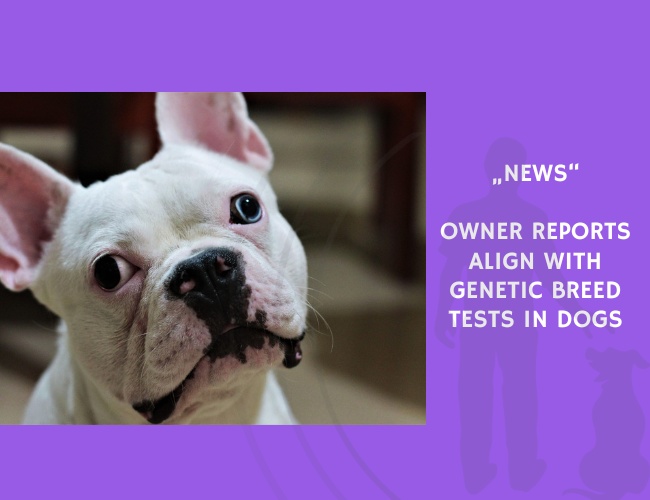
Dog breed identity plays a central role in behavioral expectations, veterinary care, breeding practices, and even social perceptions of dogs. Despite its widespread use, little research has investigated how accurately owners report their dog’s breed compared to genetic tests. Sexton et al. (2025), using data from the Dog Aging Project, addressed this gap by examining concordance between owner reports and genetic analysis across a large cohort of 5,673 dogs.
The findings revealed an impressive 80% agreement between owner-reported breed and genetic results. Discrepancies typically occurred in cases where a reported breed was absent from the genetic reference panel, or when genetic analysis identified a mix of closely related breeds where the owner had reported a single breed. Only 6% of samples showed disagreement, often due to owners applying stricter definitions of single-breed identity (e.g., insisting on 100% genetic purity).
These results have significant implications. For researchers, the high accuracy of owner reports supports the continued use of breed as a covariate in population-level studies, where controlling for breed-related traits and health predispositions is essential. For veterinarians, it reinforces the reliability of owner-reported breed information in guiding clinical decisions. At the same time, the findings highlight the importance of genetic testing in refining breed identification, especially for mixed-breed dogs or cases with uncertain ancestry.
By showing that most owners are well aware of their dogs’ breed ancestry, the study also strengthens confidence in public reporting and its role in managing life history outcomes, welfare planning, and research on breed-related behaviors and health. Ultimately, the concordance between human perception and genetic data helps bridge the gap between science and owner experience in the human–dog relationship.
Source: Sexton, C., Reichel, C., Keyser, A., Dunbar, M., Akey, J. M., Benton, B., Borenstein, E., Castelhano, M., Coleman, A. E., Creevy, K., Dunbar, M., Fajt, V. R., Fitzpatrick, A. L., Hoffman, J. M., Jonlin, E. C., Kaeberlein, M., Karlsson, E. K., Ma, J., … Ruple, A. (2025). Comparing owner reported and genetic breed identification reveals high concordance in a large cohort from the Dog Aging Project. Scientific Reports, 15. Published August 20, 2025.










