
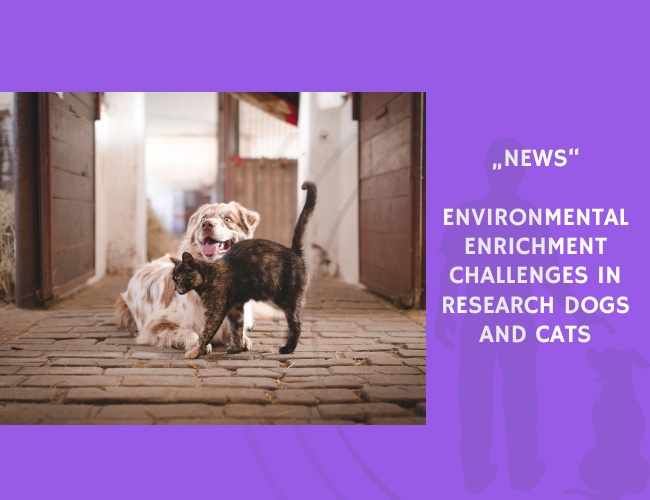
Environmental enrichment is central to ensuring the welfare of animals housed in research facilities, kennels, and catteries. Desforges (2021) examined the barriers to enrichment and proposed strategies to enhance the quality of life for dogs and cats in these structured environments.
The study highlights that animals in these settings are heavily reliant on caregivers to create enriching conditions that offer physical, social, and environmental stimulation. However, several obstacles limit implementation. These include budget constraints for enrichment equipment and training, limited space, strict study controls, and a lack of time or opportunity for improvements. Furthermore, variations in regional legislation regarding animal housing and husbandry add another layer of complexity.
Despite these challenges, the study underscores that small, tailored adjustments can make a substantial difference. Attention to each animal’s individual needs and preferences, combined with practical, low-cost solutions, can help optimize enrichment. Examples include rotating toys, varying feeding methods, and adjusting housing structures to allow more behavioural choice and social interaction.
Desforges emphasizes that sharing knowledge and best practices is vital to promoting a broader culture of care. The research presented strategies developed at the Waltham Petcare Science Institute in the UK, showcasing how even within regulated, resource-limited environments, enrichment can be refined to meaningfully improve welfare.
Source: Desforges, E. (2021). Challenges and Solutions Surrounding Environmental Enrichment for Dogs and Cats in a Scientific Environment. Animals, 11. Published October 1, 2021.










