
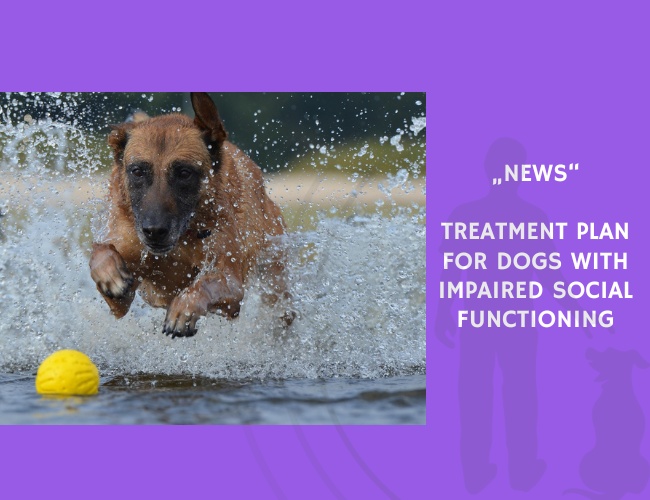
Some dogs perceive ordinary human actions—like reaching out, standing up, or moving quickly—as threatening. This misinterpretation of benign behaviours can cause stress and impair the dog–owner relationship. Monteny and Moons (2020) addressed this challenge by developing a treatment plan for dogs with impaired social functioning.
The programme has three key components. First, owners are taught to better understand dog body language and how their own actions may be perceived by the animal. Second, everyday life is managed to reduce stress by avoiding stressful situations and implementing general calming strategies. Third, targeted behaviour modification through training is introduced, using non-threatening, predictable exercises that give the dog more control. Techniques include safety cues, gradual desensitization, and enjoyable cooperative activities with the owner.
The authors also presented five case studies of dogs with impaired social functioning. Outcomes showed that the programme improved dogs’ ability to relax around their owners and increased positive interactions. Adjustments to the plan were made to suit individual dogs’ needs, underscoring the importance of personalized approaches.
This case report highlights how a structured blend of owner education, stress management, and behaviour training can help restore social balance and trust between dogs and their caregivers.
Source: Monteny, J., & Moons, C. (2020). A Treatment Plan for Dogs (Canis familiaris) That Show Impaired Social Functioning towards Their Owners. Animals, 10. Published January 1, 2020.










