
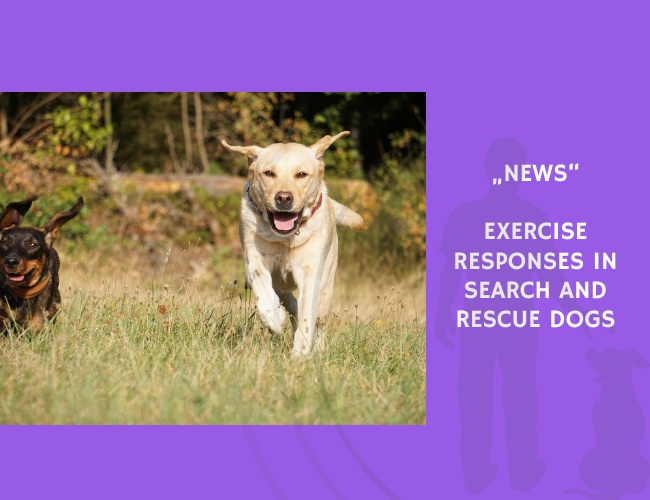
Exercise places unique demands on working dogs, especially those trained for search and rescue (SAR) tasks. In this study, Rovira, Muñoz, and Benito (2018) evaluated nine trained SAR dogs during a 20-minute training session followed by recovery monitoring.
During exercise, heart rate, respiratory rate, and rectal temperature rose significantly, with values often exceeding the typical reference range for healthy dogs. Heart rate remained elevated even after 30 minutes of recovery, while respiratory rate peaked at 5 minutes post-exercise before stabilizing.
Blood analysis showed increases in white blood cells (WBC), creatine kinase (CK), lactate dehydrogenase (LDH), lactate, and insulin, which gradually returned to baseline during recovery. Electrolyte shifts included temporary decreases in sodium and chloride. Interestingly, cortisol levels dropped during and after exercise, suggesting reduced stress rather than heightened strain.
Importantly, no clinical signs of exhaustion, dehydration, or muscle disorder were observed. The findings confirm that well-conditioned SAR dogs undergo pronounced but normal physiological adaptations during work, and recovery occurs without adverse effects.
This research provides a valuable reference for distinguishing between expected exercise-induced changes and abnormal patterns in injured or ill working dogs. It also highlights the resilience of SAR dogs when properly trained and conditioned.
Source: Rovira, S., Muñoz, A., & Benito, M. (2018). Effect of exercise on physiological, blood and endocrine parameters in search and rescue-trained dogs. Veterinarni Medicina, 53, 333–346. Published February 11, 2018.










