
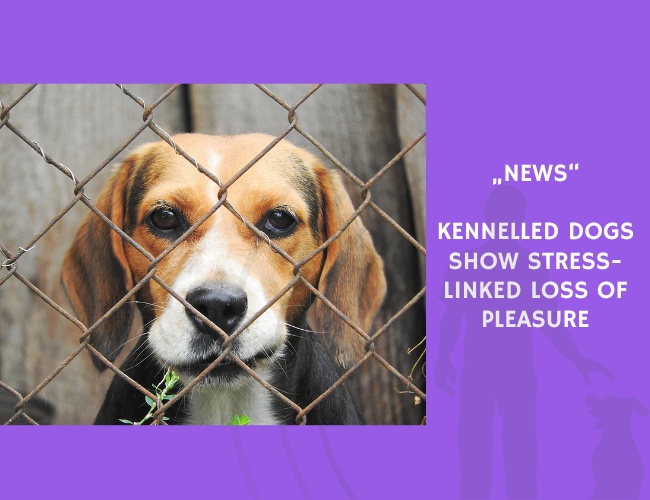
Chronic stress in kennelled dogs, caused by long-term restrictions on space and social interaction, can negatively impact emotional well-being. One consequence may be anhedonia—a diminished ability to feel pleasure from rewarding experiences, including food. To explore this, Luna et al. (2020) studied 14 Beagle dogs kept in kennels, testing their preferences for diluted sucrose (sweet) and monosodium glutamate (umami) solutions.
Before testing, dogs were categorized into two coping styles using a human approach test: close dogs (CD), considered proactive for approaching an unfamiliar person, and distant dogs (DD), considered reactive for avoiding approach. The results revealed that DD consumed less sucrose and MSG at lower concentrations compared with CD, suggesting reduced sensitivity to palatable tastes. At higher MSG concentrations, however, DD increased consumption, indicating that stronger flavors could still stimulate intake.
Importantly, DD did not show a preference for sucrose or MSG solutions over water at dilute levels, a finding consistent with depressive-like behaviors such as anhedonia. In contrast, CD dogs maintained a higher intake, reflecting better resilience to stress-related reduction in hedonic responses.
These results highlight how coping style and stress exposure interact to influence hedonic perception in dogs. For kennelled dogs, improving environmental enrichment, social contact, and stress reduction strategies may be critical for safeguarding their emotional and physical welfare.
Source: Luna, D., Carrasco, C., Álvarez, D., González, C., Egaña, J. I., & Figueroa, J. (2020). Exploring Anhedonia in Kennelled Dogs: Could Coping Styles Affect Hedonic Preferences for Sweet and Umami Flavours? Animals, 10.










