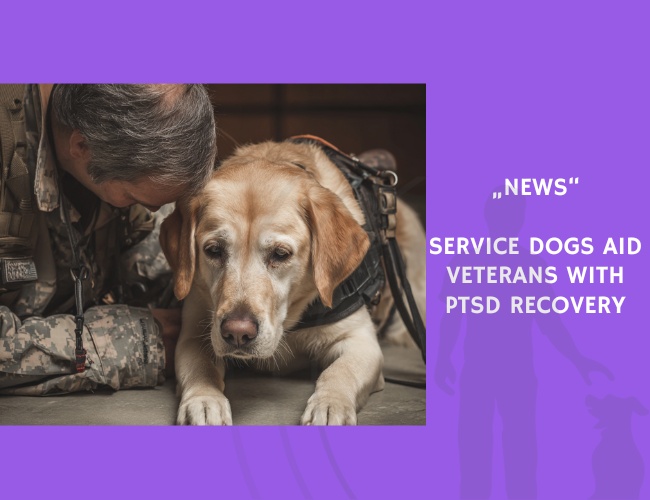
Posttraumatic stress disorder (PTSD) is a severe mental health challenge faced by many veterans, often disrupting sleep, social relationships, and daily life. To investigate whether service dogs can help, Yarborough et al. (2018) interviewed 41 veterans with PTSD who lived with service dogs, along with 8 of their caregivers, while also observing training sessions.
Veterans reported that their dogs played an active role in reducing hypervigilance by creating physical boundaries and providing alerts in stressful situations. Service dogs also disrupted nightmares, helping improve both the quality and duration of sleep. Many participants described their dogs as redirecting attention away from intrusive trauma-related thoughts, contributing to improved mental stability.
Beyond symptom reduction, service dogs supported emotional connection, encouraged community participation, and increased physical activity. Some veterans even reported reduced medication use and decreased suicidal impulses. However, challenges included the demands of ongoing training, adjustment periods, and the delayed onset of benefits, which could be stressful for both veterans and caregivers.
The findings suggest that service dogs may be a viable option for veterans who are reluctant to engage with or persist in traditional therapies. While further research is needed to measure long-term outcomes, the study highlights how service dogs provide both emotional support and practical coping strategies that foster recovery and meaningful engagement with life.
Source: Yarborough, B., Stumbo, S., Yarborough, M. T., Owen‐Smith, A., & Green, C. A. (2018). Benefits and Challenges of Using Service Dogs for Veterans With Posttraumatic Stress Disorder. Psychiatric Rehabilitation Journal, 41, 118–124.