
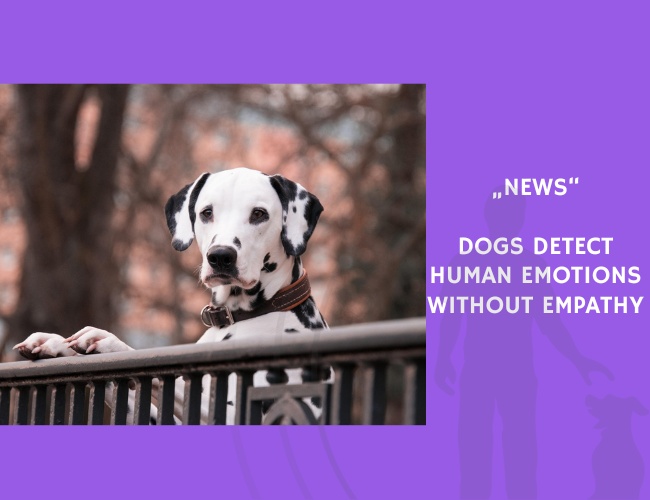
Dogs’ ability to perceive human emotional expressions has long intrigued researchers. Past studies often relied on staged stimuli such as photographs, sounds, or simulated expressions. Juliane Bräuer and colleagues (2024) took a more naturalistic approach, testing how dogs responded to their owners’ genuine emotional states of happiness, sadness, and neutrality.
Owners were asked to watch emotional video clips to induce real affective states, and also to train their dogs on a new task while experiencing these emotions. The researchers then analyzed canine responses, including gaze behavior, physical interactions, and compliance with commands.
Results showed that dogs gazed and jumped less when owners were sad, and their compliance with the “sit” command decreased in this emotional context. Conversely, when owners were happy, dogs performed better in the trained task, suggesting that positive emotional states enhance dog–human cooperation.
These findings indicate that dogs differentiate authentic human emotions and adjust their behavior accordingly. However, the researchers caution that this sensitivity does not necessarily equate to empathy. Instead, dogs may be adapting behaviorally to cues that optimize their interactions with humans, a skill shaped by domestication and coevolution.
This study deepens our understanding of the adaptive value of emotion recognition in dogs, emphasizing how it may improve cooperation and social bonding without requiring true empathic experience.
Source: Bräuer, J., Eichentopf, D., Gebele, N., Jandke, L., Mann, V., Schulte, K., & Bender, Y. (2024). Dogs distinguish authentic human emotions without being empathic. Animal Cognition, 27.










