
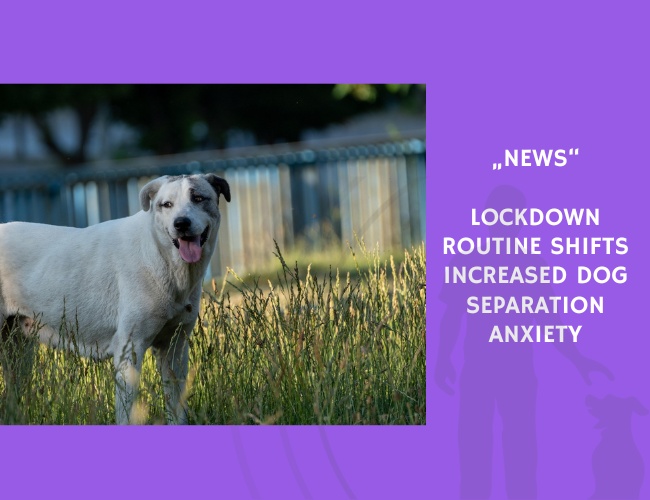
Separation-related behaviors (SRBs) such as barking, howling, pacing, toileting, or destructive acts occur when dogs are left without human company. These behaviors indicate a negative emotional state for the dog and can create significant challenges for owners. With the onset of the COVID-19 pandemic, many dogs in the United Kingdom experienced dramatic changes in daily routines, especially reductions in time left alone.
Naomi D. Harvey and colleagues (2022) surveyed UK dog owners twice in 2020—during the spring lockdown and again in October when restrictions had eased. Owners were asked about their dogs’ behavior before the pandemic, during lockdown, and afterward. The study revealed that while overall SRB prevalence declined from 22.1% to 17.2% during this period, nearly 1 in 10 dogs (9.9%) developed new SRBs by October.
The dogs at greatest risk were those whose time left alone decreased most drastically during lockdown. This suggests that sudden changes in daily separation can destabilize a dog’s coping mechanisms, leading to long-term behavioral consequences once routines shift back to normal.
Interestingly, half of the dogs with pre-existing SRBs no longer displayed them by October 2020, showing that SRB patterns can fluctuate significantly over time. These findings highlight the complex relationship between owner routines and canine emotional wellbeing, underscoring the importance of gradual adjustments when reintroducing alone time after prolonged togetherness.
The authors stress that understanding the etiology of SRBs requires considering changes in human lifestyle. They recommend that owners and practitioners proactively manage transitions in daily routines to minimize anxiety-related behaviors in dogs.
Source: Harvey, N. D., Christley, R., Giragosian, K., Mead, R., Murray, J., Samet, L., Upjohn, M., & Casey, R. (2022). Impact of Changes in Time Left Alone on Separation-Related Behaviour in UK Pet Dogs. Animals, 12.










