
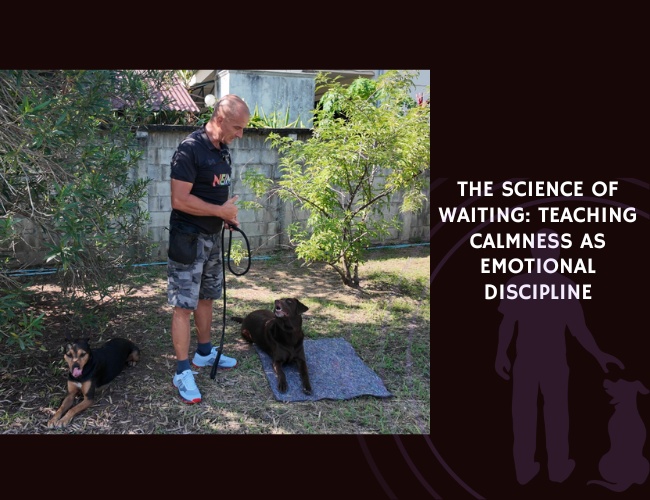
Introduction: Understanding Your Dog’s Emotional World
Have you ever watched your furry friend struggle to contain their excitement when you reach for the leash, or noticed how some dogs seem naturally composed while others vibrate with barely contained energy? The ability to wait calmly isn’t just about obedience—it’s a sophisticated form of emotional discipline that shapes every aspect of your dog’s life, from their stress levels to their relationship with you.
Teaching calmness through waiting represents one of the most profound gifts we can offer our canine companions. This practice engages complex neurological processes similar to executive function in humans, activating regions of the brain responsible for impulse control, decision-making, and emotional regulation. When we teach our dogs to wait, we’re not simply asking them to freeze in place—we’re helping them develop the cognitive tools needed to navigate an often overwhelming world with confidence and composure.
The journey toward calmness begins with understanding that every dog, regardless of breed or background, possesses the capacity for emotional self-regulation. What varies is how we unlock this potential, working with each dog’s unique temperament, learning style, and neurobiological makeup to create lasting behavioral change. 🧠
Character & Behavior: The Cognitive Foundations of Waiting
Understanding Impulse Control in Your Dog’s Mind
When your dog successfully waits before diving into their dinner bowl, they’re demonstrating executive function—those higher cognitive skills that encompass planning, decision-making, and impulse control. Just as human children gradually develop these abilities through adolescence, dogs must learn to override their immediate desires in favor of delayed rewards. This process engages the prefrontal cortex and basal ganglia, brain regions crucial for behavioral inhibition and action selection.
The fascinating aspect of canine impulse control is its context-specific nature. Your dog might excel at waiting for meals but struggle to contain themselves when greeting visitors. This variability tells us something important: impulsivity isn’t a fixed trait but rather a collection of skills that can be strengthened through targeted practice. Each successful waiting experience builds neural pathways that make future self-control easier, creating a positive feedback loop of emotional regulation.
Signs Your Dog Is Developing Strong Impulse Control:
- Physical indicators: Relaxed body posture during waiting, soft eyes rather than intense staring, ability to maintain position despite distractions
- Behavioral markers: Checking in with you when excited, pausing before acting on impulses, recovering quickly from excitement to calmness
- Cognitive signs: Longer duration abilities week over week, generalizing waiting to new contexts without specific training, offering calm behaviors spontaneously
- Emotional indicators: Lower baseline arousal in stimulating environments, faster recovery from frustration, increased tolerance for delayed gratification
Research suggests that dogs who regularly practice waiting tasks show improved frustration tolerance across various situations. They’re essentially building their “emotional muscles,” developing the capacity to remain calm even when their internal state might be pushing them toward action. This cognitive flexibility becomes particularly valuable in our modern world, where dogs must constantly navigate human rules and expectations that often conflict with their natural instincts.
The Neurobiology Behind Calmness
Beneath every moment of canine calmness lies a complex dance of neurotransmitters and hormones. Serotonin and dopamine work together to modulate impulse control—serotonin acts as the brake pedal, helping inhibit unwanted behaviors, while dopamine provides the motivation to work toward future rewards. When your dog successfully waits, these neurotransmitters are working in harmony, creating a state of focused anticipation rather than anxious arousal.
Cortisol, often called the stress hormone, plays a crucial role in this process. Dogs who haven’t learned emotional regulation often show elevated cortisol levels during waiting tasks, experiencing the delay as a stressor rather than a manageable challenge. However, as dogs become more practiced at waiting, their cortisol response diminishes—they’ve learned that patience leads to positive outcomes, transforming potential stress into confident expectation.
The autonomic nervous system provides another window into your dog’s emotional state during waiting. Successful waiting involves a shift from sympathetic arousal (the “fight or flight” response) to parasympathetic dominance (the “rest and digest” state). You might notice this transition in your dog’s body language: the initially tense muscles relax, breathing deepens, and that focused alertness replaces frantic energy. This physiological shift isn’t just about the current moment—it’s teaching your dog’s nervous system how to down-regulate, a skill that benefits them throughout their daily life. 🐾
Vocalization & Communication: How Waiting Speaks Volumes
Reading Your Dog’s Emotional Signals During Waiting
Your dog’s body tells a story during every waiting exercise, communicating their internal state through subtle and not-so-subtle signals. The tail position offers immediate insight—a high, stiff tail often indicates tension or arousal, while a relaxed, gently swaying tail suggests comfortable anticipation. Watch for the gradual lowering of the tail as your dog settles into the wait; this physical relaxation mirrors their mental state.
Progressive Relaxation Signals to Watch For:
- Initial tension (0-5 seconds): Tight muscles, focused staring, held breath, rigid posture
- Beginning to settle (5-15 seconds): Slight softening of facial muscles, weight shifting to comfortable position, first deep breath
- Achieving calmness (15-30 seconds): Soft eye blinks, relaxed jaw, natural breathing rhythm, hip shift to preferred side
- Deep calm state (30+ seconds): Soft sighs, relaxed tail position, ability to briefly look away from reward, settled weight distribution
Facial expressions provide equally valuable information. Dogs experiencing difficulty with waiting might show dilated pupils, a tense jaw, or rapid panting unrelated to temperature. As they develop stronger emotional regulation, you’ll notice softer eyes, a slightly open mouth with relaxed lips, and that characteristic “soft” expression that indicates genuine calmness. Some dogs even develop what owners affectionately call their “waiting face”—a particular expression of focused patience they adopt during these exercises.
Vocalizations during waiting deserve special attention. Whining, barking, or frustrated growling indicate that the challenge level might be too high for your dog’s current skill level. Rather than viewing these as failures, consider them valuable feedback about your training progression. A dog who vocalizes is communicating their emotional state clearly, giving you the opportunity to adjust your approach and set them up for success.
Building Communication Through Consistent Cues
The language you develop around waiting becomes a cornerstone of your relationship with your dog. Consistency in verbal cues, hand signals, and body language creates a predictable communication system that reduces anxiety and builds confidence. When your dog knows exactly what “wait” means and trusts that release will come, they can relax into the exercise rather than remaining hypervigilant.
Consider developing a progression of cues that communicate different durations or contexts. Perhaps “wait” means a brief pause before meals, while “settle” indicates a longer period of calmness. Some handlers use “easy” to signal that excitement needs to be dialed down, giving their dog a heads-up that impulse control will be required. This nuanced vocabulary helps your dog understand expectations and prepare mentally for what’s being asked.
Your own emotional state communicates volumes during waiting exercises. Dogs are remarkably attuned to human emotions, picking up on tension, frustration, or impatience in your voice and body language. When you approach waiting training with calm confidence, you’re modeling the very state you’re asking your dog to achieve. This emotional synchrony creates a feedback loop—your calmness promotes their calmness, which in turn reinforces your confidence in the process.
Training & Education: Building Emotional Discipline Step by Step
Progressive Duration: The Art of Gradual Challenge
Starting with micro-moments of waiting—perhaps just one second before releasing your dog to their food bowl—establishes the foundation for all future training. These brief successes build confidence and create positive associations with impulse control. Your dog learns that waiting isn’t an endless void but a predictable pause with a guaranteed reward.
The progression should be so gradual that your dog barely notices the increasing challenge. If they can wait calmly for three seconds, try four seconds next time. When four seconds becomes easy, stretch to five. This incremental approach prevents frustration while steadily building emotional endurance. Think of it like physical exercise—you wouldn’t expect someone to run a marathon without first building up their stamina through shorter distances.
Environmental factors play a crucial role in duration training. A dog might easily wait 30 seconds in your quiet kitchen but struggle with five seconds at the park. Rather than viewing this as regression, recognize it as an opportunity to build generalization. Practice short durations in new environments, gradually increasing the time as your dog’s confidence grows in each setting. This systematic approach ensures that calmness becomes a portable skill rather than a location-specific behavior.
Weekly Progression Schedule for Building Duration:
- Week 1-2: Master 5-second waits in 3 different rooms of your home, practice 10 times daily
- Week 3-4: Extend to 15-second waits indoors, add mild distractions like TV sounds, reduce repetitions to 5 times daily
- Week 5-6: Achieve 30-second waits indoors, introduce 5-second waits in garage or yard, maintain consistency with morning and evening sessions
- Week 7-8: Build to 1-minute indoor waits, 15-second outdoor waits, practice in 2 new environments weekly
- Week 9-10: Maintain 2-minute waits in familiar spaces, 30-second waits in public, integrate waiting into daily routines naturally
Managing Distractions: Real-World Resilience
The controlled introduction of distractions transforms waiting from a sterile exercise into practical life skills. Begin with minimal distractions—perhaps the subtle movement of your hand or a quiet sound—and observe your dog’s response. Can they maintain their calm state, or do they immediately break position? This assessment helps you understand your dog’s current threshold and plan appropriate challenges.
Progressive distraction training might follow this pattern: starting with stationary visual distractions (a toy placed nearby), advancing to moving visual stimuli (rolling a ball past them), incorporating sounds (doorbell recordings at low volume), and eventually combining multiple sensory challenges. Each level should be mastered before progressing, ensuring your dog builds genuine coping skills rather than barely managing overwhelming situations.
The goal isn’t to create a robot who ignores everything around them but rather a dog who can acknowledge distractions without being controlled by them. You might notice your dog briefly glancing at a distraction before refocusing—this is excellent progress! They’re learning to make conscious choices about their attention and behavior, developing the kind of cognitive flexibility that serves them throughout life. 🧡
Distraction Hierarchy for Progressive Training:
- Level 1 – Static Visual: Toy placed 6 feet away, food bowl (empty) in sight, another person standing still
- Level 2 – Gentle Movement: Slow hand movements, walking slowly past at distance, rolling ball 10 feet away
- Level 3 – Sound Additions: Doorbell recording at low volume, gentle knocking, crinkly bag sounds at distance
- Level 4 – Combined Stimuli: Person walking by with gentle sounds, toy movement with voice distraction, food preparation sounds with visual
- Level 5 – Real-World Chaos: Multiple people moving and talking, dogs playing at distance, outdoor environments with full sensory input
Trust-Building: The Relational Foundation
Every waiting exercise is fundamentally an act of trust. Your dog must believe that you won’t forget about them, that the reward will come, and that following your guidance leads to positive outcomes. This trust doesn’t develop overnight but grows through countless small moments of kept promises and consistent communication.
Building this trust requires absolute reliability on your part. If you ask for a wait, you must always provide the release or reward. Forgetting to release your dog or becoming distracted yourself erodes the foundation you’re building. Consider setting quiet timers on your phone during longer waiting exercises to ensure you maintain your end of the bargain.
The quality of reward matters as much as its reliability. While food rewards are powerful motivators, varying the type and value of reinforcement keeps your dog engaged and builds intrinsic motivation. Sometimes the reward might be enthusiastic praise, other times a favorite game, and occasionally that special treat they adore. This variability teaches your dog that waiting leads to good things in general, not just one specific reward.
Performance & Activities: Practical Applications for Daily Life
Mealtime Management: Turning Chaos into Calm
Mealtime offers the perfect daily opportunity to practice emotional discipline. That frantic dancing, jumping, and barking that many dogs display while their food is being prepared isn’t just annoying—it’s a state of dysregulation that affects their entire nervous system. By introducing waiting protocols around meals, you’re helping your dog start their eating experience from a place of calmness rather than arousal.
Begin by asking for just a moment of stillness before placing the bowl down. Your dog doesn’t need to maintain a perfect sit—simply standing calmly without jumping or pushing is an excellent start. As this becomes routine, you can gradually increase the criteria: waiting while you prepare the food, maintaining calmness as you walk toward their feeding spot, and eventually waiting for a release cue even after the bowl is on the floor.
This mealtime routine does more than prevent food-related chaos. Dogs who eat from a calm state digest their food better, reducing the risk of bloat and other digestive issues. They’re also learning that all good things come to those who wait, a lesson that generalizes to other resources and situations throughout their day. The twice-daily practice ensures consistent reinforcement of these emotional regulation skills.
Mealtime Waiting Protocol Progression:
- Phase 1 – Basic Stillness: Dog stops jumping/barking, food bowl goes down immediately when calm, no duration requirement yet
- Phase 2 – Position Control: Dog must sit or stand calmly, hold for 2-3 seconds before bowl placement, release with “okay” or “eat”
- Phase 3 – Duration Building: Maintain calm position for 10+ seconds, bowl placed but covered with hand initially, gradual hand removal
- Phase 4 – Distance Challenge: You step back after placing bowl, dog maintains wait despite your movement, return and release
- Phase 5 – Life Application: Dog waits while you perform other tasks (filling water, getting treats), generalizes to all feeding situations
Door Dynamics: Safety Through Self-Control
Doorways represent one of the most critical applications of waiting training, directly impacting your dog’s safety and your peace of mind. A dog who bolts through doors poses risks to themselves and others—from traffic dangers to overwhelming visitors to simple injuries from enthusiastic exits. Teaching doorway waiting transforms these transition points from chaos triggers into opportunities for calmness.
Start with interior doors where the stakes are low. Ask your dog to wait while you open the door slightly, rewarding them for maintaining position. Gradually increase how far you open the door, eventually stepping through yourself before releasing them to follow. This progression builds the understanding that doors opening doesn’t automatically mean “charge forward” but rather “wait for information.”
The real magic happens when this skill transfers to exterior doors and car doors. Your dog learns to pause and check in with you before exiting any threshold, creating a moment of connection and control that could literally save their life. This pause also gives you time to scan the environment for potential hazards or triggers, allowing you to make informed decisions about whether and how your dog should proceed.
Multi-Dog Dynamics: Harmony Through Structure
In households with multiple dogs, waiting protocols become essential for maintaining peace and preventing resource-related conflicts. When every dog understands that calmness leads to rewards while pushy behavior gets them nothing, the entire household dynamic shifts from competition to cooperation.
Implement “turn-taking” exercises where dogs learn to wait while their housemate receives attention or treats. Start with the dogs at comfortable distances from each other, asking one to wait while you briefly interact with the other. The waiting dog should be rewarded generously for their patience, learning that another dog getting attention doesn’t diminish their own opportunities.
Group waiting exercises build remarkable household harmony. Having all dogs wait calmly while you prepare their meals, before group walks, or during training sessions creates a culture of emotional regulation. Dogs learn from watching each other, and calm behavior becomes socially reinforced. You might notice your more impulsive dog beginning to mirror the calmer dog’s behavior, demonstrating the power of social learning in multi-dog households. 🐾
Nutritional & Health Connections: The Body-Mind Balance
Nutrition’s Role in Emotional Regulation
The connection between diet and behavior extends far beyond simple energy levels. The nutrients your dog consumes directly impact neurotransmitter production and function, affecting their capacity for emotional regulation and impulse control. A diet rich in high-quality proteins provides the amino acids necessary for serotonin production, while omega-3 fatty acids support overall brain health and may help reduce anxiety and hyperactivity.
Blood sugar fluctuations can significantly impact your dog’s ability to maintain calmness. Feeds high in simple carbohydrates can cause spikes and crashes that manifest as hyperactivity followed by irritability. Consider feeding smaller, more frequent meals with complex carbohydrates and quality proteins to maintain stable blood sugar levels throughout the day. This steadiness in physical state supports steadiness in emotional state.
Nutritional Support for Calmness Training:
- Optimal meal timing: Feed 2-3 hours before intensive training sessions for stable energy without fullness
- Calming nutrients: L-theanine (green tea extract), tryptophan-rich proteins (turkey, eggs), omega-3 fatty acids (fish oil, flax)
- Foods to limit: High-glycemic treats before training, artificial colors/preservatives that may increase hyperactivity, excessive protein for anxious dogs
- Hydration factors: Ensure fresh water always available, consider bone broth for anxious dogs, monitor for dehydration-related irritability
- Supplement considerations: Magnesium for muscle relaxation, B-complex for nervous system support, adaptogenic herbs (with vet approval)
Some dogs benefit from specific nutritional supplements that support calmness and cognitive function. L-theanine, an amino acid found in green tea, has been shown to promote relaxation without sedation. Adaptogenic herbs like ashwagandha may help some dogs better manage stress. However, any supplementation should be discussed with your veterinarian to ensure safety and appropriateness for your individual dog.
Exercise and Waiting: Finding the Balance
Physical exercise and mental training through waiting exercises work synergistically to create a balanced, calm dog. A dog who receives adequate physical exercise has an easier time settling into waiting exercises, as their basic need for movement has been met. However, the type and timing of exercise matters significantly.
High-arousal activities immediately before training can leave your dog too amped up to focus on impulse control. Instead, consider a moderate walk or gentle play session 30-60 minutes before waiting training, allowing your dog to discharge energy while still maintaining focus capacity. This “taking the edge off” approach sets your dog up for training success.
Interestingly, dogs who regularly practice waiting exercises often require less physical exercise to maintain calmness. The mental effort required for impulse control can be remarkably tiring, and many owners report their dogs napping deeply after intensive waiting training sessions. This mental fatigue is productive, reflecting the hard work of building new neural pathways and strengthening emotional regulation skills.
Calm. Patient. Disciplined.
Waiting is emotional training. Each pause before action strengthens your dog’s ability to regulate impulses, replacing frantic energy with composed anticipation.
Impulse control is flexible. Success in one context expands into others, creating a feedback loop where calmness becomes a learned, repeatable skill.
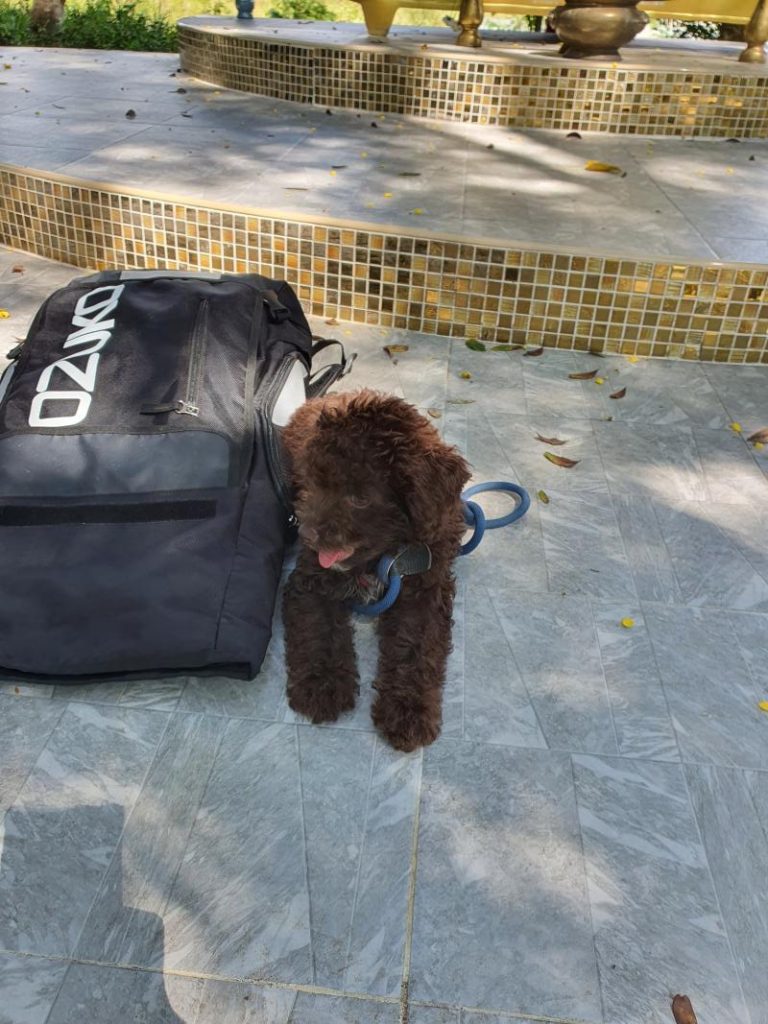
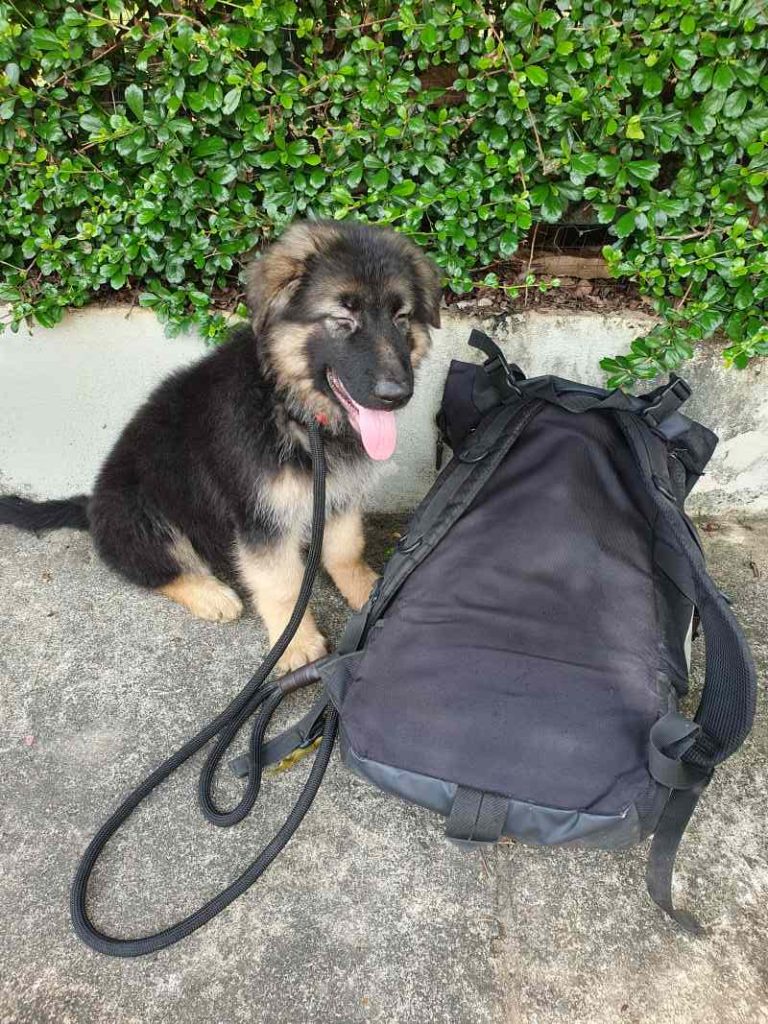
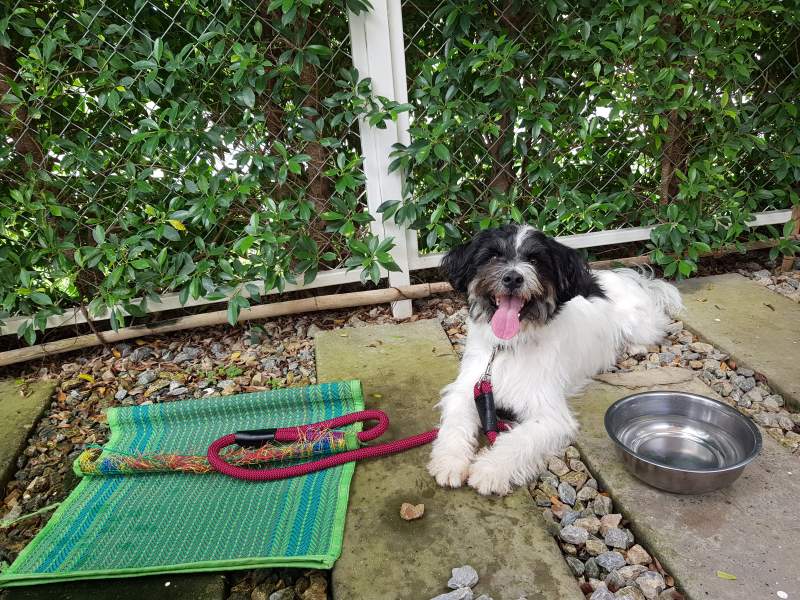
Neurochemistry drives patience. Serotonin steadies, dopamine motivates, and cortisol recedes as practice transforms stress into trust. Calm waiting becomes resilience in motion.
Health Concerns: When Waiting Becomes Challenging
Anxiety and Its Impact on Waiting Ability
Dogs with underlying anxiety disorders face unique challenges in developing waiting skills. Their heightened baseline arousal means that any delay in gratification can trigger intense stress responses, making traditional waiting exercises overwhelming rather than beneficial. These dogs might show signs like excessive panting, drooling, or even panic when asked to wait.
For anxious dogs, the approach must be modified to work below their threshold. This might mean beginning with “pseudo-waiting”—simply rewarding moments of natural stillness without adding any cues or expectations. Gradually, you can begin marking these calm moments with a gentle verbal cue, building the association between the word and the feeling of calmness rather than the pressure of performance.
Anxiety Modification Protocol for Waiting Training:
- Environmental setup: Use pheromone diffusers 30 minutes before training, play calming music at low volume, ensure comfortable temperature
- Physical supports: Anxiety wrap or light pressure vest, elevated bed for security, non-slip surfaces for stability
- Training modifications: 1-second micro-waits initially, reward for stillness not position, use continuous food delivery (treat scatter) while calm
- Success indicators: Decreased panting during exercises, ability to take treats gently, soft body posture rather than frozen stillness
- Warning signs to stop: Excessive drooling, trembling, whale eye showing, attempts to flee or hide—these indicate overwhelming stress
Consider incorporating calming aids during initial waiting training for anxious dogs. Pressure vests, calming music, or pheromone diffusers can help lower overall arousal, making it easier for the dog to access the cognitive resources needed for impulse control. As success builds confidence and confidence reduces anxiety, these aids can be gradually faded, though some dogs benefit from their continued use in challenging situations.
Age-Related Considerations
Puppies and senior dogs each bring unique considerations to waiting training. Puppies’ developing brains are primed for learning but have limited impulse control capacity. Short, frequent sessions with immediate rewards work best, capitalizing on their neuroplasticity while respecting their developmental limitations. Early exposure to waiting exercises may establish stronger emotional regulation skills that persist into adulthood.
Young puppies (under 4 months) should practice waiting in very brief increments—perhaps just 1-2 seconds initially. The goal at this age isn’t perfect performance but rather introducing the concept that stillness brings rewards. These early experiences create neural pathways that will support more advanced training as the puppy matures.
Senior dogs might struggle with waiting due to cognitive decline, sensory changes, or physical discomfort. What appears to be defiance or regression might actually be confusion, pain, or inability to maintain position comfortably. Adapt waiting exercises to accommodate physical limitations—perhaps allowing the dog to wait in a comfortable down position rather than a sit, or using clear visual cues to supplement potentially diminished hearing.
Medical Factors Affecting Impulse Control
Certain medical conditions can significantly impact a dog’s ability to practice waiting and emotional regulation. Thyroid imbalances, for instance, can cause hyperactivity or lethargy that affects impulse control. Dogs with undiagnosed pain might appear restless or unable to settle, their discomfort overriding their training.
Neurological conditions affecting the regions of the brain involved in impulse control can make waiting exercises particularly challenging. Dogs with a history of head trauma, seizures, or suspected cognitive dysfunction may show inconsistent performance or inability to retain training. In these cases, working with a veterinary behaviorist can help determine realistic goals and appropriate modifications.
Medications can also influence waiting ability. Some medications increase anxiety or arousal as side effects, while others might cause sedation that appears as calmness but doesn’t represent true emotional regulation. Always inform your trainer or behaviorist about any medications your dog takes, as this information is crucial for developing appropriate training protocols.
Breed-Specific Protocols: Tailoring Calmness to Genetic Heritage
Working/Herding Breeds: Channeling Intensity into Tranquility
Border Collies, Australian Shepherds, and their herding cousins possess extraordinary focus capabilities—their brains are literally wired for sustained attention and rapid decision-making. This neurological gift, however, can become a curse when that intense focus fixates on movement, sounds, or activities, making traditional waiting exercises feel like torture rather than training. The key isn’t suppressing their remarkable drive but rather redirecting it into the act of calmness itself.
For these breeds, waiting becomes most successful when framed as a job rather than an absence of activity. Introduce the concept of “working calmness” where the act of remaining still and regulated IS the task at hand. Use specific cues that differentiate waiting work from passive inactivity—perhaps “settle duty” or “calm work”—signaling that this stillness requires the same focused attention they’d bring to herding sheep. Reward the intensity of their calmness, not just its presence. A Border Collie maintaining fierce concentration on stillness deserves recognition for that mental effort.
Working Breed Waiting Modifications:
- Pre-waiting activities: 5-minute trick training session to engage their mind, puzzle toy solving to satisfy problem-solving needs, brief agility or nose work
- During waiting rewards: Variable reinforcement schedules to maintain interest, incorporate subtle position changes (sit-down-sit), use verbal markers for excellent focus
- Post-waiting releases: Explosive play as reward for calm control, opportunity for intense work (fetch, tug), access to job-like activities
- Environmental management: Practice near sheep/livestock gradually if applicable, use visual barriers initially for motion-reactive dogs, provide “watching post” positions
- Mental challenges: Add cognitive tasks during waits (counting treats, naming objects), teach differentiation between multiple wait cues, incorporate memory games
These breeds often benefit from what trainers call “calmness sandwiches”—brief waiting exercises bookended by satisfying work tasks. For instance, ask for a focused wait before and after trick training, agility practice, or puzzle-solving sessions. This structure teaches that calmness is part of the work cycle, not separate from it. You’ll notice these dogs developing an almost meditative quality to their waiting, bringing the same laser focus to stillness that they bring to movement. The transformation can be remarkable—that vibrating bundle of working drive learning to channel their intensity inward, achieving a profound state of concentrated calm.
Terrier Types: Taming the Ancient Hunt
Terriers carry thousands of years of selective breeding for independent decision-making and explosive response to prey stimuli. Their nervous systems are calibrated for hair-trigger reactions—a rustling leaf might as well be a rat requiring immediate dispatch. This neurological programming makes waiting exercises particularly challenging, as every fiber of their being protests against stillness when potential prey might be nearby.
Successful waiting protocols for terriers must acknowledge and work with their prey drive rather than attempting to suppress it entirely. Begin waiting exercises in environments with minimal prey-like stimuli, gradually building tolerance for stillness before introducing controlled “prey” distractions. Use puzzle toys or scent games as rewards for successful waiting, satisfying their hunt-sequence needs while reinforcing impulse control. The message becomes: “Good waiting leads to good hunting opportunities.”
Consider implementing “prey pause” exercises where you deliberately trigger mild prey interest (perhaps wiggling a toy at distance), then mark and reward the moment your terrier glances away or relaxes even slightly. This teaches them that disengaging from prey stimuli is valuable, gradually building their capacity to maintain calmness even when their ancient instincts are activated. Some terrier handlers find success with “hunting licenses”—specific cues that indicate when prey-chase behaviors are appropriate, making it clearer when those behaviors should be inhibited. Remember, you’re not trying to create a terrier who doesn’t care about prey, but one who can choose calmness despite caring intensely.
Guardian Breeds: The Vigilant Calm
Great Pyrenees, Anatolian Shepherds, Mastiffs, and other guardian breeds present a unique paradox in calmness training. These dogs were genetically selected to remain calm and settled for hours while simultaneously maintaining environmental vigilance—a state of relaxed readiness that can instantly shift to protective action. Their waiting isn’t passive but actively watchful, making traditional “zone out” approaches to calmness counterproductive.
For guardian breeds, acknowledge their need to monitor while teaching them to do so from a settled position. Practice “watchful waiting” where the dog maintains a calm physical position while being allowed to visually scan their environment. Reward both the physical stillness and the calm alertness, recognizing that for these breeds, total relaxation might actually increase anxiety by preventing them from fulfilling their guardian role.
Position these dogs where they can observe household activity during waiting exercises rather than facing walls or corners. This respects their need to monitor while teaching impulse control. You might notice your guardian breed developing a characteristic “calm surveillance” state—physically relaxed but mentally present, able to maintain this balanced state for extended periods. Advanced training can involve teaching different levels of vigilance on cue: “easy watch” for relaxed awareness versus “settle” for deeper relaxation when you explicitly take over guardian duties.
Toy/Companion Breeds: Soothing the Anxious Heart
Toy and companion breeds often struggle with waiting due to anxiety-based hyperarousal rather than drive or vigilance. Breeds like Chihuahuas, Maltese, and Cavalier King Charles Spaniels may have been selected for close bonding with humans, but this can manifest as separation distress, hypervigilance to owner emotions, and difficulty self-soothing. Their small size also means the world presents proportionally larger threats, contributing to baseline anxiety that makes calmness challenging.
For these sensitive souls, waiting training must build confidence alongside impulse control. Begin with “supported waiting” where you remain very close, gradually increasing distance as confidence grows. Use calming aids liberally—soft blankets with your scent, gentle music, or even anxiety wraps can help these dogs access a calm state initially. The goal is to pair waiting with feelings of safety and comfort rather than vulnerability.
Practice “micro-waiting” throughout the day—tiny one-second pauses before picking them up, before meals, before attention—building the understanding that brief waiting is normal and safe. These breeds often benefit from platform training, where a specific mat or bed becomes their “safety zone” for waiting exercises. This portable safe space can then travel to new environments, providing security during public practice. Pay special attention to your own emotional state, as these breeds are exceptionally attuned to human anxiety. Your calm confidence becomes their permission to relax.
Brachycephalic Breeds: Breathing Through Calmness
French Bulldogs, Pugs, Boston Terriers, and other brachycephalic breeds face unique physiological challenges during waiting exercises. Their shortened airways mean that any increase in respiratory rate—from excitement, stress, or temperature—can quickly become problematic. What might be mild panting in other breeds can escalate to respiratory distress in these flat-faced friends, making calm breathing a medical necessity rather than just a training goal.
Temperature management becomes crucial for brachycephalic waiting training. Conduct sessions in cool environments, especially during initial learning when excitement runs higher. Watch for early signs of respiratory stress: increased nostril flaring, extended neck positioning, or excessive abdominal breathing. These signals mean it’s time to end the session, regardless of training goals. Success is measured not just by waiting behavior but by maintained respiratory ease.
Focus on teaching these breeds to settle into positions that optimize breathing—often a sphinx-like down with elbows spread and head slightly elevated. Avoid positions that compress the chest or require the head to be turned sharply. Build duration very gradually, as the mental effort of impulse control can increase respiratory rate even without physical activity. Consider incorporating specific “breathing breaks” into waiting exercises, where you encourage a few deep, calm breaths before continuing. Some handlers find success with cooling mats or fans during summer training, ensuring comfort while building impulse control skills. 🐾
The Human Psychology Component: Your Mind Shapes Their Calm
Owner Anxiety Transfer: The Invisible Leash of Stress
Your stress hormones create an invisible communication channel with your dog, one that speaks louder than any verbal command. When you approach waiting exercises while harboring anxiety about your dog’s performance, your body releases cortisol and adrenaline—chemicals your dog can literally smell. These stress signatures trigger your dog’s own stress response, creating a feedback loop that makes calmness virtually impossible to achieve.
Research in human-dog dyads shows that dogs mirror their owners’ long-term stress levels, with owner and dog cortisol levels showing remarkable synchronization over time. This means your chronic anxiety about your dog’s behavior becomes their chronic anxiety, manifesting as the very hyperarousal and impulse control issues you’re trying to address. The frustrated owner trying to teach calmness while radiating tension is essentially asking their dog to do something they themselves cannot model.
Breaking this cycle requires conscious awareness of your internal state before and during training. If you’re rushing through waiting exercises because you’re stressed about time, your dog learns that waiting happens in a context of urgency—hardly conducive to genuine calmness. Instead, schedule training when you have mental space to be fully present. Some handlers find it helpful to do a brief personal check-in before training: “Am I genuinely calm right now, or am I performing calmness while feeling stressed?” Your dog knows the difference.
Attachment Styles: How Your Relationship Pattern Affects Training
Your attachment style—the way you form and maintain emotional bonds—profoundly influences how you approach dog training and how your dog responds to that training. Handlers with secure attachment styles tend to provide consistent, calm guidance that allows dogs to develop confidence in waiting exercises. They trust the process and their dog’s capability, creating an environment where learning flourishes.
Those with anxious attachment patterns might hover, constantly adjusting and worrying, inadvertently communicating that waiting is dangerous or uncertain. You might find yourself breaking waiting exercises early because you’re anxious about your dog’s comfort, or conversely, becoming rigid and punitive when your dog struggles, interpreting their difficulty as rejection. Your dog, reading this emotional instability, learns that waiting exercises are unpredictable and stressful.
Handlers with avoidant attachment might struggle with the emotional intimacy required for effective waiting training, maintaining such emotional distance that the dog never develops the trust necessary for vulnerable stillness. Alternatively, those with disorganized attachment might oscillate between approaches, sometimes patient and sometimes frustrated, creating confusion that impedes learning. Recognizing your attachment pattern isn’t about judgment but about awareness—understanding how your relational style impacts training allows you to consciously adjust your approach for your dog’s benefit.
Mindfulness Exercises for Handlers: Becoming the Calm You Seek
Before you can teach your dog to regulate their internal state, you must master your own. Simple breathing exercises performed before training sessions can shift your nervous system from sympathetic arousal to parasympathetic calm, creating the physiological state you want your dog to achieve. Try the “4-7-8 breath”: inhale for 4 counts, hold for 7, exhale for 8. This pattern activates your vagus nerve, triggering a relaxation response your dog will immediately sense.
Practice “embodied awareness” during waiting exercises. Notice where you hold tension—shoulders, jaw, hands—and consciously release it. Your dog reads these micro-tensions as signals about the environment’s safety. When your body is soft and relaxed, you communicate that waiting is safe and comfortable. Some handlers find it helpful to imagine roots growing from their feet into the ground, creating a sense of grounded stability that translates to their dog.
5-Minute Pre-Training Mindfulness Routine:
- Minute 1 – Arrival: Sit quietly with your dog, no commands or expectations, just shared presence and gentle breathing together
- Minute 2 – Body scan: Notice your tension points (shoulders, jaw, hands), consciously soften each area, release the day’s stress
- Minute 3 – Breath work: Practice 4-7-8 breathing pattern (inhale 4, hold 7, exhale 8), let your dog observe your calm state
- Minute 4 – Intention setting: Visualize successful calm waiting, focus on the feeling not the outcome, smile to activate positive emotions
- Minute 5 – Connection: Gentle massage for your dog if they enjoy it, soft eye contact without intensity, verbal affirmation of partnership
Develop a pre-training ritual that signals to both you and your dog that calm focus is beginning. This might be a few gentle stretches, a moment of quiet observation of your dog without agenda, or simply sitting together in silence before beginning formal exercises. This transition time allows both of you to shift from the day’s chaos to training’s focused calm. Think of it as setting the emotional stage for the performance to follow. Your mindfulness becomes the container within which your dog’s calmness can develop. 🧠
Dealing with Training Frustration: Your Emotional Regulation Toolkit
Training frustration is inevitable—your dog will have off days, regressions, and moments that test your patience. How you handle these frustrations determines whether training builds or erodes trust. The handler who responds to a broken wait with sharp correction teaches their dog that mistakes are dangerous, increasing anxiety that makes future calmness harder to achieve.
Develop a frustration protocol for yourself: when you feel irritation rising, implement an immediate pause. Step back, take three breaths, and ask yourself: “What does my dog need right now to succeed?” This cognitive reframe shifts you from emotional reaction to problem-solving. Often, frustration signals that you’ve pushed too hard or too fast. Your dog’s “failure” is actually valuable feedback about the training plan.
Consider having a “frustration discharge” practice—something physical you can do to release tension without directing it at your dog. Some handlers do jumping jacks, others squeeze a stress ball, and some simply walk away for a moment. Your dog learns that when things get difficult, you don’t become scary—you become thoughtful. This models the very emotional regulation you’re trying to teach. Remember: every time you successfully manage your own frustration, you’re demonstrating to your dog that big feelings can be felt and released without chaos.
Family Consistency: Creating a United Front
When different family members have varying approaches to waiting training, dogs quickly learn to discriminate between handlers rather than generalizing the skill. Mom might require a calm wait before meals while Dad absent-mindedly puts the bowl down for a jumping dog. Children might inadvertently reward breaking position with excited attention. These inconsistencies don’t just slow progress—they can create anxiety as dogs struggle to predict which rules apply when.
Successful family implementation requires explicit coordination and communication. Hold a family meeting where everyone understands not just the “what” of waiting protocols but the “why.” When family members understand that waiting training is about emotional regulation and safety rather than just obedience, buy-in increases. Create simple, consistent rules everyone can follow: “The dog waits for permission before eating, going through doors, or receiving attention when excited.”
Develop family-wide cues and protocols that even young children can implement. Visual cues like a raised hand for “wait” can be more consistent across handlers than verbal commands that vary in tone and delivery. Consider designating one person as the “lead trainer” for waiting exercises while others support by following established protocols. Post reminder signs in key locations—by the door, near the food bowls—helping everyone remember to maintain consistency. When the whole family commits to supporting your dog’s emotional development, progress accelerates dramatically. The dog relaxes into the predictability, no longer needing to constantly assess which rules apply with which human.
Family Consistency Checklist:
- Universal rules everyone follows: Dog waits before eating (all meals/treats), pause before going through doors, no attention for jumping/demand behaviors
- Age-appropriate responsibilities: Adults handle complex duration work, teens practice basic door waiting, young children participate with supervised treat delivery
- Communication strategies: Weekly 5-minute family check-ins about progress, shared notes app for tracking breakthroughs/challenges, video examples of correct technique
- Troubleshooting assignments: One person handles anxious waiting, another works on excitement control, designated “public practice” handler
- Celebration protocols: Family recognition of waiting milestones, group rewards when goals achieved, sharing success stories to maintain motivation
Lifestyle & Environment: Creating a Culture of Calmness
Home Environment Optimization
Your home environment profoundly influences your dog’s ability to develop and maintain calmness. A chaotic, unpredictable environment makes emotional regulation infinitely harder, while a structured, peaceful space supports the development of waiting skills. Consider the sensory landscape of your home from your dog’s perspective—are there constant triggers for arousal, or opportunities for settling?
Create designated calm zones where waiting and settling are regularly practiced and rewarded. This might be a specific mat or bed where your dog learns to relax while you work, or a quiet corner away from household traffic. These spaces become associated with the physiological state of calmness, making it easier for your dog to achieve that state when directed to these areas.
Environmental management during initial training stages sets your dog up for success. Using baby gates to control access to triggering areas, white noise machines to mask outside sounds, or window films to reduce visual stimulation can all help your dog focus on developing impulse control without overwhelming distractions. As skills strengthen, these management tools can be gradually reduced.
Public Space Practice: Generalizing Calmness
Taking waiting skills into public spaces represents a significant leap in difficulty but is essential for creating a truly calm, regulated dog. The novelty, unpredictability, and intensity of public environments challenge even well-trained dogs, making systematic preparation crucial for success.
Begin with semi-public spaces that offer some control—perhaps a friend’s yard or a quiet corner of a park during off-peak hours. Practice brief waiting exercises with high rates of reinforcement, focusing on success rather than duration. The goal is to build your dog’s confidence that the waiting rules apply everywhere, not just at home.
Gradually increase the challenge by practicing in busier environments, always staying below your dog’s threshold. A dog who can maintain a calm wait while watching other dogs play at the park has developed remarkable emotional regulation skills. This achievement represents not just obedience but genuine cognitive and emotional maturity. Remember to celebrate these victories—they represent significant neurobiological accomplishments! 😄
The Ripple Effect: How Calmness Transforms Relationships
As your dog develops stronger emotional regulation through waiting exercises, you’ll likely notice improvements in areas you hadn’t explicitly trained. The dog who learned to wait calmly for meals might spontaneously start showing more patience during grooming. The previously reactive dog might begin offering calm behavior when seeing triggers, having generalized the skill of impulse control.
This transformation extends to the human-animal bond itself. Dogs with strong emotional regulation skills are easier to live with, take places, and include in family activities. This increased inclusion further reinforces calm behavior, creating a positive cycle of deepening relationship and improving behavior. Your dog becomes a true partner rather than a management project.
The benefits extend to everyone your dog encounters. Veterinarians report easier examinations, groomers note improved cooperation, and visitors feel more comfortable. Your dog’s developed calmness makes them an ambassador for positive human-animal relationships, demonstrating the profound impact of patient, compassionate training.
Senior Care & Advanced Applications
Maintaining Skills Through Aging
As dogs age, maintaining their waiting and calmness skills requires thoughtful adaptation rather than abandonment. Cognitive function naturally changes with age, but continued practice of impulse control exercises can help maintain mental acuity. Think of waiting exercises as cognitive fitness training for your senior dog’s brain.
Adjust expectations to match your senior dog’s capabilities. Where they once held a standing wait for two minutes, they might now practice in a comfortable lying position for shorter durations. The principle remains the same—impulse control and emotional regulation—but the physical demands are modified to ensure comfort and success.
Use waiting exercises as diagnostic tools for monitoring cognitive health. Sudden changes in your senior dog’s ability to perform previously mastered waiting behaviors might indicate pain, sensory decline, or cognitive changes worthy of veterinary investigation. This early detection can lead to interventions that maintain quality of life longer.
Advanced Protocols for Exceptional Calmness
For dogs who have mastered basic waiting, advanced protocols can develop extraordinary levels of emotional regulation. “Zen games” where dogs must wait while highly valued resources are placed increasingly close to them build incredible impulse control. The dog learns to remain calm even with their favorite treat inches from their nose, demonstrating remarkable cognitive override of instinctual drives.
Duration challenges can extend to practical life skills. Teaching your dog to maintain calmness during extended veterinary procedures, grooming sessions, or while you engage in lengthy conversations develops patience that makes life easier for everyone. These extended waiting periods should be built gradually and always paired with appropriate rewards for the effort required.
Some handlers introduce “surprise waiting” where cues are given in unexpected contexts, helping dogs generalize the skill to any situation. This might mean asking for a wait during play, on walks, or even during training for other behaviors. This integration makes emotional regulation a default state rather than a specific response to particular cues.
Therapeutic Applications: Waiting as Healing
For dogs recovering from trauma, anxiety disorders, or other behavioral challenges, waiting exercises can be profoundly therapeutic. The predictability and success inherent in well-structured waiting training rebuild confidence and trust. Dogs learn that they can control outcomes through their choices, a particularly powerful realization for dogs who have experienced unpredictability or trauma.
In rehabilitation settings, waiting protocols help dogs recovering from surgery or injury maintain mental stimulation while physical activity is restricted. The mental effort required for impulse control provides enrichment without physical strain, preventing boredom and associated behavioral problems during recovery periods.
Therapy and service dogs benefit enormously from advanced waiting training, as their work requires extraordinary impulse control in challenging environments. The ability to maintain calmness despite hospitals’ sensory chaos or the excitement of public spaces makes them reliable partners for their human handlers. This professional-level calmness begins with the same simple waiting exercises every pet dog can master. 🧠
Conclusion: Is Calmness Training Right for Your Dog?
Every dog, regardless of age, breed, or background, can benefit from developing stronger emotional regulation through waiting exercises. The science is clear: teaching calmness as emotional discipline engages fundamental cognitive processes that improve overall quality of life for both dogs and their human companions. From the neurobiological changes that reduce stress to the behavioral improvements that enhance safety, the impacts of this training ripple through every aspect of the human-canine relationship.
The journey toward calmness isn’t about creating a sedated or shut-down dog—it’s about developing a confident, regulated companion who can navigate life’s challenges with resilience and grace. Your high-drive herding dog maintains their work enthusiasm while gaining the ability to settle when work is done. Your anxious rescue develops the confidence to pause and assess rather than react from fear. Your exuberant puppy learns that excitement has its time and place, but so does peaceful companionship.
Quick-Start Waiting Exercises for Today:
- The One-Second Victory: Before your dog’s next meal, ask for just one second of stillness—success builds success
- Door Pause Practice: At your next potty break, count to three before opening the door—safety starts with small steps
- Calm Greeting Game: When arriving home, wait for four feet on floor before acknowledging your dog—teach that calmness earns attention
- Treat Toss Patience: Toss a treat, ask your dog to wait before getting it—builds impulse control with built-in reward
- Settle on Mat: During your next TV show, reward your dog every 30 seconds for staying on their bed—duration builds gradually
As we’ve explored, this training extends far beyond simple obedience. It’s about giving our dogs the cognitive tools they need to thrive in a human-centric world while respecting their canine nature. The dog who can wait calmly at doorways is safer. The dog who can regulate their emotions during greetings builds better social relationships. The dog who has learned that patience brings rewards experiences less frustration and anxiety in daily life.
Consider starting your calmness journey today with just one simple exercise: ask your dog to wait one second before eating their next meal. In that brief moment, you’re beginning a transformation that touches neurotransmitters, reshapes neural pathways, and ultimately creates a more harmonious life together. Remember, every moment of waiting is a gift you’re giving your dog—the gift of emotional resilience, cognitive strength, and the deep satisfaction that comes from self-mastery.
The path ahead might require patience, consistency, and adaptation to your individual dog’s needs, but the destination—a truly calm, emotionally regulated companion—is worth every moment invested. Your dog is waiting to show you just how remarkable their capacity for calmness can be. All they need is your guidance, understanding, and commitment to helping them develop this profound life skill. Let us guide you and your furry friend toward the transformative power of emotional discipline through waiting. 🐾










