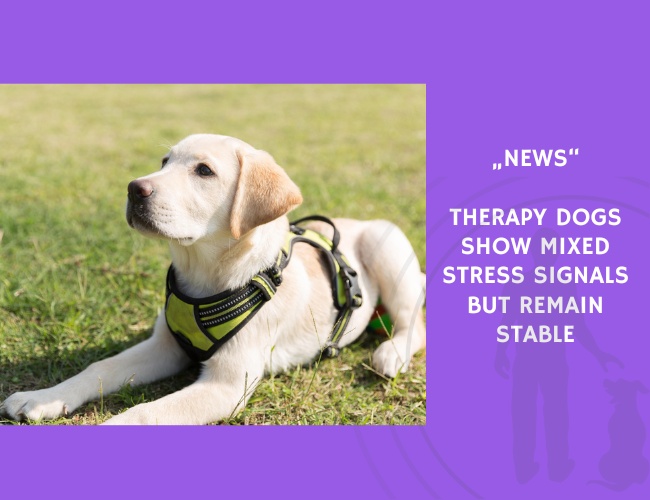
Therapy dogs play a valuable role in supporting patients with dementia, depression, and loneliness, but their welfare in overstimulating medical environments is less well studied. Clark and colleagues (2020) investigated stress in nine therapy dog-handler teams from the Mayo Clinic’s Caring Canine Program during their first three visits in a hospital setting.
Each team visited an average of nine patients per session, with dogs spending about 47 minutes in the hospital. Researchers collected salivary cortisol samples from both handlers and dogs at baseline, before, and after visits. Behaviors such as panting, lip licking, and yawning were the most frequently observed indicators of stress. Handlers also reported their perceptions of their dogs’ stress levels.
Findings showed a significant correlation (p = 0.02) between handlers’ perception of their dogs’ stress and the dogs’ cortisol levels. Dogs noted as experiencing medium to high stress displayed higher post-visit cortisol. However, overall, there was no significant difference in cortisol levels across visits, suggesting that both handlers and dogs maintained their welfare state despite the challenging environment.
The study emphasizes the importance of handlers accurately reading canine body language in therapy contexts. While dogs displayed mixed stress signals, their overall physiological stability suggests that with skilled handlers, therapy work can be performed without compromising canine welfare.
Source: Clark, S., Smidt, J. M., & Bauer, B. (2020). Therapy Dogs’ and Handlers’ Behavior and Salivary Cortisol During Initial Visits in a Complex Medical Institution: A Pilot Study. Frontiers in Veterinary Science, 7.