
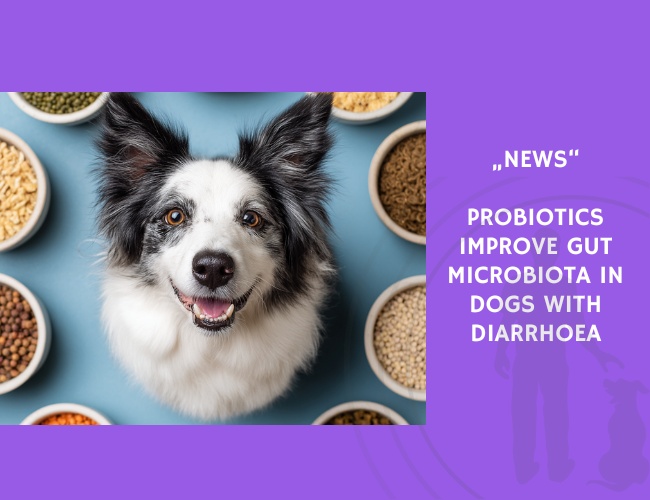
Haiyan Xu and colleagues (2019) investigated the impact of probiotics on the gut microbiota of dogs with diarrhoea. Forty affected dogs were randomly assigned to a treatment group, which received a probiotic mix of Lactobacillus casei Zhang, Lactobacillus plantarum P-8, and Bifidobacterium animalis subsp. lactis V9, or a control group without supplementation. The trial lasted for 60 days.
Metagenomic analysis revealed that dogs receiving probiotics showed greater microbial diversity and structural changes in their gut microbiota. Beneficial bacteria such as Lactobacillus johnsonii, Lactobacillus reuteri, Lactobacillus acidophilus, and Butyricicoccus pullicaecorum increased significantly. In contrast, opportunistic pathogens including Clostridium perfringens and Stenotrophomonas maltophilia were reduced.
Beyond altering bacterial composition, probiotics also influenced functional pathways. Metabolism of amino acids and biosynthesis of secondary metabolites were upregulated, while pathways linked to bacterial virulence and cell signaling were downregulated. These shifts indicate a healthier microbial ecosystem and suggest probiotics promote both microbial and host resilience.
Overall, the study highlights that targeted probiotic supplementation can play a therapeutic role in managing canine diarrhoea by reshaping gut microbiota and supporting digestive health.
Source: Xu, H., Zhao, F., Hou, Q., Huang, W., Liu, Y., Zhang, H., & Sun, Z. (2019). Metagenomic analysis revealed beneficial effects of probiotics in improving the composition and function of the gut microbiota in dogs with diarrhoea. Food & Function, 10(5), 2618–2629.










