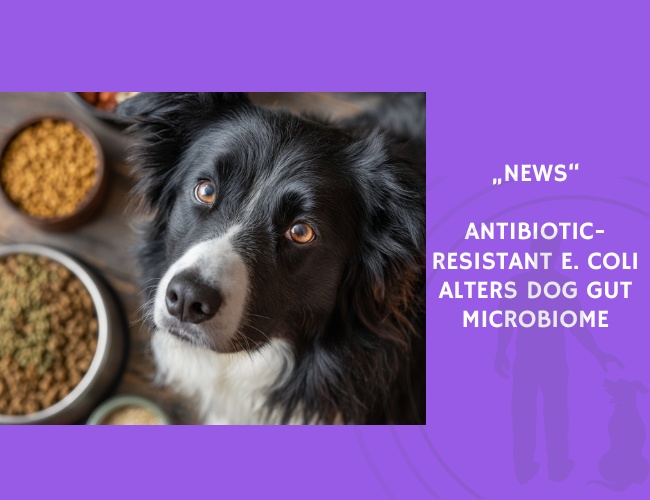
P. Stege and colleagues (2023) investigated the relationship between ESBL-producing *E. coli* (ESBL-EC) and gut microbial composition in 57 companion dogs in the Netherlands. Fecal samples collected over six weeks revealed that 68% of dogs carried ESBL-EC at least once during the study period.
Analysis showed that ESBL-EC carriage was linked to increased abundance of specific bacterial groups, including Clostridium sensu stricto 1, Enterococcus, Lactococcus, and Escherichia-Shigella. Furthermore, resistome sequencing identified higher levels of antimicrobial resistance genes such as cmlA, dfrA, dhfR, floR, and sul3 in colonized dogs.
These findings underscore the importance of studying microbial diversity in companion animals, as gut colonization by resistant bacteria not only alters the microbiome but may also promote the selection of additional antimicrobial resistance genes. The study highlights a potential risk for both canine and public health, given the close contact between dogs and humans.
Source: Stege, P., Hordijk, J., Sandholt, A. K. S., Zomer, A. L., Viveen, M., Rogers, M. R. C., Salomons, M., Wagenaar, J., Mughini-Gras, L., Willems, R. J. L., & Paganelli, F. (2023). Gut Colonization by ESBL-Producing Escherichia coli in Dogs Is Associated with a Distinct Microbiome and Resistome Composition. Microbiology Spectrum, 11. https://doi.org/10.1128/spectrum.01627-23