
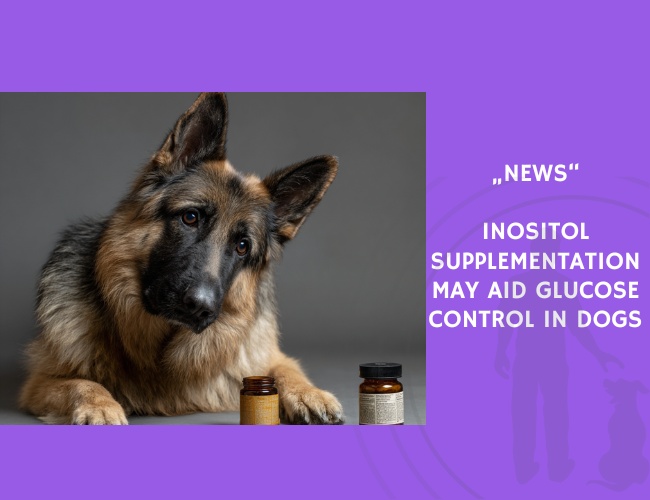
The research by Emanuela Kayser, M. D. Godoy, and S. L. Rodrigues-Zas (2023) explored the functional properties of inositol, a natural compound extracted mainly from carob, in canine nutrition. While inositol has been linked to antioxidant and glucose-regulating benefits in humans, little was known about its effects in dogs.
Thirty adult overweight dogs were assigned to one of three treatment groups: a control group receiving corn syrup, and two groups receiving either 8 g/day or 16 g/day of inositol. Over a 60-day feeding trial, dogs’ metabolic, hormonal, and inflammatory responses were monitored.
The study found that inositol supplementation had no negative impact on health or food intake. While oxidative stress biomarkers showed no significant changes, there was a linear increase in serum cytokine CXCL1, suggesting an influence on inflammatory processes. Notably, continuous glucose monitoring revealed a linear decrease in average 24-hour glucose levels with higher inositol supplementation, even though glucose tolerance test results did not differ significantly.
These results indicate that inositol may help regulate glucose metabolism in dogs and interact with inflammatory pathways, supporting its potential role as a nutritional supplement for canine metabolic health.
Source: Kayser, E., Godoy, M. D., & Rodrigues-Zas, S. L. (2023). Functional Properties of Inositol in Canine Nutrition. Journal of Animal Science, published November 6, 2023.










