
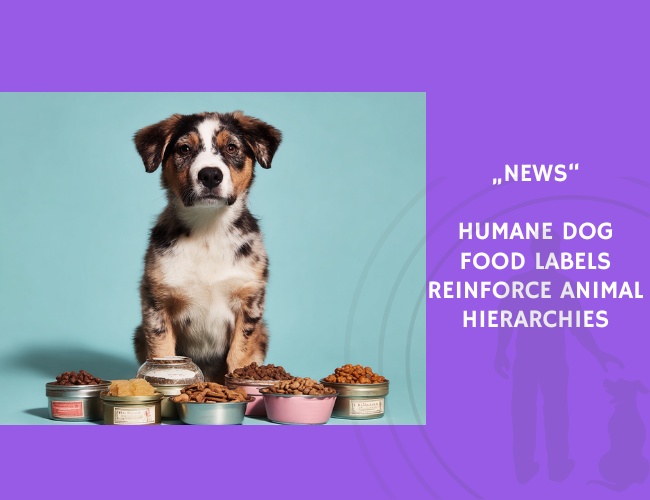
The dog food industry has long marketed products that emphasize the dog’s carnivorous nature, centering animal-based protein as essential. While consumer awareness of animal welfare impacts is increasing, leading to growth in alternative pet food movements, the study by Carly Baker (2023) examines how humane certification operates within this system.
By tracing the value chain of Open Farm—the first certified humane dog food brand—Baker compared marketing claims, transparency tools, and Global Animal Partnership standards. She found that humane certification creates a framework where owners feel they are “caring” for farmed animals while still feeding meat to their dogs. Rather than questioning animal protein altogether, certification provides an alternative that maintains industry structures.
The analysis shows that humane certification reinforces animal–animal hierarchies: dogs are nurtured as carnivores, while farmed animals are cared for in life only to be killed for food. Marketing also depends on the charisma and proximity of certain animals to humans, shaping whether they are viewed as cared-for companions or killable livestock.
However, the study highlights that these hierarchies are fragile and must be constantly reinforced. Interview data revealed that animals’ positions can shift depending on human perception and context, complicating the supposed stability of humane claims. Ultimately, humane certification enables owners to reconcile care for their dog with complicity in farmed animal deaths, sustaining the paradox of humane killing within pet food systems.
Source: Baker, C. (2023). Humane dog food? caring and killing in the certified humane dog food value chain. Environment and Planning E: Nature and Space, 7, 311–329.










