

Introduction: Understanding Your Staffie’s Training Journey
The Staffordshire Bull Terrier stands before you—muscular, determined, and surprisingly sensitive beneath that tough exterior. This breed, originally forged in the working-class communities of 19th-century England, carries within its DNA a unique paradox: the tenacity of a terrier combined with an unexpected emotional depth that makes them one of the most rewarding breeds to train when you understand their true nature.
Your Staffie isn’t just another dog to be commanded into submission. They’re a complex emotional system wrapped in a compact, powerful body—a breed that thrives not on dominance but on connection. The NeuroBond approach recognizes what science has confirmed: these dogs are quick studies with significant intelligence, provided you speak their language of trust, creativity, and positive engagement. When you align your training with their natural instincts rather than fighting against them, you unlock a partnership that transforms both of you.
Let us guide you through a revolutionary approach that doesn’t seek to control your Staffie but to connect with them at a neurological level. This isn’t about making your dog obedient—it’s about creating an invisible leash of trust that makes them choose to stay close, to look to you for guidance, and to find joy in cooperation. 🐾
Character & Behavior: The Staffie Operating System
Understanding the Emotional Architecture
Your Staffordshire Bull Terrier operates on what we call a “high-intensity emotional processor.” Research shows that while 9.5% of Staffies display behaviors like tail chasing—indicators of frustration or impulse control challenges—this same intensity, when properly channeled, becomes their superpower. They’re not stubborn; they’re determined. They’re not aggressive; they’re passionate. Understanding this distinction changes everything about how you approach their training.
The NeuroBond philosophy recognizes that your Staffie is, quite literally, an operating system on four legs. What you input through experiences, interactions, and training directly shapes their behavioral output. Their exuberant, sometimes bull-headed nature isn’t a flaw to be corrected—it’s an energy source to be redirected. When you stop fighting their nature and start working with it, training transforms from a battle into a dance.
The Sensitivity Paradox
Here’s what surprises most Staffie owners: beneath that muscular frame beats the heart of an unexpectedly sensitive soul. Studies on canine stress responses show that dogs trained with aversive methods display elevated cortisol levels and pessimistic cognitive bias—and Staffies, despite their tough appearance, are particularly susceptible to emotional shutdown when faced with harsh corrections. This sensitivity isn’t weakness; it’s actually their training superpower when you know how to engage it.
Your Staffie’s emotional regulation system is like a finely tuned instrument. They possess what researchers call “amygdala hypersensitivity”—meaning they process emotional stimuli more intensely than many breeds. In practical terms? Your frustration becomes their confusion. Your excitement becomes their overdrive. But your calm confidence? That becomes their stability. The NeuroBond approach leverages this emotional mirroring to create profound behavioral change without force or intimidation.
Prey Drive as Teacher, Not Enemy
That strong prey drive that has your Staffie lunging after squirrels? It’s not a training obstacle—it’s your most powerful training tool. The NeuroBond method doesn’t suppress instincts; it redirects them. When your Staffie’s prey drive activates, their brain releases a cocktail of dopamine and norepinephrine—the same neurochemicals that enhance learning and memory formation. This is why games that engage their chase instinct while teaching impulse control create lasting behavioral change.
Think of prey drive as your Staffie’s native language. When you incorporate movement, chase, and capture into training, you’re not just teaching commands—you’re speaking directly to their instinctive brain. This is why a Staffie who “won’t listen” during traditional obedience suddenly becomes laser-focused during a game of tug with rules. You haven’t changed the dog; you’ve changed the conversation.
Vocalization & Communication: Understanding How Your Staffie “Talks”
The Multi-Modal Communication System
Your Staffordshire Bull Terrier communicates through a rich tapestry of vocalizations, body language, and energy shifts that most owners only partially decode. That low rumble isn’t always a warning—sometimes it’s excitement. That stillness before movement isn’t defiance—it’s processing. Understanding these signals transforms training from guesswork into dialogue.
Research on canine communication reveals that terriers often use what ethologists call “escalating communication chains.” Your Staffie might start with a subtle ear position change, progress to a vocalization, then to a body posture shift. Missing these early signals means you’re always reacting to behavior rather than preventing it. The NeuroBond approach teaches you to read these micro-communications, allowing you to redirect behavior before it escalates.
Creating Shared Context
Remember: dog behavior is never random—it’s always contextual. Your Staffie’s logic may differ from yours, but it’s always valid in their world. When they bark at the doorbell, they’re not being “bad”—they’re fulfilling their perceived job of alerting the pack. The NeuroBond method doesn’t punish this instinctive communication; instead, it creates new context where alerting once is rewarded, but continued barking is redirected into a different behavior.
This is where the “invisible command” concept becomes powerful. Through consistent pairing of situations with desired responses, your Staffie begins to offer behaviors without being asked. The doorbell becomes the cue to grab a toy. The sight of another dog becomes the signal to check in with you. These aren’t trained behaviors in the traditional sense—they’re chosen behaviors based on the relationship and trust you’ve built.
Training & Education: The NeuroBond Learning Pathway
Building the Foundation: Connection Before Commands
Every training journey with your Staffie must begin not with “sit” or “stay,” but with connection. The NeuroBond approach prioritizes building what we call the “emotional tether”—that invisible thread that keeps your dog psychologically connected to you even when physically distant. For Staffies, with their combination of independence and sensitivity, this foundation is non-negotiable.
Start with simple presence exercises. Stand on your Staffie’s leash—not to control, but to create a boundary within which they must problem-solve. Watch as they cycle through behaviors: pulling, jumping, barking, and eventually… settling. The moment they choose calmness—sitting or lying down—mark and reward it enthusiastically. You haven’t commanded anything; you’ve simply created context where your Staffie discovers the solution themselves. This self-directed learning creates neural pathways far stronger than any forced compliance ever could.
The Power of Micro-Sessions
Scientific research confirms what experienced Staffie owners know: these dogs have relatively short attention spans but incredibly fast learning curves when motivated. The NeuroBond method leverages this through what we call “micro-training”—intense, focused sessions lasting just 2-3 minutes, repeated throughout the day. Your Staffie’s brain, particularly the hippocampus responsible for memory formation, actually consolidates learning better with distributed practice than massed practice.
During these micro-sessions, focus on one concept through multiple expressions. Teaching “impulse control”? Start with waiting for food, progress to pausing before going through doors, then to settling when excited visitors arrive. You’re not teaching three different things—you’re teaching one principle (self-regulation) through varied contexts. This approach aligns perfectly with how your Staffie’s brain naturally categorizes and generalizes information.
Leveraging Food Motivation Strategically
Your Staffie’s high food motivation isn’t just about treats—it’s about dopamine. When they anticipate food reward, their ventral tegmental area floods their brain with dopamine, enhancing both attention and learning capacity. But here’s the neuroscience secret: variable reinforcement schedules (sometimes rewarding, sometimes not) create stronger behavioral patterns than constant reinforcement.
The NeuroBond approach uses what we call “jackpot moments”—unexpected, high-value rewards for breakthrough behaviors. When your Staffie chooses to disengage from a trigger without prompting? That’s jackpot worthy. When they offer eye contact in a distracting environment? Jackpot. These surprise rewards create what neuroscientists call “prediction error signals”—powerful learning accelerators that make behaviors “stick” faster than predictable rewards ever could.
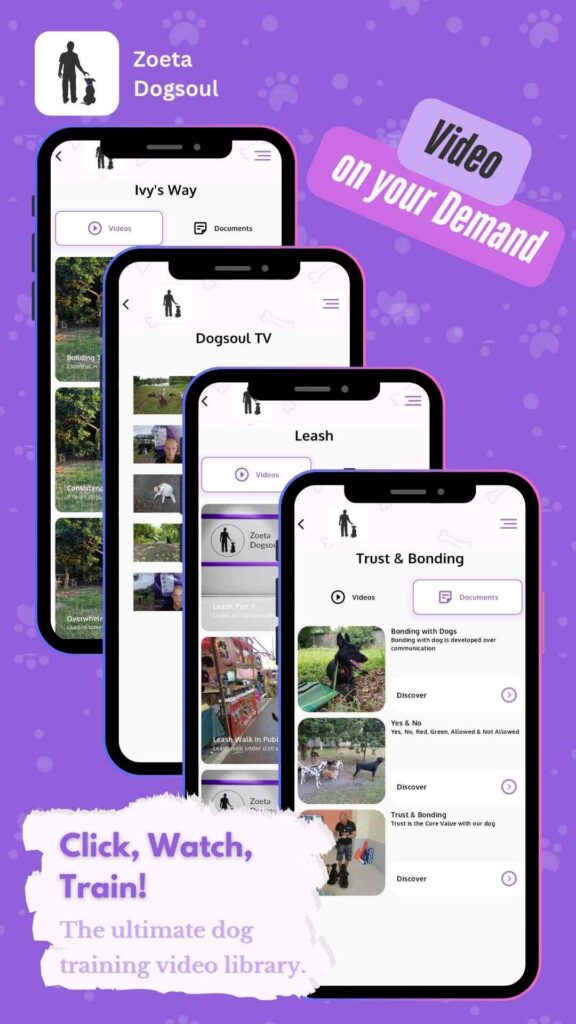
Performance & Activities: Channeling the Staffie Drive
From Energy to Excellence
Your Staffordshire Bull Terrier arrives in every training session with what feels like a nuclear reactor of energy. Traditional training often tries to suppress this energy, creating frustration and resistance. The NeuroBond method sees this energy as raw material for excellence. High arousal isn’t your enemy—it’s your opportunity to teach emotional regulation when it matters most.
Before formal training, engage in what we call “cognitive warm-ups.” These aren’t just physical exercises but mental challenges that require your Staffie to think while moving. Scatter feeding in tall grass engages their seeking system. Playing “find it” with hidden toys activates their problem-solving networks. These activities don’t tire your Staffie out—they actually prime their brain for learning by achieving optimal arousal levels for cognitive function.
The Invisible Leash in Action
Once trust and bonding are complete through consistent NeuroBond work, something magical happens: the invisible leash replaces the need for constant physical correction. Your Staffie naturally maintains proximity not because they’re commanded to heel, but because closeness to you has become intrinsically rewarding. This isn’t obedience—it’s choice. And choice-based behaviors are infinitely more reliable than commanded ones.
Watch a Staffie trained through NeuroBond methods at a dog park. They play, explore, and socialize, but their attention regularly returns to their human like a compass finding north. They’re not restricted; they’re connected. When you call, they come not because they fear consequences but because returning to you is genuinely more interesting than whatever they were doing. This is the ultimate expression of the human-animal bond—voluntary cooperation born from trust.
Structured Play as Advanced Training
Your Staffie’s play drive is actually sophisticated neural programming waiting to be activated. When they engage in play, their brain releases BDNF (brain-derived neurotrophic factor), literally growing new neural connections. The NeuroBond method structures play to teach complex concepts without your dog ever realizing they’re “training.”
Tug games become lessons in “take it” and “drop it.” Chase games teach recall and impulse control. Wrestling teaches bite inhibition and appropriate force modulation. But here’s the key: you’re not imposing these lessons—you’re letting them emerge naturally from the play structure. Your Staffie learns that certain behaviors make the game continue (soft mouth, checking in, responding to cues) while others make it stop. No punishment, no force—just natural consequences within a fun context.
Nutritional Support for Cognitive Function
Feeding the Learning Brain
Your Staffie’s brain consumes about 20% of their daily caloric intake, and during intensive training periods, these demands increase significantly. The NeuroBond approach recognizes that optimal nutrition directly impacts training success. Omega-3 fatty acids, particularly DHA, have been shown to improve cognitive function and trainability in dogs. Your Staffie’s diet isn’t just fuel—it’s part of their training program.
Consider timing your training sessions strategically around meals. A slightly hungry dog (not starving, just ready for a meal) shows enhanced food motivation and improved focus. Post-training feeding also leverages the principle of “episodic memory consolidation”—the brain better remembers events that precede rewards. This is why dogs often remember training sessions that end with dinner better than random middle-of-the-day sessions.
Neurochemical Balance Through Nutrition
Research reveals that tryptophan levels (precursor to serotonin) directly impact impulse control and emotional regulation in dogs. For your naturally impulsive Staffie, ensuring adequate tryptophan through quality protein sources can actually make training easier. Similarly, B-vitamins support neurotransmitter production, directly affecting your dog’s ability to focus and retain information.
The NeuroBond approach views nutrition holistically—what you feed affects how they feel, which affects how they learn. A Staffie experiencing blood sugar spikes and crashes from poor-quality food will struggle with consistent training responses. Stable energy from quality nutrition creates stable behavior, making every training session more productive.
Strong. Sensitive. Connected.
Intensity defines the Staffie. What seems like stubbornness is really determination, and what looks like aggression is unchanneled passion. Their emotional energy, once understood, becomes the very force that drives their learning and loyalty.
Sensitivity is their paradox. Beneath muscle and grit lies a heart that mirrors your emotions. Harsh methods break trust, but calm confidence anchors them. Their hypersensitivity, when respected, transforms training into deep connection.
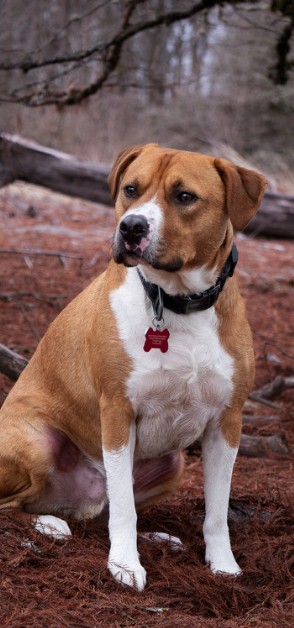

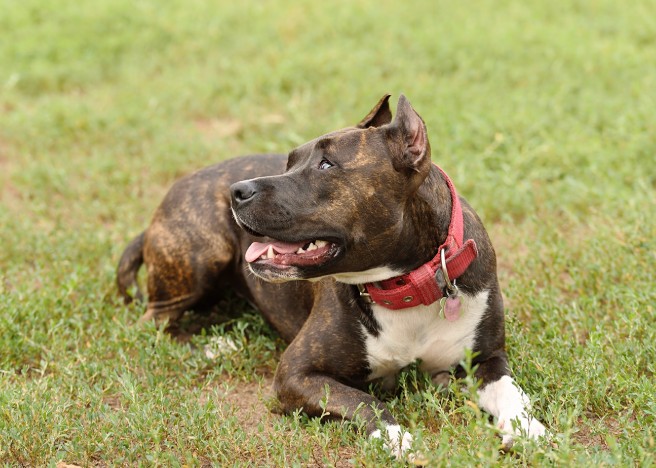
Connection builds cooperation. The NeuroBond approach turns obedience into choice, creating an invisible leash of trust. By aligning with their emotional architecture, you unlock a partnership rooted in joy, guidance, and shared purpose.
Health Concerns Affecting Training
The Physical-Behavioral Connection
Your Staffie’s robust appearance can mask subtle health issues that profoundly impact training. Hip dysplasia, common in the breed, doesn’t just cause physical discomfort—it alters movement patterns, which changes proprioceptive feedback to the brain, potentially increasing anxiety and reducing confidence. A Staffie who “suddenly” becomes reluctant to perform previously learned behaviors might not be stubborn—they might be uncomfortable.
The NeuroBond philosophy always considers physical wellness as the foundation of behavioral wellness. Regular veterinary check-ups aren’t just health maintenance—they’re training insurance. Pain or discomfort activates the amygdala (fear center) and suppresses the prefrontal cortex (executive function), literally making it neurologically impossible for your dog to learn effectively.
Sensory Health and Learning Capacity
Many Staffies develop age-related hearing changes that owners initially interpret as “selective hearing” or stubbornness. Vision changes can make a previously confident dog suddenly reactive to approaching strangers or dogs. The NeuroBond approach adapts to these changes by shifting from verbal to visual cues, from distance work to close connection work, always maintaining the trust bond regardless of sensory limitations.
Understanding that behavior changes often signal health changes keeps you responsive to your Staffie’s needs. This awareness prevents the frustration that comes from misinterpreting medical issues as training failures. When training suddenly stops working, the NeuroBond practitioner asks “what changed?” before asking “what’s wrong?” 🧠
Lifestyle & Environment: Creating the Learning Ecosystem
Environmental Design for Success
Your home environment is your Staffie’s primary classroom, and the NeuroBond approach treats it as such. Environmental management isn’t about restriction—it’s about setting your dog up for success. Every correct choice your Staffie makes strengthens neural pathways for that behavior. By designing your environment to make good choices easy and unwanted behaviors impossible, you’re training 24/7 without constant supervision.
Place puzzle feeders where your Staffie tends to get restless. Keep appropriate chew toys in areas where they might otherwise investigate furniture. Create calm zones with comfortable bedding away from high-traffic areas. These environmental modifications work with your Staffie’s natural behavior patterns rather than against them, making the right choice the easy choice.
Social Architecture and the Staffie Temperament
Your Staffie’s relationship with other dogs requires thoughtful environmental orchestration. Some Staffies are naturally dog-social, others are dog-selective, and some are dog-intolerant. The NeuroBond approach doesn’t try to force friendships but instead creates structured social experiences that build confidence and appropriate social skills.
Parallel walking with calm dogs teaches coexistence without confrontation. Structured play dates with known compatible dogs build positive associations. The goal isn’t to make your Staffie love every dog—it’s to help them remain calm and responsive to you regardless of other dogs’ presence. This is the difference between socialization (exposure) and social engineering (strategic relationship building).
The Rhythm of Connection
Daily routines become invisible training through the NeuroBond lens. Morning greetings establish the day’s energy. Meal times reinforce patience and impulse control. Evening wind-downs teach settling and relaxation. Your Staffie’s entire day becomes a series of micro-learning opportunities, each reinforcing the central theme: connection with you makes life predictable, safe, and rewarding.
This rhythmic approach works particularly well with the Staffie temperament, which thrives on predictability despite their spontaneous nature. Knowing what comes next reduces anxiety, and reduced anxiety improves learning capacity. The structured day becomes a scaffold supporting continuous behavioral development.
Senior Care: Adapting the NeuroBond Through Life Stages
The Cognitive Aging Journey
As your Staffie ages, their brain undergoes changes that affect learning and behavior. Cognitive Dysfunction Syndrome, similar to human dementia, can affect up to 28% of dogs aged 11-12. But here’s what’s remarkable: dogs maintaining strong human bonds and regular mental stimulation show delayed onset and slower progression of cognitive decline. The NeuroBond you’ve built doesn’t just train—it protects.
Older Staffies may need modified training approaches. Processing speed slows, so cues need more time. Working memory decreases, so complex chains need to be broken into smaller components. But the emotional connection—that foundational bond—often strengthens with age. Your senior Staffie may not learn new tricks as quickly, but their desire to connect with you remains strong, sometimes even intensifying.
Maintaining Mental Fitness
The “use it or lose it” principle applies strongly to aging Staffie brains. Continued training, even simple exercises, maintains neural plasticity. Novel experiences, even small ones like new walking routes or puzzle toys, stimulate neurogenesis (growth of new brain cells) even in senior dogs. The NeuroBond approach never stops teaching because the brain never stops being capable of learning.
Adapt activities to physical limitations while maintaining mental challenges. If your senior Staffie can’t chase balls anymore, hide treats for them to find. If long walks are difficult, increase short, mentally stimulating sessions. The goal shifts from performance to engagement, from achievement to connection. Your aging Staffie doesn’t need to be perfect—they need to be engaged.
The Deepening Bond
Something beautiful happens in the senior years when you’ve followed the NeuroBond approach: the training disappears into the relationship. Your Staffie anticipates your needs, responds to subtle cues, and offers behaviors without being asked. This isn’t just training success—it’s the culmination of years of connection-based learning.
The invisible leash becomes so strong that even cognitive decline can’t break it. Senior Staffies trained through NeuroBond methods often maintain strong recall and basic responses even when other cognitive functions decline. The emotional memory, housed in different brain regions than procedural memory, preserves the connection even when other memories fade. 🧡
Addressing Behavioral Challenges Through NeuroBond
Reactivity as Communication, Not Defiance
When your Staffie barks, lunges, or reacts to triggers, they’re not giving you a problem—they’re giving you feedback. The NeuroBond approach reads reactivity as a breakdown in the connection system. Maybe trust hasn’t been fully established in that context. Perhaps past experiences created neural pathways that bypass the thinking brain and go straight to reaction. Understanding reactivity as communication changes how you address it.
Instead of suppressing reactive behavior through punishment (which research shows increases stress and often worsens reactivity long-term), the NeuroBond method creates new neural pathways. Through careful distance management and positive associations, your Staffie learns that triggers predict good things from you, not threats requiring their intervention. You’re not training them not to react—you’re giving their brain a different program to run when encountering triggers.
Impulse Control as a Learned Skill
Your Staffie’s impulsivity isn’t a character flaw—it’s a neurological tendency that can be modified through specific exercises. The prefrontal cortex, responsible for impulse control, is literally strengthened through practice, like a muscle. Every time your Staffie chooses to wait rather than grab, to settle rather than jump, to think rather than react, those neural pathways strengthen.
The NeuroBond method builds impulse control through life rewards, not arbitrary exercises. Waiting for meals, pausing at doorways, settling before play—these daily moments become training opportunities. Your Staffie learns that impulse control isn’t restriction—it’s the key that unlocks rewards. This reframing transforms frustrated energy into focused anticipation.
The Feedback Loop of Success
Behavioral challenges often create negative feedback loops: reactive behavior leads to isolation, which increases anxiety, which increases reactivity. The NeuroBond approach breaks these loops by creating success spirals. Small wins build confidence. Confidence reduces anxiety. Reduced anxiety improves learning capacity. Improved learning creates more success.
Start where your Staffie can succeed, not where you wish they were. If they react to dogs at 20 feet, work at 50 feet. If they can’t settle for 5 minutes, celebrate 30 seconds. Every success, no matter how small, builds the neural architecture for bigger successes. This isn’t lowering standards—it’s building foundations.
Conclusion: Is the NeuroBond Approach Right for You and Your Staffie?
The journey we’ve explored together isn’t just about training—it’s about transformation. Both yours and your Staffie’s. The NeuroBond approach asks more of you than traditional training because it requires you to see your dog not as a subordinate to be commanded but as a partner to be understood. It demands patience when you want quick results, consistency when you’re tired, and trust when conventional wisdom says control.
But here’s what you get in return: a Staffordshire Bull Terrier who chooses to cooperate rather than complies from fear. A dog whose exuberance becomes enthusiasm for shared activities rather than chaos to be contained. A companion whose sensitivity becomes the foundation for deep emotional connection rather than a training obstacle. You get not just an obedient dog, but a true partner.
The scientific evidence is clear: Staffies trained through positive, connection-based methods show better long-term behavioral outcomes, lower stress levels, and stronger human bonds than those trained through aversive methods. But beyond the science, there’s something deeper—the joy of watching your Staffie’s face light up when they figure something out for themselves, the pride in their eyes when they choose the right behavior, the deepening trust that comes from never breaking faith with each other.
Your Next Steps on the NeuroBond Journey
Start tomorrow morning with fresh eyes. Watch your Staffie without judgment, without agenda. Notice how they communicate, what makes them curious, what brings them joy. Begin with one simple exercise—the stand-on-the-leash settling exercise—and observe without commanding. Let them find the solution. Celebrate their discovery.
Remember: Zero effort leads to zero outcome, but full effort leads to full connection. Your Staffie is an operating system waiting for the right programming—not commands and corrections, but experiences and connections that teach them how to navigate the human world while honoring their canine nature.
The invisible leash awaits. Not as a metaphor for control, but as a reality of connection. When you commit to the NeuroBond approach, you’re not just training a dog—you’re building a relationship that transcends species, creating understanding that needs no words, and forging a bond that strengthens with every passing day.
Is this approach right for you? If you’re ready to see your Staffie not as a problem to be solved but as a puzzle to be understood, not as a subordinate to be dominated but as a partner to be cherished, then yes. The NeuroBond journey isn’t always easy, but it’s always worth it. Because at the end of this path waits something extraordinary: a Staffordshire Bull Terrier who doesn’t just obey you—but who truly, deeply, chooses you. Every single day. 🐾










