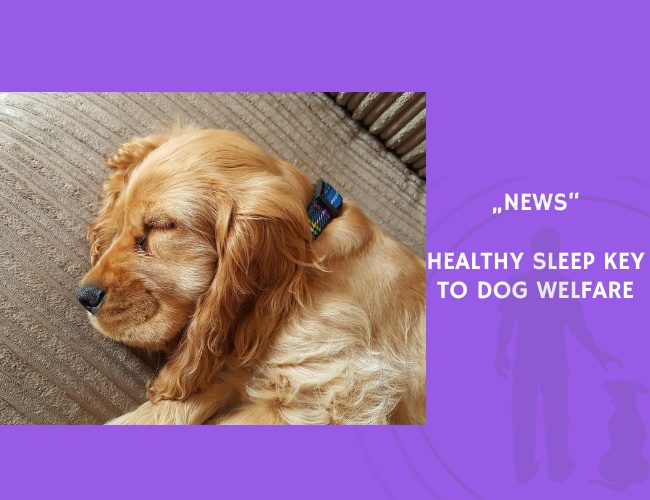
Domestic dogs living in modern urban environments are frequently exposed to stressors that affect their well-being. One often-overlooked factor is the sleep–wake cycle. Fomina et al. (2022) reviewed the physiology of mammalian sleep, focusing on pet dogs, and highlighted how insufficient or disrupted sleep has direct welfare implications.
Sleep deprivation was found to be more detrimental than food deprivation, pushing dogs into states of chronic stress. This not only affects immediate behavior but also increases susceptibility to other health problems. The review discussed methods of analyzing canine sleep cycles, potential disorders, and their impact on behavior and physiology.
The authors also examined the growing interest in human–dog co-sleeping. While sharing a bed can strengthen the human–dog bond, it can also influence sleep quality for both. Responsible sleep hygiene—such as providing dogs with a quiet, comfortable, and predictable rest environment—was emphasized as a critical welfare factor.
By ensuring healthy sleep patterns, owners can significantly support their dogs’ resilience against stress and promote better long-term health. The findings underline the importance of integrating sleep care into broader strategies of canine welfare management.
Source: Fomina, A., Vakulenko, M., Krakhmalev, T., & Burok, T. (2022). How are you sleeping, my beloved dog? Healthy sleep of pet dogs as a factor of welfare. Veterinarska Stanica.