
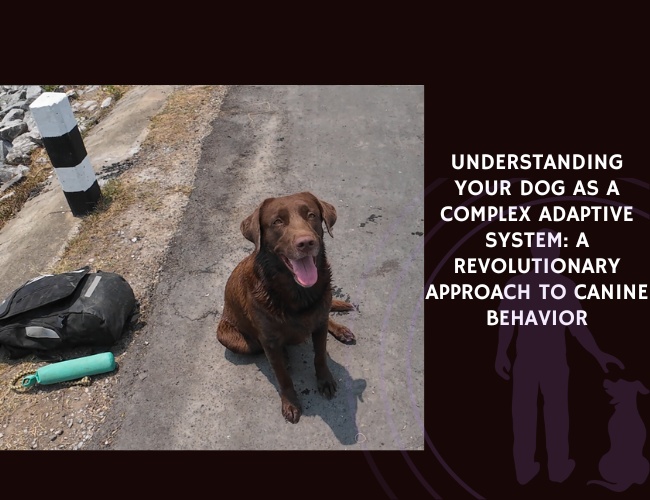
Introduction: Beyond Simple Commands and Rewards
Have you ever wondered why your dog suddenly “gets” a trick after weeks of practice, or why a normally calm companion can unexpectedly snap during stress? The answer lies not in simple cause-and-effect relationships, but in understanding your furry friend as a Complex Adaptive System (CAS) – a living network of interconnected behaviors, emotions, and responses that create something far more sophisticated than traditional training models suggest.
For decades, we’ve approached dog behavior through linear thinking: more training equals better behavior, consistent rewards produce consistent results. But what if we told you that your dog’s mind operates more like a weather system than a computer program? This revolutionary perspective, grounded in complexity science and nonlinear dynamics, reveals why breakthrough moments happen, how stress accumulates invisibly until reaching critical tipping points, and why some dogs bounce back from trauma while others struggle.
Let us guide you through this fascinating new framework that’s transforming how scientists, trainers, and caring owners understand canine behavior. You’ll discover how local interactions – a gentle touch, a sharp word, the rustle of a treat bag – cascade through your dog’s internal systems to create global behavioral states that define their personality, learning capacity, and emotional resilience. 🧠
Character & Behavior: Your Dog as an Emergent System
The Dance of Countless Interactions
When you observe your dog’s unique personality – whether they’re confident, anxious, playful, or reserved – you’re witnessing emergence in action. This personality isn’t stored in any single part of their brain or determined by one gene. Instead, it emerges from millions of tiny interactions: neurons firing, hormones circulating, memories forming, and environmental inputs processing simultaneously.
Understanding Emergence in Daily Life
Think about how your dog greets you after work. This seemingly simple behavior actually involves:
- Visual recognition systems processing your appearance
- Auditory networks interpreting your voice and footsteps
- Memory circuits recalling past positive interactions
- Motor control systems coordinating tail wagging and body movements
- Emotional regulation balancing excitement with learned restraint
Each component follows simple rules, yet together they create the complex, heartwarming reunion ritual unique to your relationship. This is emergence – where the whole becomes magnificently more than the sum of its parts.
Self-Organization: How Routines Form Without Training
You might notice your dog has developed elaborate morning routines or specific ways of requesting attention that you never explicitly taught. This self-organization is a hallmark of complex adaptive systems. Your dog’s brain naturally creates patterns and structures from repeated experiences, building behavioral repertoires that help them navigate their world efficiently.
These self-organized behaviors often surprise us because they seem intentional and planned, yet they arise spontaneously from the system seeking stable, efficient states – what scientists call “attractor states.” Understanding this helps explain why some habits are so hard to break: they’ve become deeply embedded attractors in your dog’s behavioral landscape.
Vocalization & Communication: The Nonlinear Nature of Canine Expression
When Small Signals Create Big Responses
Have you noticed how a slight change in your tone can dramatically alter your dog’s behavior? This isn’t oversensitivity – it’s nonlinearity in action. In complex systems, small inputs can trigger disproportionately large outputs, and nowhere is this more evident than in canine communication.
The Cascade Effect of Emotional Signals
Your emotional state doesn’t just influence your dog; it can fundamentally reorganize their entire behavioral system. Research shows that the dog-human dyad operates as a coupled system where:
- Your stress hormones can trigger stress responses in your dog within minutes
- A calm, confident demeanor can down-regulate your dog’s anxiety
- Facial micro-expressions you’re unaware of can shift your dog’s attention and arousal
This bidirectional feedback loop means that managing your own emotional state becomes a powerful tool for shaping your dog’s behavior. It’s not about hiding emotions – dogs are too perceptive for that – but about understanding how your internal state ripples through the shared system you create together.
Multimodal Communication Networks
Dogs don’t just “speak” through barks and whines. Their communication emerges from the integration of:
- Vocalizations with distinct acoustic properties
- Body postures conveying emotional valence
- Facial expressions (yes, dogs have complex facial musculature for expression)
- Chemical signals through pheromones
- Behavioral sequences that serve as contextual grammar
When these channels align, communication is clear. But when they conflict – such as a wagging tail with tense body posture – you’re observing the system in a transitional state, searching for a new equilibrium. Learning to read these mixed signals helps you understand when your dog is processing conflicting inputs or approaching a behavioral tipping point. 🐾
Training & Education: Embracing Nonlinear Learning Trajectories
The Myth of Linear Progress
Traditional training assumes that each repetition brings your dog incrementally closer to mastery. But if you’ve ever experienced your dog suddenly “forgetting” a well-known command or dramatically improving overnight, you’ve witnessed nonlinear learning dynamics firsthand.
Understanding Learning Plateaus and Breakthroughs
Learning in complex adaptive systems follows a punctuated equilibrium model:
- Exploration Phase: Your dog experiments with various responses, appearing inconsistent or confused
- Consolidation Plateau: Performance stabilizes but doesn’t improve, despite continued practice
- Phase Transition: Sudden breakthrough as neural networks reorganize into more efficient configurations
- New Baseline: The skill becomes integrated into the behavioral repertoire
These “aha moments” aren’t random – they represent phase transitions where accumulated micro-learning suddenly crystallizes into macro-level understanding. Brain imaging studies in learning animals show dramatic reorganization of neural networks during these breakthroughs, confirming that learning involves qualitative shifts, not just quantitative accumulation.
The Value of Variability and “Mistakes”
What looks like regression or mistakes might actually be your dog’s system exploring the solution space. This “chaotic exploration” is essential for robust learning because it:
- Tests the boundaries of what works and what doesn’t
- Builds flexibility into learned behaviors
- Prevents overfitting to specific contexts
- Develops creative problem-solving abilities
Trainers who understand this encourage controlled variability rather than demanding rigid perfection. This approach produces dogs who can generalize skills across contexts and adapt to novel situations – the hallmark of true intelligence.
Feedback Loops in Training
Every training interaction creates feedback loops that can either amplify or dampen learning:
Positive Feedback Spirals
- Success → Increased confidence → Greater engagement → More success
- Calm trainer energy → Reduced dog anxiety → Better focus → Improved performance
Negative Feedback Spirals
- Frustration → Stress hormones → Impaired cognition → Poor performance → More frustration
- Inconsistent rewards → Confusion → Decreased motivation → Reduced learning
Understanding these dynamics explains why emotional regulation – yours and your dog’s – is as important as technique in training. The most effective trainers don’t just teach behaviors; they manage the entire learning system. 😄

Performance & Activities: Optimizing Your Dog’s Adaptive Capacity
Building Resilience Through Controlled Challenges
Just as muscles grow stronger through progressive overload, your dog’s adaptive capacity develops through carefully calibrated challenges. But unlike linear strength training, behavioral resilience follows nonlinear development paths.
The Goldilocks Zone of Stress
Optimal development occurs in what researchers call the “zone of proximal development” – challenges just beyond current capability but not so difficult they overwhelm the system. This zone is different for every dog and shifts dynamically based on:
- Current stress load from all life sources
- Recent sleep quality and physical health
- Social support availability
- Previous learning experiences
- Genetic stress sensitivity thresholds
Activities that hit this sweet spot trigger adaptive reorganization without pushing the system into dysfunction. This might mean gradually increasing agility course complexity for one dog while another benefits more from novel scent work challenges.
Cross-Domain Transfer and Emergent Skills
One fascinating property of complex systems is how learning in one domain can suddenly unlock abilities in seemingly unrelated areas. You might notice:
- Agility training improves general impulse control
- Scent work enhances problem-solving in puzzle toys
- Therapy dog training reduces reactivity to strangers
- Trick training strengthens the human-animal bond globally
These transfers occur because you’re not just training specific behaviors – you’re reshaping the underlying attractor landscape of your dog’s behavioral system. Skills that seem unrelated at the surface level share deep structural patterns in neural organization.
Nutritional Recommendations: Feeding the Complex System
Nutrition as a System Regulator
Your dog’s diet doesn’t just fuel their body – it modulates their entire behavioral system through multiple pathways:
Neurotransmitter Precursors The amino acids in protein directly influence neurotransmitter production:
- Tryptophan → Serotonin (mood regulation, impulse control)
- Tyrosine → Dopamine (motivation, reward processing)
- Glutamate → GABA (anxiety regulation, calmness)
Small changes in dietary composition can shift the balance of these crucial signaling molecules, potentially moving your dog’s baseline emotional state toward different attractor states.
Gut-Brain Axis Dynamics
The gut microbiome operates as a semi-autonomous system that profoundly influences behavior through:
- Production of neurotransmitters (90% of serotonin is made in the gut)
- Inflammation modulation affecting mood and cognition
- Stress hormone regulation via the HPA axis
- Vagus nerve signaling directly to the brain
Dietary changes that alter microbiome composition can trigger cascading effects throughout your dog’s behavioral system. This explains why some dogs show dramatic behavioral improvements with diet changes while others seem unaffected – it depends on their system’s current state and sensitivity to these inputs.
Metabolic Stability and Behavioral Regulation
Blood sugar fluctuations create waves of behavioral change:
- Rapid spikes trigger hyperactivity and impulsivity
- Crashes lead to irritability and reduced frustration tolerance
- Stable levels support consistent emotional regulation
Complex carbohydrates and balanced meal timing help maintain metabolic stability, providing a steady platform for behavioral adaptation rather than adding another source of system perturbation.
Personalized Nutrition for System Optimization
Because each dog is a unique complex system, nutritional needs vary based on:
- Genetic metabolic tendencies
- Current stress load and activity level
- Age-related changes in system dynamics
- Health conditions affecting system regulation
- Environmental factors influencing metabolism
Working with a veterinary nutritionist who understands systems thinking can help identify the dietary inputs that best support your individual dog’s behavioral equilibrium. 🧡
Health Concerns: When Systems Become Dysregulated
Understanding Health Through a Systems Lens
Traditional veterinary medicine often treats symptoms in isolation, but a complex systems approach recognizes that health issues rarely affect just one component. Instead, they create ripple effects that can fundamentally alter your dog’s behavioral landscape.
The Inflammation-Behavior Connection
Chronic inflammation operates as a system-wide perturbation that can:
- Alter neurotransmitter metabolism, affecting mood
- Increase stress hormone production
- Reduce neuroplasticity, impairing learning
- Lower frustration tolerance thresholds
- Shift the system toward defensive behavioral states
This explains why dogs with allergies, arthritis, or digestive issues often show concurrent behavioral changes. The inflammation isn’t just causing physical discomfort – it’s reorganizing the entire system’s operating parameters.
Pain as a System Disruptor
Pain doesn’t just hurt – it fundamentally rewires behavioral priorities and capabilities:
- Cognitive resources redirect toward monitoring and avoiding pain
- Social engagement systems downregulate to conserve energy
- Stress response systems become hypervigilant
- Learning capacity diminishes as the brain prioritizes immediate survival
Even subtle, chronic pain can push your dog’s system toward a new, maladaptive equilibrium. This is why addressing pain isn’t just about comfort – it’s about restoring the system’s capacity for positive adaptation.
Identifying Early Warning Signals
Complex systems often show subtle perturbations before major transitions. Learning to recognize these early warning signals can help you intervene before your dog’s system reaches a tipping point:
Behavioral Precursors
- Increased behavioral variability (mood swings)
- Slower recovery from minor stressors
- Changes in sleep patterns or appetite
- Reduced interest in previously enjoyed activities
- Subtle changes in social engagement patterns
Physiological Markers Heart Rate Variability (HRV) serves as a window into system regulation:
- Decreased HRV indicates reduced adaptive capacity
- Irregular patterns suggest system instability
- Recovery time from stress extends when systems are strained
Regular monitoring of these indicators – through observation and potentially wearable technology – helps you track your dog’s system health over time.
Dynamic. Nonlinear. Emergent.
Not a machine—an ecosystem. Your dog’s behavior isn’t a straight line from command to response, but the outcome of countless interacting subsystems—neurology, physiology, memory, and environment—constantly adapting in real time.
Order arises from interaction. Greeting rituals, training breakthroughs, or sudden stress responses emerge from simple local signals cascading through the whole system, creating patterns that can’t be reduced to single causes.
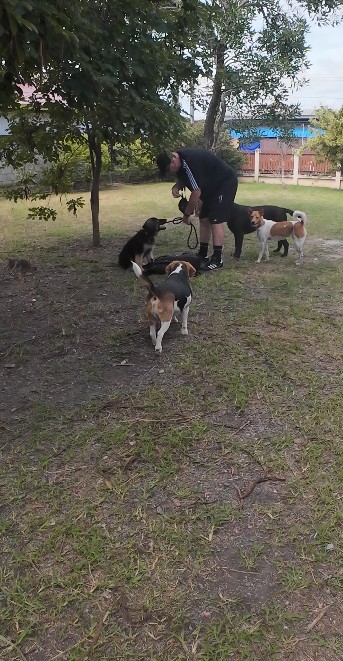

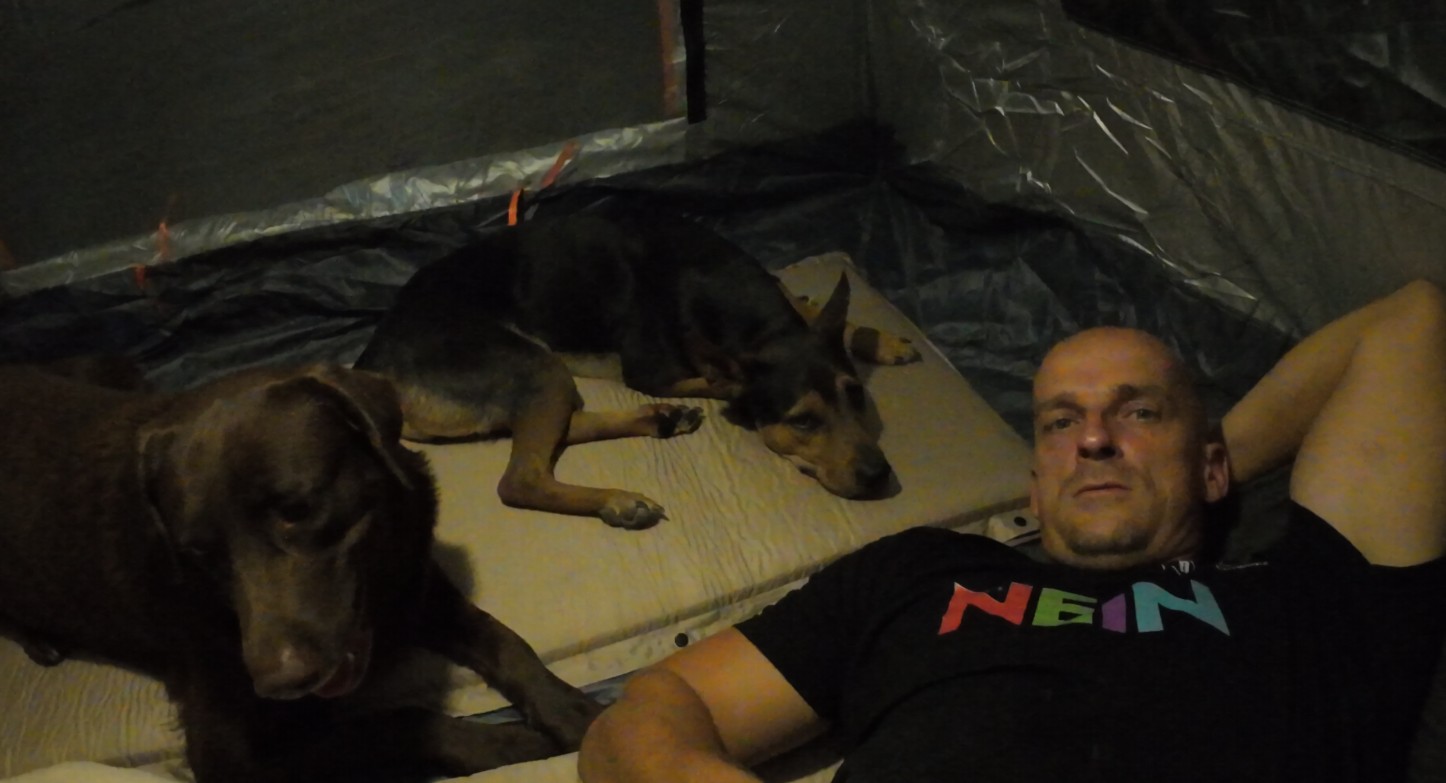
Complexity is connection. By seeing your dog as a Complex Adaptive System, training shifts from control to co-regulation—where resilience, trust, and harmony emerge naturally from the dance of daily interactions.
Lifestyle & Environment: Designing for System Stability
Environmental Inputs and System States
Your dog’s environment isn’t just a backdrop – it’s an active participant in shaping their behavioral system. Every element, from lighting to soundscape to social structure, serves as an input that influences system dynamics.
Creating Supportive Physical Environments
The physical environment can either stabilize or destabilize your dog’s system:
- Predictable spaces provide anchor points for behavioral organization
- Retreat options allow system recovery when overwhelmed
- Enrichment opportunities encourage healthy system exploration
- Sensory modulation (quiet spaces, dim lighting) prevents system overload
Think of environmental design as creating a framework that guides your dog’s system toward positive attractor states while providing escape routes from negative ones.
Social Environment as System Context
The social dynamics in your home create a field that shapes behavioral possibilities:
- Calm, consistent human behavior promotes system stability
- Chaotic or unpredictable social patterns increase system stress
- Multiple dogs create complex interaction networks with emergent properties
- Visitor patterns influence baseline arousal and vigilance levels
Understanding these dynamics helps explain why some dogs thrive in busy households while others need quieter environments – it’s about matching environmental complexity to the dog’s system capacity.
Routine as System Scaffolding
Routines don’t just provide comfort – they reduce the computational load on your dog’s system, freeing resources for adaptation and learning:
The Power of Predictability
- Reduces anticipatory stress about when needs will be met
- Creates temporal structure that organizes behavior
- Provides recovery periods between challenges
- Establishes baseline rhythms that support regulation
But remember: too much rigidity can reduce system flexibility. The ideal routine provides structure while maintaining enough variability to keep the system adaptive.
Circadian Synchronization
Your dog’s internal clock is a powerful organizing force that influences:
- Hormone production cycles
- Cognitive performance windows
- Emotional regulation capacity
- Stress recovery processes
Aligning daily activities with natural circadian rhythms optimizes system function. This means considering not just what activities you do, but when you do them for maximum benefit. 🐾
Senior Care: Supporting Aging Complex Systems
The Dynamics of System Aging
As dogs age, their complex adaptive systems undergo fundamental changes that go beyond simple decline. Understanding these shifts helps us provide support that maintains quality of life and behavioral flexibility.
Reduced System Plasticity
Aging systems become less responsive to inputs:
- Learning new behaviors requires more repetitions
- Recovery from stress takes longer
- Behavioral patterns become more rigid
- Adaptation to change becomes more challenging
This isn’t just “stubbornness” – it’s a fundamental shift in system dynamics that requires adjusted expectations and methods.
Compensatory Mechanisms
Remarkably, aging systems often develop compensatory strategies:
- Enhanced use of context cues when memory falters
- Increased reliance on routine when processing slows
- Deeper social bonds compensating for physical limitations
- Wisdom-based responses replacing quick reactions
Supporting these compensations rather than fighting them helps maintain system function despite underlying changes.
Cognitive Dysfunction as System Collapse
Canine cognitive dysfunction represents a system-wide breakdown where multiple feedback loops fail simultaneously:
- Neurotransmitter systems become dysregulated
- Inflammatory processes accelerate
- Sleep-wake cycles destabilize
- Stress response systems become either hyperactive or unresponsive
Early intervention focusing on system support rather than single symptoms shows the most promise:
- Nutritional support for neural function (omega-3s, antioxidants)
- Cognitive enrichment maintaining neural plasticity
- Stress reduction preventing system overload
- Social engagement supporting emotional regulation
The goal isn’t to reverse aging but to maintain system coherence as long as possible.
Stress Management: Understanding Tipping Points and Resilience
The Nonlinear Accumulation of Stress
Stress doesn’t add up arithmetically in your dog’s system. Instead, it accumulates nonlinearly, meaning that the tenth stressor might have vastly more impact than the first nine combined. This explains why dogs can seem “fine” until they suddenly aren’t.
The Stress Bucket Model Reimagined
Traditional models describe stress as filling a bucket until it overflows. But in complex systems, it’s more like adding weight to a balanced structure:
- Initial stressors are easily compensated
- Additional stress requires increasing system resources to manage
- Near the tipping point, tiny additions cause dramatic shifts
- Once tipped, the system reorganizes into a stress-dominated state
Understanding this helps explain why preventing that last straw is so much more effective than trying to rebuild after system collapse.
Identifying Your Dog’s Unique Threshold
Every dog’s system has different sensitivity to stress based on:
- Genetic factors influencing stress hormone production
- Early life experiences setting baseline stress responses
- Current health status affecting system resources
- Learned coping strategies providing stress buffers
- Social support availability offering co-regulation
Learning your dog’s specific warning signs – the subtle changes that precede major stress responses – allows intervention before reaching the tipping point.
Building Resilience Through System Strengthening
Resilience isn’t about being stress-proof – it’s about rapid recovery and adaptive reorganization after challenges:
Recovery Dynamics
Resilient systems show specific recovery patterns:
- Quick return to baseline after minor stressors
- Ability to maintain function during moderate stress
- Rapid reorganization after major disruptions
- Learning from stress experiences to build future capacity
Supporting these patterns involves both preventing system overload and providing resources for recovery.
The Co-Regulation Advantage
Your presence can fundamentally alter your dog’s stress dynamics through:
- Social buffering that dampens stress responses
- Emotional contagion that shares calm states
- Predictable support that reduces uncertainty
- Physical contact that activates parasympathetic recovery
This isn’t anthropomorphism – it’s documented biological synchrony between bonded individuals. Your nervous system literally helps regulate your dog’s. 🧠
Practical Applications: Living with Your Complex Adaptive Dog
Daily Life Strategies
Understanding your dog as a complex system transforms everyday interactions:
Morning Routines That Set System Tone Start days with activities that promote positive system states:
- Gentle wake-up transitions respecting circadian rhythms
- Predictable sequence reducing anticipatory stress
- Opportunity for elimination, movement, and social connection
- Nutritional input supporting stable blood sugar
Reading System States Before Training Assess your dog’s current system state before demanding performance:
- High variability suggests system instability – focus on calming
- Sluggish responses indicate low arousal – add stimulation
- Hyperfocus might mean stress – check for other indicators
- Balanced attention suggests readiness for learning
Managing Multi-Dog Dynamics
Multiple dogs create an emergent super-system with properties no individual dog possesses:
- Arousal contagion can amplify excitement or anxiety
- Resource competition adds system stress even with abundance
- Social learning accelerates both positive and negative behaviors
- Pack dynamics create hierarchies affecting individual behavior
Managing these dynamics requires thinking about the group as a system, not just individual dogs.
Training Adaptations for Nonlinear Learning
Embracing nonlinearity transforms training approach:
Expecting and Utilizing Plateaus When progress stalls:
- Continue practice without pressure for breakthrough
- Add slight variations to prevent rigid pattern formation
- Trust that subsurface reorganization is occurring
- Celebrate maintenance as valuable consolidation
Creating Breakthrough Conditions To encourage phase transitions:
- Vary context slightly to promote generalization
- Add play elements reducing performance pressure
- Use social learning with skilled dogs as models
- Practice in different emotional states for flexibility
Managing Regression Constructively When skills seem to disappear:
- Recognize this as potential system reorganization
- Return to earlier success points without judgment
- Check for system stressors affecting performance
- Trust the learning remains and will re-emerge
Therapeutic Interventions for Traumatized Dogs
Trauma creates persistent maladaptive attractor states. Healing involves gently shifting the system toward healthier equilibriums:
Titrated Exposure Protocols Instead of flooding or avoidance:
- Introduce triggers at sub-threshold levels
- Allow system to maintain equilibrium during exposure
- Gradually increase intensity as system adapts
- Provide clear escape routes preventing system overload
Somatic Stabilization Techniques Body-based interventions can reset system states:
- Gentle massage organizing sensory input
- Rhythmic movement promoting neural synchronization
- Breathing synchronization with calm humans
- Temperature regulation through appropriate environmental control
Creating New Attractors Build positive behavioral states that compete with trauma responses:
- Establish reliable pleasure associations
- Strengthen social bonding circuits
- Develop mastery experiences building confidence
- Create predictable safety anchors in daily routine
Conclusion: Is This Perspective Right for You and Your Dog?
Understanding your dog as a complex adaptive system isn’t just an intellectual exercise – it’s a practical framework that can transform your relationship and your dog’s wellbeing. This approach is especially valuable if you’ve noticed:
- Your dog’s behavior seems inconsistent despite consistent training
- Small changes sometimes trigger dramatic behavioral shifts
- Traditional training methods haven’t resolved persistent issues
- You sense there’s more going on than simple cause-and-effect
- Your dog shows different personalities in different contexts
Moving Forward with Systems Thinking
As you begin seeing your dog through this lens, remember:
- Every dog is a unique system requiring individualized understanding
- Progress isn’t always linear, and that’s perfectly normal
- Your emotional state profoundly influences your dog’s system
- Health, behavior, and learning are interconnected, not separate
- Resilience comes from supporting the whole system, not fixing parts
The Journey Ahead
This perspective opens new possibilities for connection and growth. You’ll find yourself noticing subtle system dynamics, predicting needs before problems arise, and creating environments that naturally support positive behaviors. Most importantly, you’ll develop a deeper appreciation for the magnificent complexity of your canine companion.
Your dog isn’t just following commands or seeking rewards – they’re navigating life as an intricate, adaptive, constantly evolving system. By understanding and supporting this complexity, you become not just a trainer or owner, but a partner in their ongoing development and wellbeing.
The path forward involves patience with nonlinear progress, curiosity about unexpected behaviors, and trust in your dog’s inherent capacity for adaptation and growth. Welcome to a richer, more nuanced understanding of your remarkable canine companion. Together, you and your dog form your own complex adaptive system, capable of achieving far more than either could alone. 🧡
As you implement these insights, remember that transformation happens not through force but through understanding, not through dominance but through partnership, and not through rigid protocols but through flexible, responsive adaptation to your dog’s ever-changing needs. This is the future of canine companionship – one that honors the full complexity and potential of our remarkable four-legged friends.










