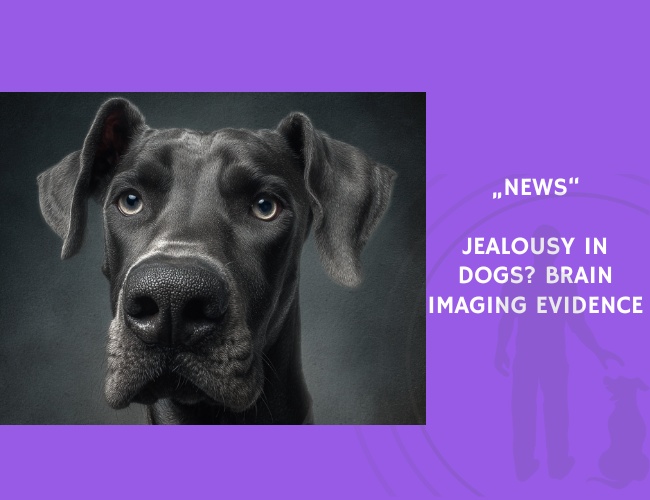
Domestic dogs are highly social animals that respond not only to human actions but also to interactions between humans and other dogs. To investigate whether dogs experience jealousy-like emotions, Cook, Prichard, Spivak, and Berns (2018) used noninvasive functional magnetic resonance imaging (fMRI) on awake, unrestrained dogs. The team also employed the Canine Behavioral Assessment and Research Questionnaire (C-BARQ) to assess aggressiveness.
Results showed that more aggressive dogs exhibited significantly greater amygdala activity when their caregiver gave food to a realistic fake dog, compared to when the food was placed in a bucket. This heightened response parallels jealousy-like reactions in humans, providing insight into the neurobiological basis of canine social emotions. Importantly, the amygdala response diminished with repeated exposures, suggesting that habituation could be used as a behavioral intervention for dogs prone to aggression.
The study contributes to a growing body of evidence showing that individual differences in brain activity correlate with canine temperament. By applying comparative neuroscience methods, the researchers highlight how understanding jealousy-like emotions in dogs can improve behavioral management and deepen our knowledge of dog–human social bonds.
Source: Cook, P., Prichard, A., Spivak, M., & Berns, G. (2018). Jealousy in dogs? Evidence from brain imaging. Animal Sentience: An Interdisciplinary Journal on Animal Feeling, 3, 1. Publication Year: 2018. Authors: Peter Cook, Ashley Prichard, Mark Spivak, Gregory S. Berns.